Loading...
Done
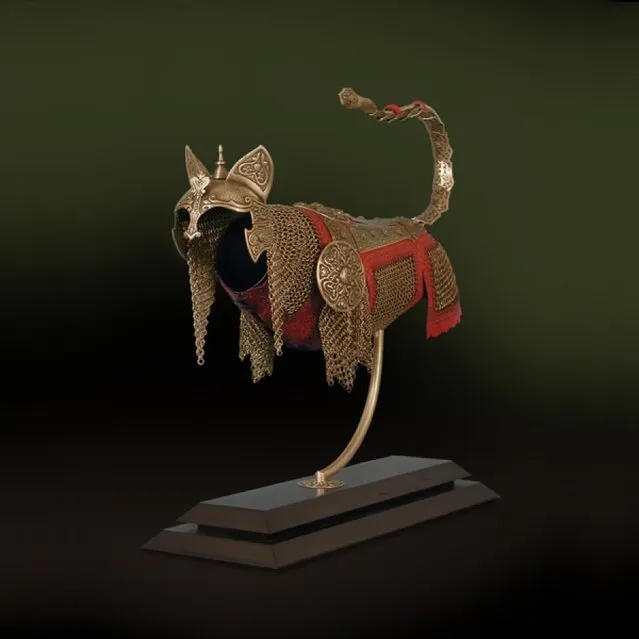
Animal Armour: Cats And Mice By Jeff de Boer

Jeff de Boer is a Calgary-based multi-media artist with an international reputation for producing some of the world's most original and well-crafted works of art. With an emphasis on metal, he is best known for such bodies of work as suits of armour for cats and mice, armour ties and sword-handled briefcases, rocket lamps and pop culture ray guns, and exquisite high art, abstract works called exoforms.
Details
10 Apr 2013 11:50:00
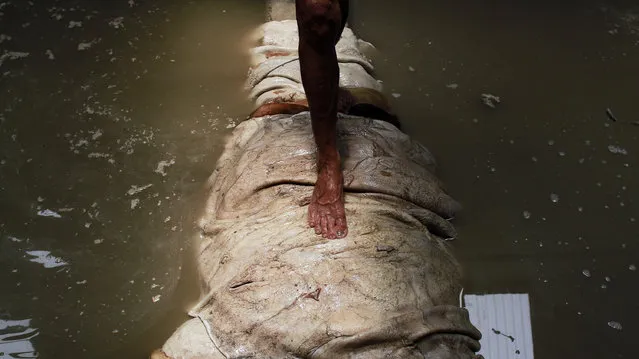
A man walks across a vat of water used to wash the hide. (Photo by Rezza Estily/JG Photo)

Sukaregang in Garut district, West Java, has long been a bustling center for Indonesia's leather trade, with some shops producing and selling various goods – including bags, shoes and jackets – since the 1940s. The industrial area is also a major supplier for high-end brands from across the globe, catering to the fashion, auto and motor-sports industry. Here: a man walks across a vat of water used to wash the hide. (Photo by Rezza Estily/JG Photo)
Details
31 Mar 2015 13:29:00
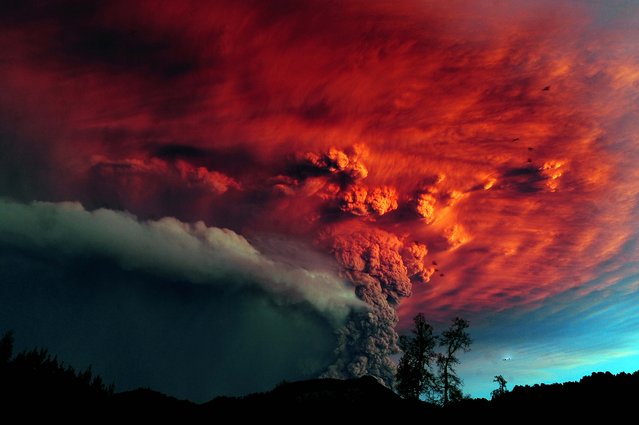
A cloud of ash pours from Puyehue volcano in southern Chile, at sunset on June 5, 2011

“A dirty thunderstorm (also, Volcanic lightning) is a weather phenomenon that occurs when lightning is produced in a volcanic plume. Dirty thunderstorms have been reported in Chile above the Chaiten Volcano, above Alaska's Mount Augustine volcano, and Iceland's Eyjafjallajökull volcano”.

Photo: A cloud of ash pours from Puyehue volcano in southern Chile, at sunset on June 5, 2011. (Claudio Santana/AFP)
Details
15 May 2012 11:31:00
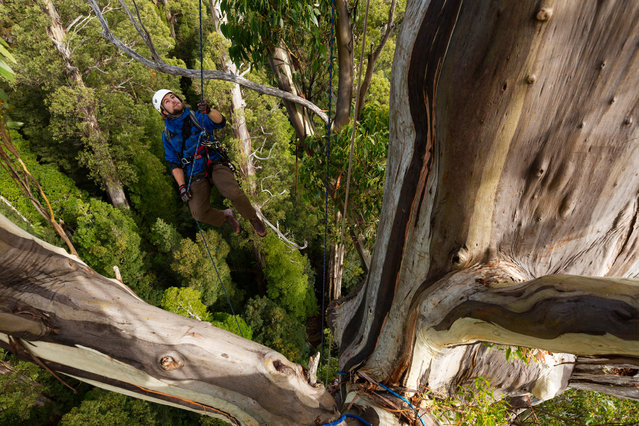
Haley nears the top of the tree. (Photo by Steven Pearce/The Tree Projects/The Guardian)

The Tree Projects team spent 67 days documenting one eucalyptus regnans in the Styx valley of Tasmania. Using a combination of tree-climbing and elaborate arboreal rigging techniques, they produced an intimate portrait from an impossible perspective of one of the world’s largest individual flowering trees, which goes by several common names. These photos document the process that resulted in an extraordinary ultra high-definition photograph. Here: Haley nears the top of the tree. (Photo by Steven Pearce/The Tree Projects/The Guardian)
Details
01 Feb 2017 06:37:00
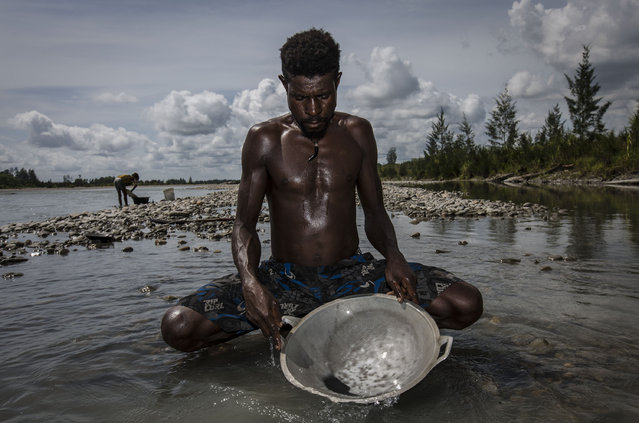
A illegal gold miner of Kamoro people, Tinus, pan for gold on February 4, 2017 in Timika, Papua Province, Indonesia. (Photo by Ulet Ifansasti/Getty Images)

A illegal gold miner of Kamoro people, Tinus, pan for gold on February 4, 2017 in Timika, Papua Province, Indonesia. Indonesia produces over 70 billion dollars in gold a year and is home to the largest gold mine and the third largest copper mine in the world, the Grasberg mine, which is located at West Papua. (Photo by Ulet Ifansasti/Getty Images)
Details
09 Feb 2017 00:05:00
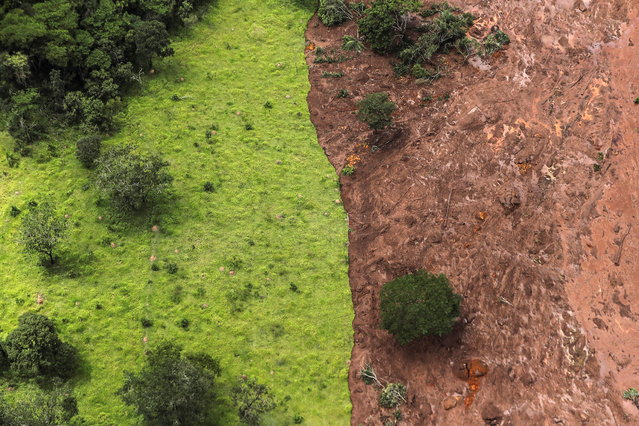
Aerial view over mud and waste from the disaster caused by dam spill in Brumadinho, Minas Gerais, Brazil, 26 January 2019. At least nine people have died and 300 are missing after a tailings dam burst at the Feijao mine in southeastern Brazil owned by Vale, the world's largest iron-ore producer, the Minas Gerais state government said. The dam in Brumadinho near Belo Horizonte broke on 25 January at around mid-day, unleashing a river of sludge that destroyed some nearby houses. (Photo by Antonio Lacerda/EPA/EFE)

Aerial view over mud and waste from the disaster caused by dam spill in Brumadinho, Minas Gerais, Brazil, 26 January 2019. At least nine people have died and 300 are missing after a tailings dam burst at the Feijao mine in southeastern Brazil owned by Vale, the world's largest iron-ore producer, the Minas Gerais state government said. The dam in Brumadinho near Belo Horizonte broke on 25 January at around mid-day, unleashing a river of sludge that destroyed some nearby houses. (Photo by Antonio Lacerda/EPA/EFE)
Details
29 Jan 2019 00:03:00
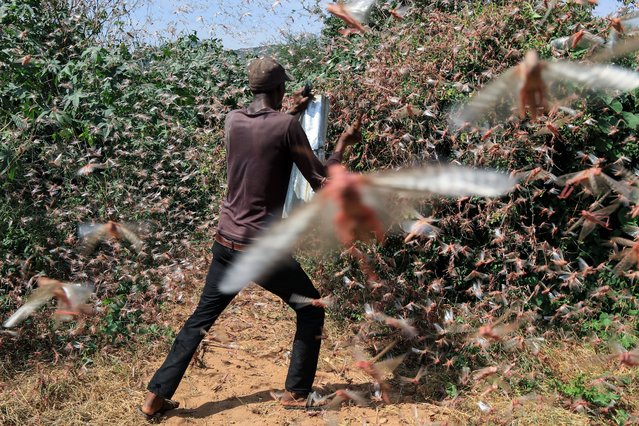
A man uses iron sheet to make noises, as a way of trying to disperse desert locusts that had invaded their farms during the second wave invasion in Kakongo village, in Nuu-Mwingi East, in Kitui, Kenya, 06 February 2021. The second wave invasion of the desert locusts in the country comes at a time where most famers are expecting to harvest their farm produce in the country. According to the United Nations Food and Agriculture Organization (FAO), on 04 February, warned numerous immature desert locust swarms persist in southern Ethiopia and Kenya. Some of the swarms are in community areas and therefore cannot be treated. In Kenya, immature swarms continue to spread westwards across northern and central counties where there are currently about 20 small swarms present, mostly about 50 hectares in size, it said. (Photo by Daniel Irungu/EPA/EFE)

A man uses iron sheet to make noises, as a way of trying to disperse desert locusts that had invaded their farms during the second wave invasion in Kakongo village, in Nuu-Mwingi East, in Kitui, Kenya, 06 February 2021. The second wave invasion of the desert locusts in the country comes at a time where most famers are expecting to harvest their farm produce in the country. (Photo by Daniel Irungu/EPA/EFE)
Details
25 Feb 2021 08:17:00
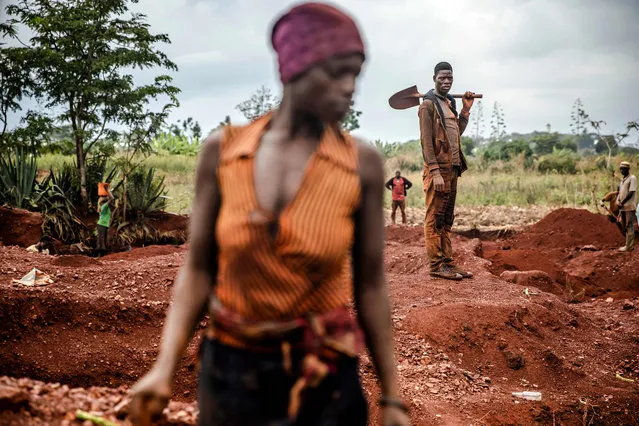
A gold miner observes from the distance how some women miners work at an open-pit gold mine in Nyarugusu, Geita Region, Tanzania on May 27, 2022. Tanzania is a land rich in minerals and one of the main gold producers in Africa, with gold representing more than 90% of the country's mineral exports. Artisanal and small-scale gold mining have culturally and historically relegated women's participation. The extractive sector in Tanzania has historically been a male-dominated industry with high levels of harassment, sеxual abuse, discrimination and misconceptions over women's involvement, and contributions following traditional beliefs. (Photo by Luis Tato/AFP Photo)

A gold miner observes from the distance how some women miners work at an open-pit gold mine in Nyarugusu, Geita Region, Tanzania on May 27, 2022. Tanzania is a land rich in minerals and one of the main gold producers in Africa, with gold representing more than 90% of the country's mineral exports. Artisanal and small-scale gold mining have culturally and historically relegated women's participation. The extractive sector in Tanzania has historically been a male-dominated industry with high levels of harassment, sеxual abuse, discrimination and misconceptions over women's involvement, and contributions following traditional beliefs. (Photo by Luis Tato/AFP Photo)
Details
13 Jun 2022 04:31:00