A Lowrider rides on three-wheels on Sunset Blvd., in the Echo Park neighborhood of Los Angeles late Sunday afternoon July 18, 2021. (Photo by Damian Dovarganes/AP Photo)
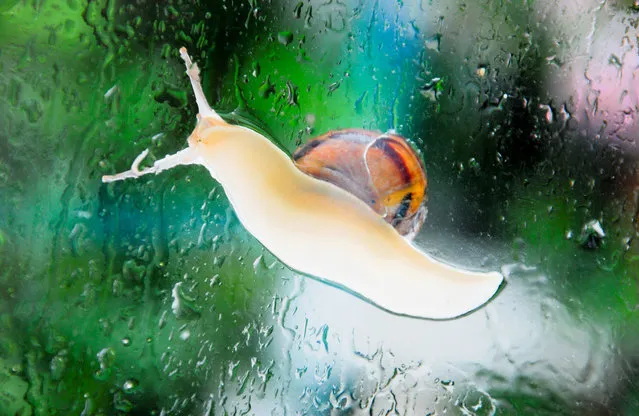
A snail slithers up a rain spattered window during stormy weather on the Isle of Portland, Fortuneswell, England on July 29, 2018. (Photo by Stuart Fretwell/Rex Features/Shutterstock)
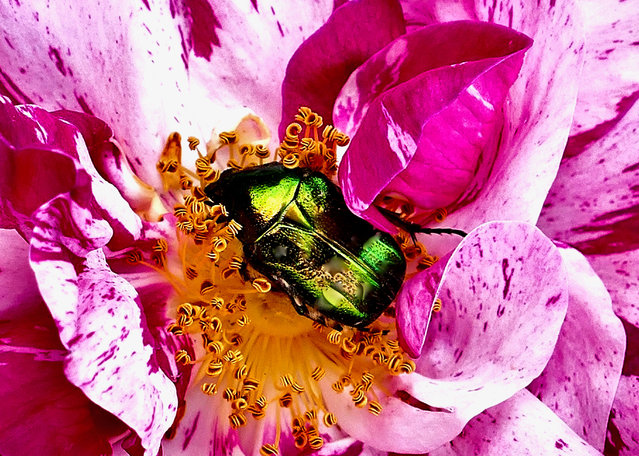
A rose chafer in Oxfordshire, UK on July 8, 2024. The beetles are often seen on flowers in the garden and are sometimes maligned for munching their way through these plants. However, they are an important detritivore as they feed on dead and decaying matter and recycle its nutrients, which makes a helpful addition to any compost. (Photo by Geoffrey Swaine/Rex Features/Shutterstock)
A fire show lit up Mayfair on May 10, 2022 to celebrate The Ivy Asia arriving at its newest central London location. Reservations have now opened for the new dining venue in North Audley Street ahead of its launch on May 31. (Photo by Handout via PA Wire Press Association)
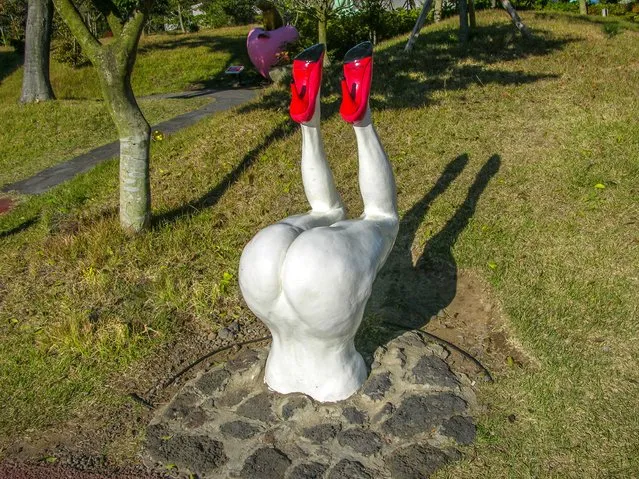
A statue is seen at the theme park “Love Land” on October 19, 2011 in Jeju, South Korea. Love Land is an outdoor sеx-themed sculpture park which opened in 2004 on Jeju Island. The park runs sеx education films and features 140 sculptures representing humans in various sеxual positions. It also has other elements such as large phallus statues, stone labia, and hands-on exhibits such as a “masturbation-cycle”. (Photo by James Jiao/Rex Features/Shutterstock)
An innovative artist has camouflaged nude bodies by painting them into the worlds most expensive artworks. New York body artist, Trina Merry picked the 20 top dearest paintings, then photographed naked models disguised as part of the piece. Here: Titled 8,100,000 after the price paid for Bal du moulin de la Galette. (Photo by Trina Merry/Caters News)
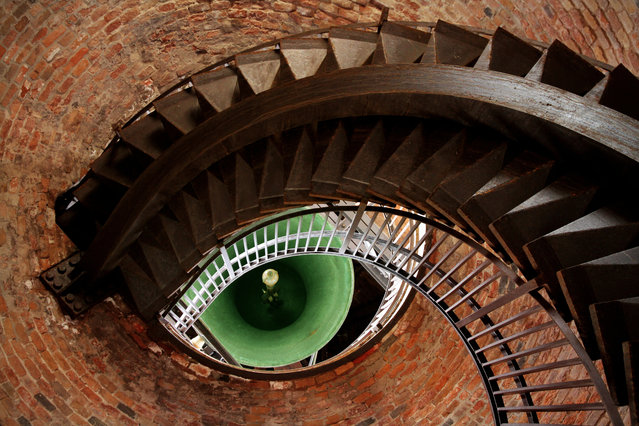
“Eye of the Tower” by Mehmet Yasa; Verona, Italy. “The staircase and the bell looks like an eye. Architecture can fascinate us in many ways”. (Photo by Mehmet Yasa/Art of Building Photography Awards 2017)
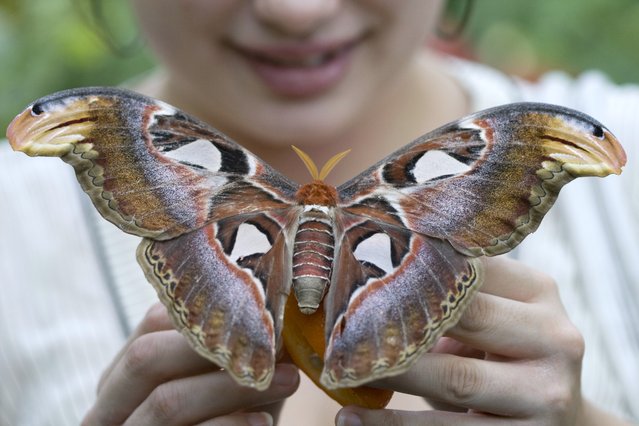
“The Atlas moth (Attacus atlas) is a large saturniid moth found in the tropical and subtropical forests of Southeast Asia, and common across the Malay archipelago. Atlas moths are considered the largest moths in the world in terms of total wing surface area [upwards of c. 400 cm2 (62 sq in)]. Their wingspans are also amongst the largest, reaching over 25 cm (10 in). Females are appreciably larger and heavier”. – Wikipedia. Photo: Atlas Moth. (Photo by Terri Oda)