Loading...
Done


Cannabis had already dominated the world of medicine. More and more people become convinced of its effectiveness, especially in terms of treating known diseases (e.g., Epilepsy, Depression, and Anxiety). Such commotion resulted in several experts to create and establish pieces of research about cannabis. Factors affecting the pros and cons are identified and verified to know further whether or not it is a capable substance.
Details
22 Jan 2020 08:49:00
Action on the catwalk during the Congo fashion week. (Photo by Olivia Acland/The Guardian)

The Democratic Republic of the Congo’s misfortunes have often eclipsed its good news, with ongoing armed conflicts and most recently an Ebola outbreak. Much of the world knows little of the country’s vibrant arts scene, and last weekend in the capital, Kinshasa, models showed off daring new looks dreamed up by local designers on the catwalk. (Photo by Olivia Acland/The Guardian)
Details
20 Aug 2018 00:05:00
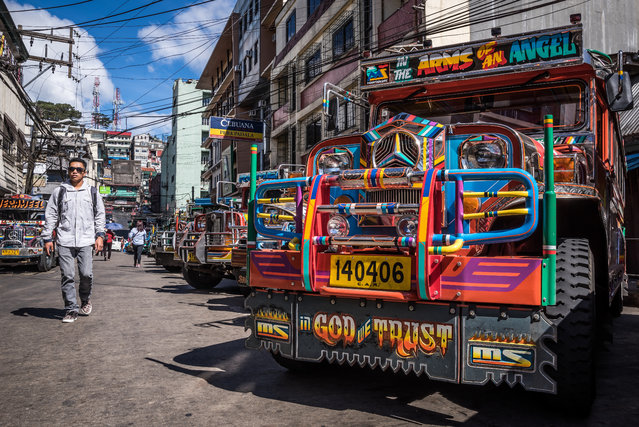
A jeepney waits for departure at Baguio (North Luzon). (Photo by Claudio Sieber/Barcroft Media)

These Filipino icons of ingenuity were originally re-crafted from abandoned US army jeeps after the second world war, and helped to establish a new system of urban transportation. Jeepneys are being phased to help ease city congestion, but the move will also cause unemployment for experienced drivers – and higher fares for commuters. (Photo by Claudio Sieber/Barcroft Media)
Details
30 May 2019 00:01:00
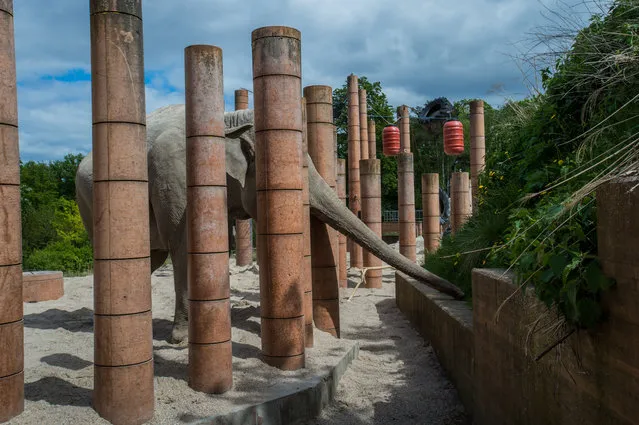
Asian Elephant, Denmark, 2016. (Photo by Jo-Anne McArthur/Born Free Foundation/The Guardian)

Jo-Anne McArthur’s book of photographs puts the spotlight on ethics of zoos around the world. Accompanied by essays by Born Free Foundation’s Virginia McKenna and philosopher Lori Gruen, the images and stories are also shared online through “A Year of Captivity”. Here: Asian Elephant, Denmark, 2016. (Photo by Jo-Anne McArthur/Born Free Foundation/The Guardian)
Details
28 Jul 2017 09:49:00
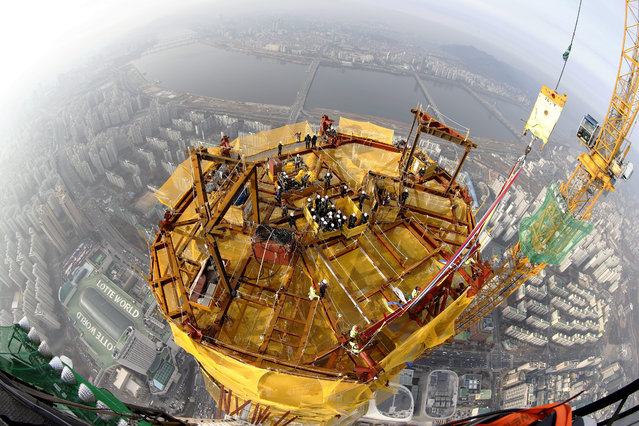
South Korean workers are seen from a crane as they work on the 123rd floor during the framing completion ceremony of the 'Lotte World Tower' in Seoul, South Kora, 22 December 2015. The building's exterior was completed in a final height of 550 meters, and 123 floors. The ceremony came five years and two months after the construction of the building began and its opening will likely take place at the end of next year when the interior work is set to be completed, the South Korean Yonhap news agency reported. (Photo by Jeon Heon-Kyun/EPA)

South Korean workers are seen from a crane as they work on the 123rd floor during the framing completion ceremony of the 'Lotte World Tower' in Seoul, South Kora, 22 December 2015. The building's exterior was completed in a final height of 550 meters, and 123 floors. The ceremony came five years and two months after the construction of the building began and its opening will likely take place at the end of next year when the interior work is set to be completed, the South Korean Yonhap news agency reported. The building is the highest in South Korea and the fifth highest in the world, according to Yonhap. (Photo by Jeon Heon-Kyun/EPA)
Details
23 Dec 2015 13:19:00


“Josephine Baker (June 3, 1906 – April 12, 1975) was an American-born French dancer, singer, and actress. Nicknamed the “Bronze Venus”, the “Black Pearl”, and even the “Créole Goddess” in anglophone nations.

Baker was the first African American female to star in a major motion picture and to integrate an American concert hall, and to become a world-famous entertainer. She is also noted for her contributions to the Civil Rights Movement in the United States (she was offered the unofficial leadership of the movement by Coretta Scott King in 1968 following Martin Luther King, Jr.'s assassination, but turned it down), for assisting the French Resistance during World War II and for being the first American-born woman to receive the French military honor, the Croix de guerre”.

Photo: American entertainer Josephine Baker in costume for her famous “banana dance”. Baker was an overnight sensation when she arrived in Paris in the mid-1920s. (Photo by Walery/Getty Images)

Details
18 Mar 2011 10:22:00
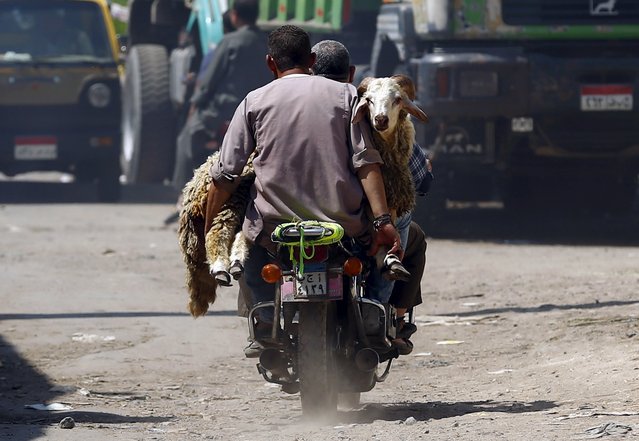
Men transport a sheep on their motorcycle after buying it at an old cattle market named “Al Emam Market” ahead of the Muslim festival Eid al-Adha in Cairo, Egypt, September 19, 2015. Muslims across the world are preparing to celebrate the annual festival of Eid al-Adha or the Festival of Sacrifice, which marks the end of the annual hajj pilgrimage, by slaughtering goats, sheep. (Photo by Amr Abdallah Dalsh/Reuters)

Men transport a sheep on their motorcycle after buying it at an old cattle market named “Al Emam Market” ahead of the Muslim festival Eid al-Adha in Cairo, Egypt, September 19, 2015. Muslims across the world are preparing to celebrate the annual festival of Eid al-Adha or the Festival of Sacrifice, which marks the end of the annual hajj pilgrimage, by slaughtering goats, sheep, cows and camels in commemoration of the Prophet Abraham's readiness to sacrifice his son to show obedience to Allah. (Photo by Amr Abdallah Dalsh/Reuters)
Details
22 Sep 2015 08:05:00
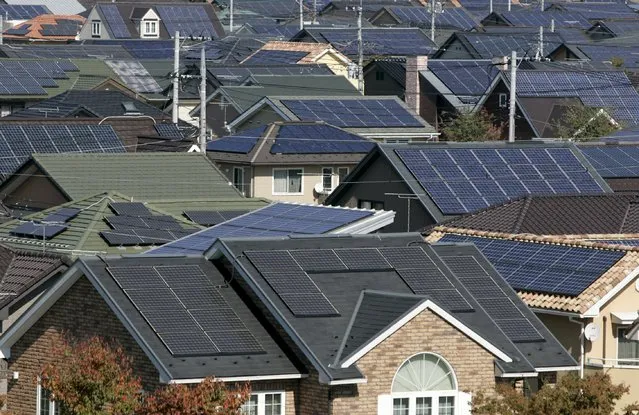
Rooftops of solar powered houses are pictured in Ota, 80 km northwest of Tokyo in this October 28, 2008 file photo. One by one, Japan is turning off the lights at the giant oil-fired power plants that propelled it to the ranks of the world's top industrialised nations. With nuclear power in the doldrums after the Fukushima disaster, it's solar energy that is becoming the alternative. (Photo by Yuriko Nakao/Reuters)

Rooftops of solar powered houses are pictured in Ota, 80 km northwest of Tokyo in this October 28, 2008 file photo. One by one, Japan is turning off the lights at the giant oil-fired power plants that propelled it to the ranks of the world's top industrialised nations. With nuclear power in the doldrums after the Fukushima disaster, it's solar energy that is becoming the alternative. Solar power is set to become profitable in Japan as early as this quarter, according to the Japan Renewable Energy Foundation (JREF), freeing it from the need for government subsidies and making it the last of the G7 economies where the technology has become economically viable. (Photo by Yuriko Nakao/Reuters)
Details
24 Nov 2015 08:04:00