Loading...
Done
Beluga Whales Blowing Bubbles in Japan

The talent in bubbles unfurled the white Beluga whales living in Shimane Aquarium in Japan.As shown in the picture, have learned to make bubble rings, indicative of high intelligence.Whales blowing air from the mouth to create a stream and immediately after xanafysoun powerfully in the same place so that the bubbles to form a ring.Beluga whales are organized in groups and are social animals. They live in Arctic and sub​​-Arctic and known as "sea canaries" and mimic a wide range of sounds.
Details
18 Sep 2012 10:55:00
Grandmother Tips

Chacho Puebla, a creative director from Madrid is back with loads of social media tips from grandma. After receiving a lot of appreciation from the first version of 'Grandmother Tips' project, he decided to share some more valuable tips. "My grandmother's tips never end. Neither do my sister's photos, or help from my girlfriend, who never stops giving me ideas." shares Puebla.
Details
04 Jan 2013 12:23:00
This picture taken on June 1, 2019 shows Alex Gao trying to balance a book on his head during an etiquette and manners class in central Shanghai. (Photo by Hector Retamal/AFP Photo)

This picture taken on June 1, 2019 shows Alex Gao trying to balance a book on his head during an etiquette and manners class in central Shanghai. Against a soundtrack of classical music, children learn social skills, dining manners and deportment in the class, which costs $390 for four hours of practical instruction per student. (Photo by Hector Retamal/AFP Photo)
Details
02 Jul 2019 00:01:00
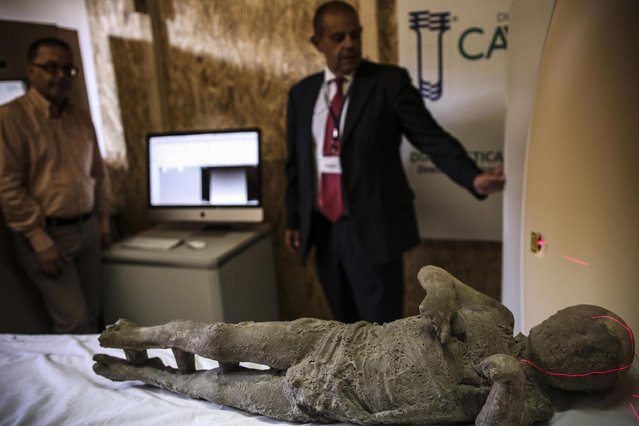
A working team appointed by the Archaeological Superintendence of Pompeii performs a Cat scan (Computerized axial tomography) one out of thirty casts of victims of the eruption of Vesuvius in 79 AD in Pompeii, in Napoli, Italy, 29 September 2015. (Photo by Cesare Abbate/EPA)

A working team appointed by the Archaeological Superintendence of Pompeii performs a Cat scan (Computerized axial tomography) one out of thirty casts of victims of the eruption of Vesuvius in 79 AD in Pompeii, in Napoli, Italy, 29 September 2015. The project which aims to trace the habits of life, employment and social class of the victims, involves a working team of archeologists, anthropologists, radiologists, dentists and engineers to obtain results from the scan. (Photo by Cesare Abbate/EPA)
Details
02 Oct 2015 08:04:00
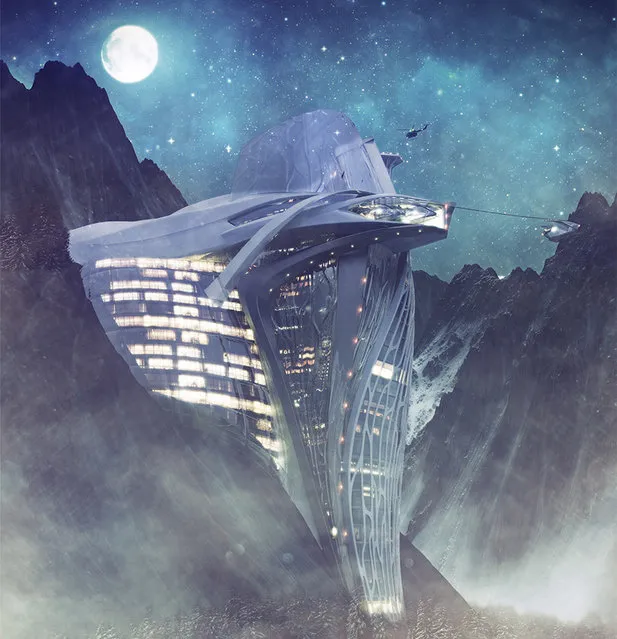
Semiotic Alpine Escape By Armin Senoner

Armin Senoner conceptualizes class system based semiotic alpine escape all visuals courtesy of armin senoner. From birth, every human is organized through the hierarchical class system. Without regard to personal characteristics in the least, each is donned with a label; lower, middle, or upper. Society at large is innately regulated because by it, the rich do anything to remain at the top, the middle tries to overthrow the rich, and the poor just try to survive. Modern times, though less brutal, is no less restrained by the unspoken rules of social division.
Details
01 Jul 2015 13:22:00
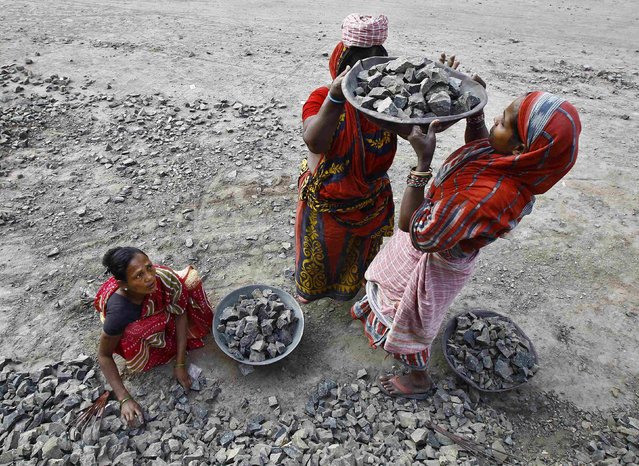
Women labourers work at the construction site of a road in Kolkata January 8, 2015. Across towns and cities in India, it is not uncommon to see women cleaning building sites, carrying bricks and or shoveling gravel - helping construct the infrastructure necessary for the country's economic and social development. (Photo by Rupak De Chowdhuri/Reuters)

Women labourers work at the construction site of a road in Kolkata January 8, 2015. Across towns and cities in India, it is not uncommon to see women cleaning building sites, carrying bricks and or shoveling gravel – helping construct the infrastructure necessary for the country's economic and social development. They help build roads, railway tracks, airports, and offices. They lay pipes for clean water supplies, cables for telecommunications, and dig the drains for sewage systems. But although women make up at least 20 percent of India's 40 million construction workers, they are less recognized than male workers with lower pay and often prone to safety hazards and sexual harassment. They are often unaware of their rights or scared to complain, say activists now trying to campaign for better treatment of women in the construction industry. (Photo by Rupak De Chowdhuri/Reuters)
Details
15 Jan 2015 13:47:00
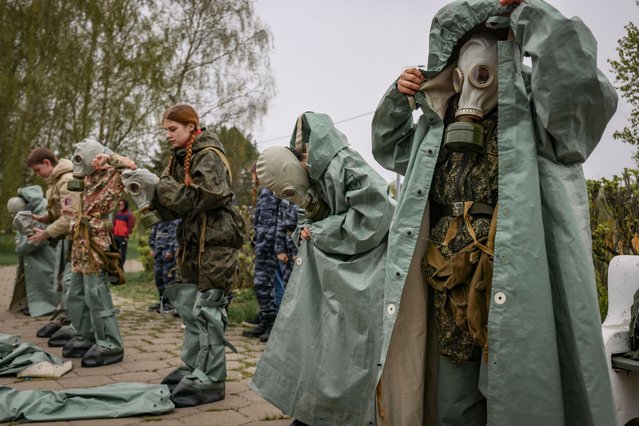
“Yunarmiya” (Young Army) All-Russia National Military Patriotic Social Movement Association members compete during the 7th military-patriotic game “Yunarmiya, forward!” dedicated to Victory Day at the Museum-reserve “Gorki Leninskie” in Gorki Leninskie, Russia, 29 April 2025. A total of 160 teams of Yunarmiya and military-patriotic detachments attended the games, each team consisting of seven people aged between 12 and 17 years old. The games are a continuation of the Soviet military-sports competitions for children and teenagers, “Zarnitsa” (since 1967) and “Orlyonok (Eaglet)” (since 1972). (Photo by Sergei Ilnitsky/EPA/EFE)

“Yunarmiya” (Young Army) All-Russia National Military Patriotic Social Movement Association members compete during the 7th military-patriotic game “Yunarmiya, forward!” dedicated to Victory Day at the Museum-reserve “Gorki Leninskie” in Gorki Leninskie, Russia, 29 April 2025. A total of 160 teams of Yunarmiya and military-patriotic detachments attended the games, each team consisting of seven people aged between 12 and 17 years old. The games are a continuation of the Soviet military-sports competitions for children and teenagers, “Zarnitsa” (since 1967) and “Orlyonok (Eaglet)” (since 1972). (Photo by Sergei Ilnitsky/EPA/EFE)
Details
04 Jun 2025 02:14:00
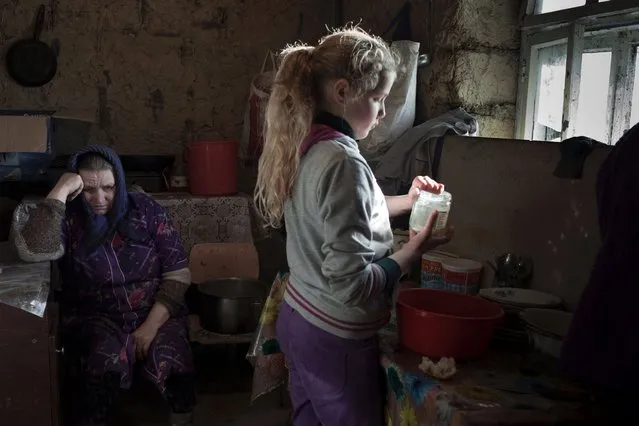
According to the U.S. government, Moldova, one of the poorest countries in Europe, depends on about $1.6 billion annually sent back from the roughly one million Moldovans who left for work in in Europe, Russia, and other former Soviet Bloc countries. Photographer Myriam Meloni went to Moldova to document what she refers to as “social orphans” – children whose parents have emigrated to another country in search of a job and a better future for their families. Here: Lulia is seen washing dishes in her grandmother's house, where she lives. (Photo by Myriam Meloni)

According to the U.S. government, Moldova, one of the poorest countries in Europe, depends on about $1.6 billion annually sent back from the roughly one million Moldovans who left for work in in Europe, Russia, and other former Soviet Bloc countries. Photographer Myriam Meloni went to Moldova to document what she refers to as “social orphans” – children whose parents have emigrated to another country in search of a job and a better future for their families. Here: Lulia is seen washing dishes in her grandmother's house, where she lives. (Photo by Myriam Meloni)
Details
12 Mar 2016 14:57:00