Loading...
Done
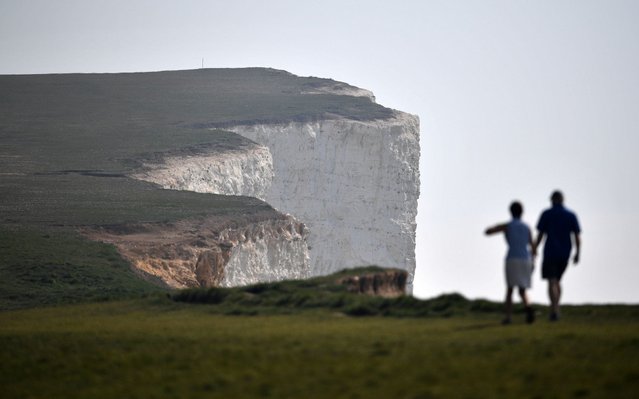
People walk along Beachy Head, close to Eastbourne on the south coast of England on April 12, 2020, as life in Britain continues over the Easter break, during the nationwide lockdown to combat the novel coronavirus pandemic. Britain's Prime Minister Boris Johnson was making “very good progress” on Saturday in his recovery in hospital from coronavirus, officials said, as the country's deaths toll from the disease approached the grim milestone of 10,000. (Photo by Ben Stansall/AFP Photo)

People walk along Beachy Head, close to Eastbourne on the south coast of England on April 12, 2020, as life in Britain continues over the Easter break, during the nationwide lockdown to combat the novel coronavirus pandemic. Britain's Prime Minister Boris Johnson was making “very good progress” on Saturday in his recovery in hospital from coronavirus, officials said, as the country's deaths toll from the disease approached the grim milestone of 10,000. (Photo by Ben Stansall/AFP Photo)
Details
05 May 2020 00:05:00
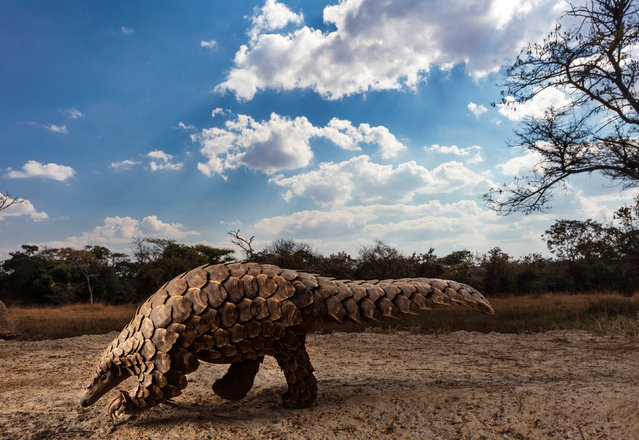
Pangolins in Crisis: Brent Stirton, South Africa; 1st place, Natural world and wildlife. “Pangolins are the world’s most illegally trafficked mammals, with an estimated one million trafficked to Asia in the last 10 years. Their scales are used in traditional Chinese and Vietnamese medicine, and their meat is sold as a high-priced delicacy. As a result, pangolins are listed as critically endangered and anyone who trades or consumes them is breaking the law. This body of work exposes the trade, while exploring aspects of illegality and celebrating the people who are trying to save these animals”. (Photo by Brent Stirton/Sony World Photography Awards 2020)

Pangolins in Crisis: Brent Stirton, South Africa; 1st place, Natural world and wildlife. “Pangolins are the world’s most illegally trafficked mammals, with an estimated one million trafficked to Asia in the last 10 years. Their scales are used in traditional Chinese and Vietnamese medicine, and their meat is sold as a high-priced delicacy. As a result, pangolins are listed as critically endangered and anyone who trades or consumes them is breaking the law. This body of work exposes the trade, while exploring aspects of illegality and celebrating the people who are trying to save these animals”. (Photo by Brent Stirton/Sony World Photography Awards 2020)
Details
11 Jun 2020 00:05:00
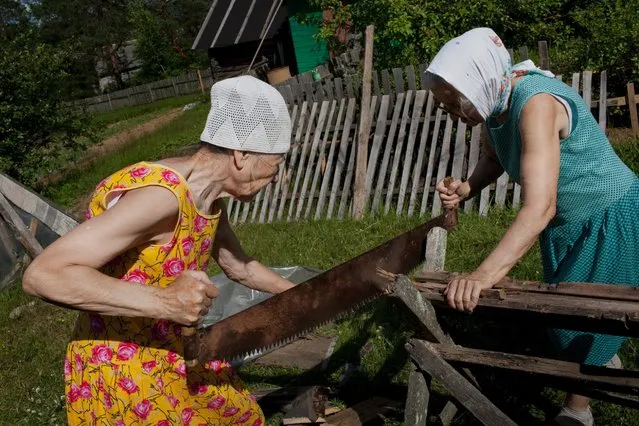
“Two-Handed Saw, 2014”. “Most of the neighbors have switched to power tools to run their households, the buzz of chain saws and weed-whackers overpowering the quieter sounds of country life, but my aunts hold on to the two-handed saw that's decades old, the sickle and scythe that need to be sharpened and polished after each use, the old axe that's becoming heavier each year. Each of these objects is familiar, holding memories of their brother, who succumbed to cancer a few years ago, of days before my grandfather lost his vision in the 50's, of busier days and longer futures”, Sablin told. (Photo by Nadia Sablin)

In northwest Russia, in a small village called Alekhovshchina, Nadia Sablin's aunts spend the warmer months together in the family home and live as the family has always lived, chopping wood to heat the house and making their own clothes. Sablin's book of photographs, “Aunties: The Seven Summers of Alevtina and Ludmila”, is published by Duke University Press. Here: “Two-Handed Saw, 2014”. (Photo by Nadia Sablin)
Details
25 Feb 2016 12:12:00
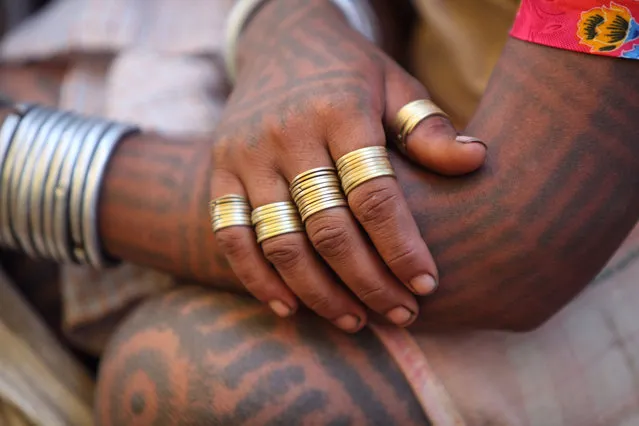
Once applied, the designs are washed using warm water and cow dung. Herbs are applied to promote faster healing. (Photo by Ronny Sen/WaterAid/The Guardian)

For more than 2,000 years, women from the Baiga tribe in the highland district of Dindori, in central India’s Madhya Pradesh state, have been tattooed. Sumintra, 25, from Bona village, has the markings across her forehead, legs and arms. The women who work as tattoo artists are knowledgable about the different types of designs and pigments preferred by various tribes, and their meanings are passed to them by their mothers. The tattooing ‘season’ begins with the approach of winter. (Photo by Ronny Sen/WaterAid/The Guardian)
Details
19 Aug 2017 08:48:00
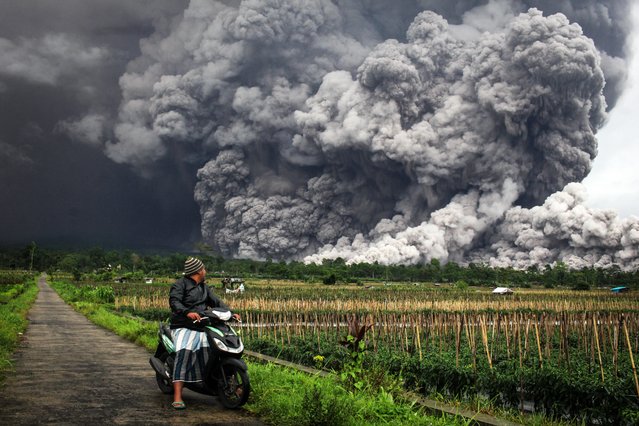
A man looks at a pyroclastic flow during the eruption of Mount Semeru in Lumajang, East Java, on November 19, 2025. (Photo by Agus Harianto/AFP Photo)

A man looks at a pyroclastic flow during the eruption of Mount Semeru in Lumajang, East Java, on November 19, 2025. (Photo by Agus Harianto/AFP Photo)
Details
11 Dec 2025 06:21:00
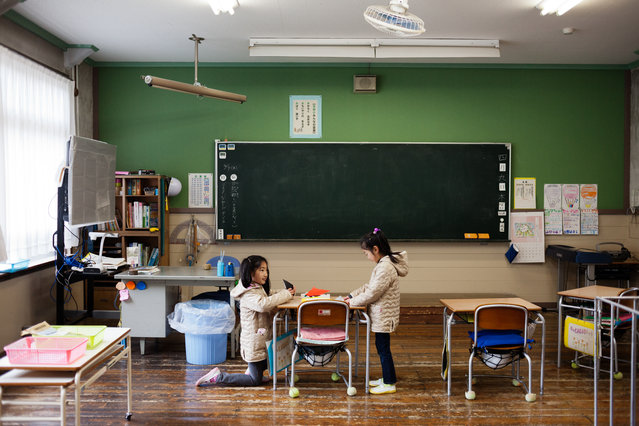
Students in Aone’s elementary school during break in between the class on April 9, 2015. The school has only six students, two of whom are from the same family. Similarly small schools can be found throughout Japan. (Photo by Ko Sasaki/The Washington Post)

Students in Aone’s elementary school during break in between the class on April 9, 2015. The school has only six students, two of whom are from the same family. Similarly small schools can be found throughout Japan. (Photo by Ko Sasaki/The Washington Post)
Details
21 Apr 2015 11:28:00
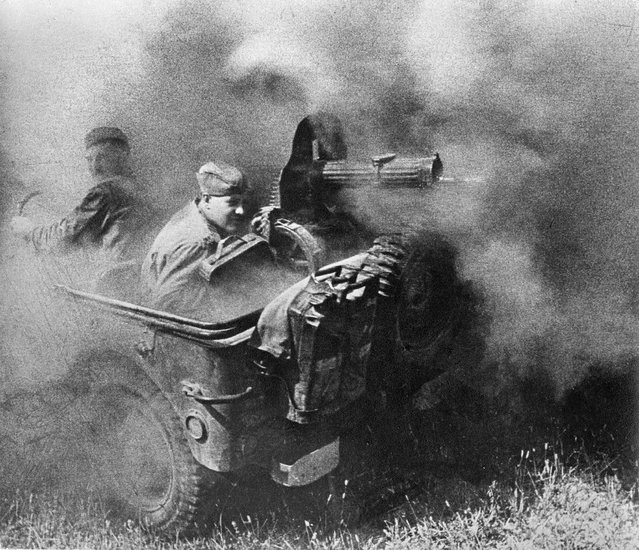
The Enemy, 1944. With the outbreak of world war two, photojournalism was enlisted in defence of Mother Russia. In this photo by Anatoli Egorov, who was wounded in action, corporal Stepan Vasiljevich Ovcharenko shoots at enemy troops with a machine gun. (Photo by Anatoli Egorov/Lumiere Brothers Center for Photography)

The Enemy, 1944. With the outbreak of world war two, photojournalism was enlisted in defence of Mother Russia. In this photo by Anatoli Egorov, who was wounded in action, corporal Stepan Vasiljevich Ovcharenko shoots at enemy troops with a machine gun. (Photo by Anatoli Egorov/Lumiere Brothers Center for Photography)
Details
18 Nov 2015 08:02:00
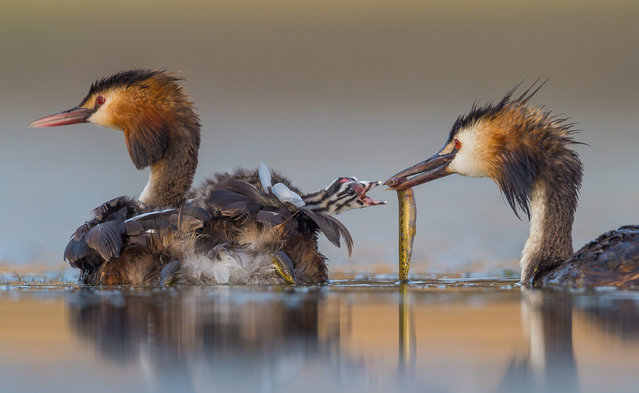
A great crested grebe feeds a chick sitting on its mother’s back on a lake in Cáceres, Spain. (Photo by Jose Luis Ruiz/Solent News & Photo Agency)

A great crested grebe feeds a chick sitting on its mother’s back on a lake in Cáceres, Spain. (Photo by Jose Luis Ruiz/Solent News & Photo Agency)
Details
03 Nov 2019 00:03:00