Loading...
Done
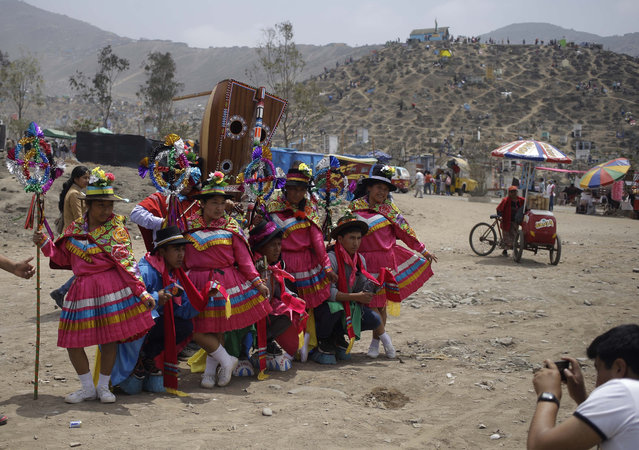
A group of dancers pose for a photo before their performance at the Nueva Esperanza cemetery in the shantytown Villa Maria, in Lima, Peru, Tuesday, November 1, 2016, as part of the Day of the Dead festivities. The holiday honors the deceased and coincides with All Saints Day, and All Souls Day celebrated on Nov. 1 and 2. Dancing, drinking alcohol, and eating with the deceased are part of Day of the Dead celebrations. (Photo by Martin Mejia/AP Photo)

A group of dancers pose for a photo before their performance at the Nueva Esperanza cemetery in the shantytown Villa Maria, in Lima, Peru, Tuesday, November 1, 2016, as part of the Day of the Dead festivities. The holiday honors the deceased and coincides with All Saints Day, and All Souls Day celebrated on Nov. 1 and 2. Dancing, drinking alcohol, and eating with the deceased are part of Day of the Dead celebrations. (Photo by Martin Mejia/AP Photo)
Details
02 Nov 2016 11:56:00
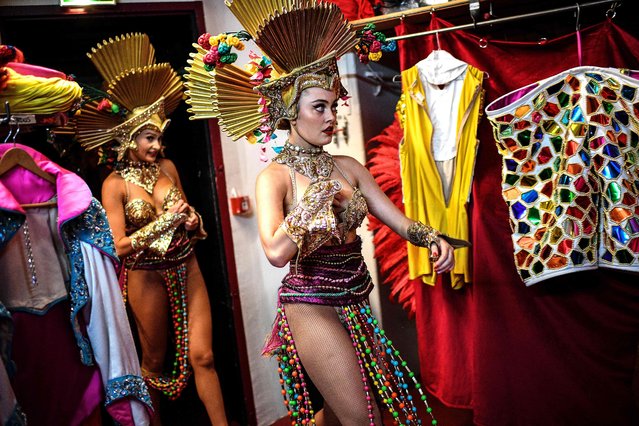
Dancers wait in the wings before performing in a full-dress rehearsal at the Moulin Rouge in Paris on September 8, 2021, two days ahead of the reopening of the cabaret following an 18-month closure amid the COVID-19 pandemic. Closed for a year and a half due to the pandemic, the Moulin Rouge and Le Lido, emblems of the crazy Parisian nights since 1889, are finally reopening. (Photo by Christophe Archambault/AFP Photo)

Dancers wait in the wings before performing in a full-dress rehearsal at the Moulin Rouge in Paris on September 8, 2021, two days ahead of the reopening of the cabaret following an 18-month closure amid the COVID-19 pandemic. Closed for a year and a half due to the pandemic, the Moulin Rouge and Le Lido, emblems of the crazy Parisian nights since 1889, are finally reopening. (Photo by Christophe Archambault/AFP Photo)
Details
10 Sep 2021 10:07:00
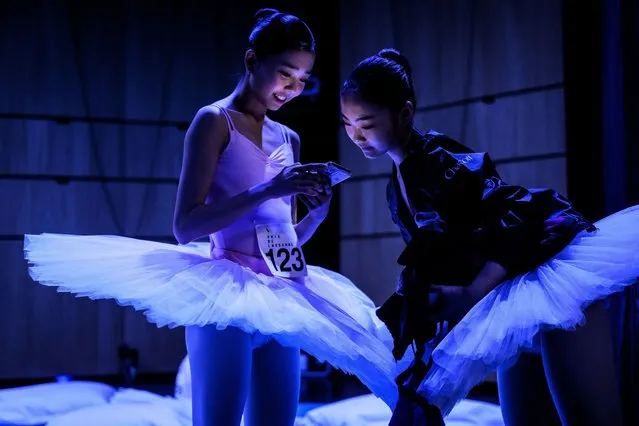
Yedam Kim (L) and Chaewon Kim, both of South Korea, look at a smartphone backstage after performing on stage during the first day of the 51st Prix de Lausanne at the Theatre de Beaulieu, in Lausanne, Switzerland, 30 January 2023. Launched in 1973, the Prix de Lausanne is an international dance competition for young dancers aged 15 to 18. Closing the six-day event, scholarships granting free tuition in a world-renowned dance school or dance company will be award to the best dancers out of 87 participants who come from 18 different countries this year. (Photo by Laurent Gillieron/EPA)

Yedam Kim (L) and Chaewon Kim, both of South Korea, look at a smartphone backstage after performing on stage during the first day of the 51st Prix de Lausanne at the Theatre de Beaulieu, in Lausanne, Switzerland, 30 January 2023. (Photo by Laurent Gillieron/EPA)
Details
01 Feb 2023 00:08:00
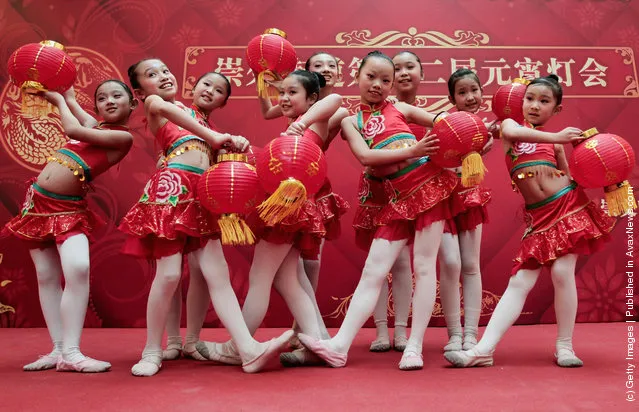
China Celebrates The Lantern Festival

Young dancers perform at a preview show for the Chinese Lantern Festival which falls on February 6 and traditionally marks the end of the Lunar New Year celebrations on February 3, 2012 in Beijing, China.The Lantern Festival also known as the Yuanxiao Festival or Shangyuan Festival in China.(Photo by Lintao Zhang/Getty Images)
Details
04 Feb 2012 13:02:00
A contestant performs in wooden Pujllay dance shoes known as “ojotas”, in a contest to elect the Queen of Great Power, in La Paz, Bolivia, Friday, May 24, 2019. (Photo by Juan Karita/AP Photo)

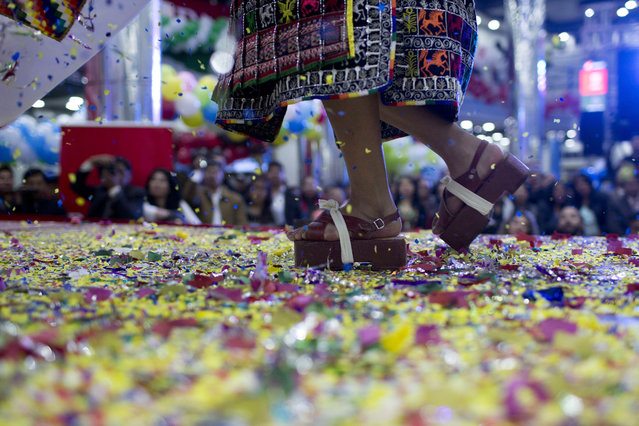
A contestant performs in wooden Pujllay dance shoes known as “ojotas”, in a contest to elect the Queen of Great Power, in La Paz, Bolivia, Friday, May 24, 2019. The largest religious festival in the Andes choses its queen in a tight contest to head the Festival of the Lord Jesus of the Great Power, mobilizing thousands of dancers and more than 4,000 musicians into the streets of La Paz. (Photo by Juan Karita/AP Photo)
Details
27 May 2019 00:01:00
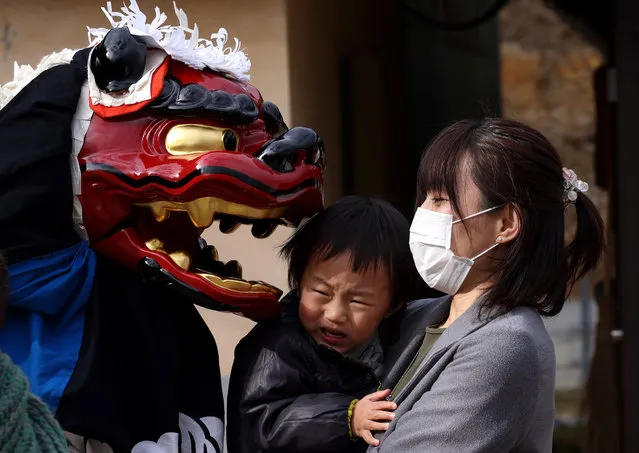
A performer wearing a lion mask performs the Ise Daikagura lion dance at the remote village of Yamanawa on February 08, 2021 in Ryuo, Japan. Ise Daikagura is a group of traditional Lion Dance performers who pray in front of farmers houses and businesses for good grain harvests and disease-free lives. Performers play sacred music using drums and flutes with two lion mask dancers. A lion mask is considered a symbol of God, who enters the house and performs in front of the Shinto God, a statue placed inside the house, mostly in the kitchen. These prayers are called “Kamodo Barai”. After the prayers, they are gifted with money, rice, sake and Japanese sweets from the householders. A group can travel for more than one hundred days to thousands of households and businesses throughout rural-villages in western Japan, and pray to those who are unable to visit the country’s most sacred shrine, the Grand Ise Shrine in Mie Prefecture. The group started its performance in the Edo era between 1603 to 1868 according to Japanese history. The Japanese government designated it as an important folk cultural national property in 1981. (Photo by Buddhika Weerasinghe/Getty Images)

A performer wearing a lion mask performs the Ise Daikagura lion dance at the remote village of Yamanawa on February 08, 2021 in Ryuo, Japan. Ise Daikagura is a group of traditional Lion Dance performers who pray in front of farmers houses and businesses for good grain harvests and disease-free lives. (Photo by Buddhika Weerasinghe/Getty Images)
Details
18 Feb 2021 09:27:00
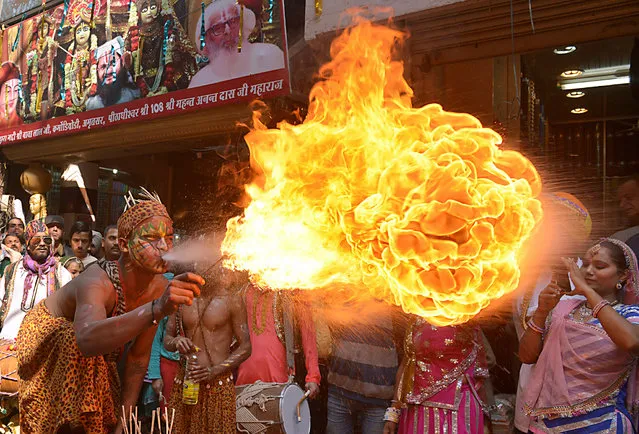
Indian dancers perform a fire breathing act during a procession to mark the 661st anniversary of the birth of Hindu guru Bawa Lal Dayal Maharaj in Amritsar on February 9, 2016. Bawa Lal Dayal Maharaj, a popular leader of his time, is especially revered by devotees of a temple in the town of Dhyanpur, some 45 kms north of Amritsar. (Photo by Narinder Nanu/AFP Photo)

Indian dancers perform a fire breathing act during a procession to mark the 661st anniversary of the birth of Hindu guru Bawa Lal Dayal Maharaj in Amritsar on February 9, 2016. Bawa Lal Dayal Maharaj, a popular leader of his time, is especially revered by devotees of a temple in the town of Dhyanpur, some 45 kms north of Amritsar. (Photo by Narinder Nanu/AFP Photo)
Details
13 Feb 2016 09:02:00
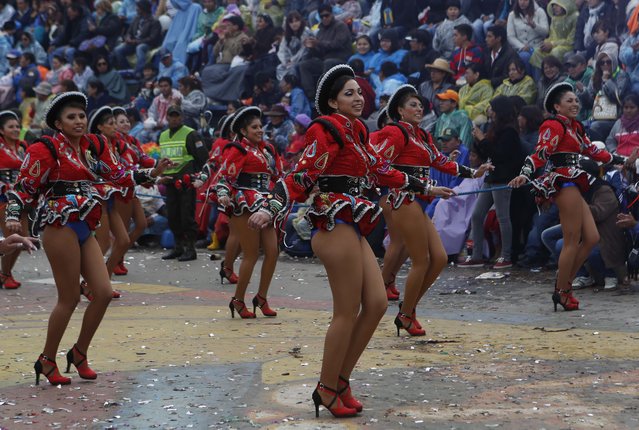
Caporal dancers perform during the carnival celebrations in Oruro, Bolivia, Saturday February 14, 2015. The Carnival of Oruro which is a religious festival dating back more than 2000 years in an ongoing pagan-catholic blend of religious practice in the region, and is one of UNESCO's Masterpieces of the Oral and Intangible Heritage of Humanity. (Photo by Juan Karita/AP Photo)

Caporal dancers perform during the carnival celebrations in Oruro, Bolivia, Saturday February 14, 2015. The Carnival of Oruro which is a religious festival dating back more than 2000 years in an ongoing pagan-catholic blend of religious practice in the region, and is one of UNESCO's Masterpieces of the Oral and Intangible Heritage of Humanity. (Photo by Juan Karita/AP Photo)
Details
17 Feb 2015 12:25:00