Loading...
Done
Ben Green, of St. Augustine, flies into the pool on his inflatable alligator to find the hidden lizard at the bottom of the pool in the “Evading Arrest Obstacle Course” during the inaugural Florida Man Games, Saturday, February 24, 2024, at Francis Field in St. Augustine, Fla. (Photo by Corey Perrine/The Florida Times-Union via AP Photo)

Ben Green, of St. Augustine, flies into the pool on his inflatable alligator to find the hidden lizard at the bottom of the pool in the “Evading Arrest Obstacle Course” during the inaugural Florida Man Games, Saturday, February 24, 2024, at Francis Field in St. Augustine, Fla. (Photo by Corey Perrine/The Florida Times-Union via AP Photo)
Details
05 Mar 2024 08:24:00
Silver Medalists Thomas Daley and Noah Williams of Team Great Britain celebrate as they pose following the Diving medal ceremony after the Men’s Synchronised 10m Platform Final on day three of the Olympic Games Paris 2024 at Aquatics Centre on July 29, 2024 in Paris, France. (Photo by Marc Aspland/The Times)

Silver Medalists Thomas Daley and Noah Williams of Team Great Britain celebrate as they pose following the Diving medal ceremony after the Men’s Synchronised 10m Platform Final on day three of the Olympic Games Paris 2024 at Aquatics Centre on July 29, 2024 in Paris, France. (Photo by Marc Aspland/The Times)
Details
07 Aug 2024 04:29:00
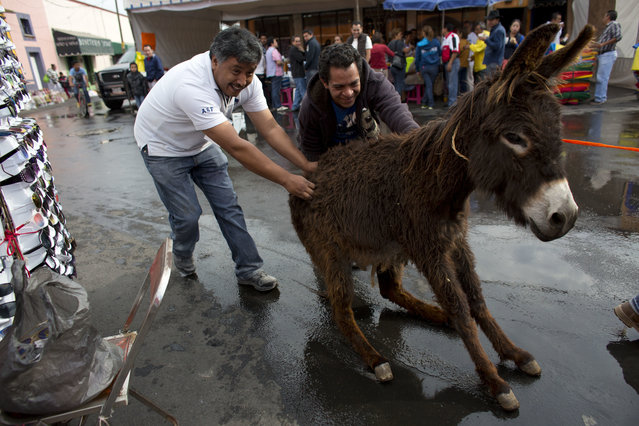
In this May 1, 2016 photo, a reluctant donkey is alternately pushed and pulled and enticed with carrots toward town hall in order to be dressed for the costume competition at the annual donkey festival in Otumba, Mexico state, Mexico. Otumba was an important donkey market during Spanish colonial times, standing at the crossroads of major roads leading to Mexico City, where the beasts pulled heavy loads and carried travelers. Today, however, farmers use tractors and pickup trucks, and the donkey population is in decline. (Photo by Rebecca Blackwell/AP Photo)

In this May 1, 2016 photo, a reluctant donkey is alternately pushed and pulled and enticed with carrots toward town hall in order to be dressed for the costume competition at the annual donkey festival in Otumba, Mexico state, Mexico. Otumba was an important donkey market during Spanish colonial times, standing at the crossroads of major roads leading to Mexico City, where the beasts pulled heavy loads and carried travelers. Today, however, farmers use tractors and pickup trucks, and the donkey population is in decline. (Photo by Rebecca Blackwell/AP Photo)
Details
04 May 2016 11:55:00
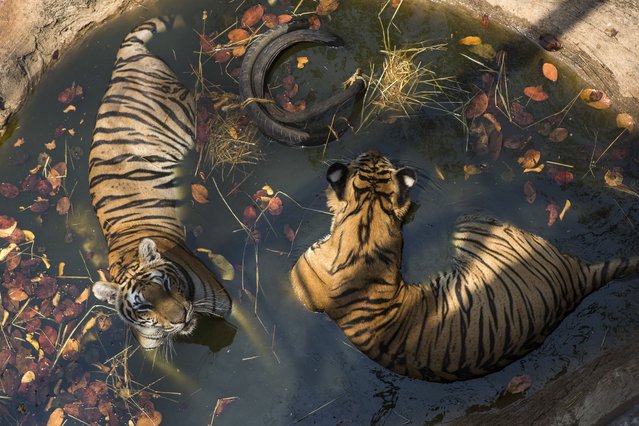
A pair of tigers soak in a shallow pool at Tiger Temple, a Buddhist monastery where paying visitors can interact with young adult tigers, in Kanchanaburi, Thailand, March 16, 2016. The attraction, near the Myanmar border, started collecting the animals 15 years ago when villagers brought an injured tiger cub to the local abbot, who agreed to care for it. Today there are nearly 150 tigers at the monastery. (Photo by Amanda Mustard/The New York Times)

A pair of tigers soak in a shallow pool at Tiger Temple, a Buddhist monastery where paying visitors can interact with young adult tigers, in Kanchanaburi, Thailand, March 16, 2016. The attraction, near the Myanmar border, started collecting the animals 15 years ago when villagers brought an injured tiger cub to the local abbot, who agreed to care for it. Today there are nearly 150 tigers at the monastery. (Photo by Amanda Mustard/The New York Times)
Details
04 May 2016 12:08:00
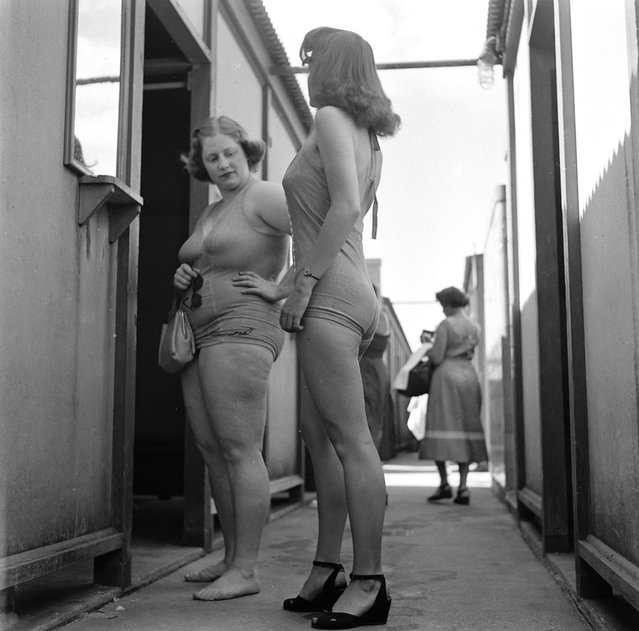
Dorothy Bradley (left), photographed for LIFE magazine article on obesity, 1949. (Photo by Martha Holmes/Time & Life Pictures)

“The most serious health problem in the U.S. today is obesity.” Sounds familiar, doesn’t it? But that pronouncement about obesity’s primacy in the hierarchy of national health problems is not new. Rather, it’s the opening line to a remarkable article published 60 years ago in LIFE magazine. This photographs made by Martha Holmes to illustrate that March 1954 article, titled “The Plague of Overweight.” Photo: Dorothy Bradley (left), photographed for LIFE magazine article on obesity, 1949. (Photo by Martha Holmes/Time & Life Pictures)
Details
11 Apr 2013 11:42:00
Tsukimi Ayano steps out of her house in the village of Nagoro on Shikoku Island in southern Japan February 24, 2015. (Photo by Thomas Peter/Reuters)

Tsukimi Ayano steps out of her house in the village of Nagoro on Shikoku Island in southern Japan February 24, 2015. Tsukimi Ayano made her first scarecrow 13 years ago to frighten off birds pecking at seeds in her garden. The life-sized straw doll resembled her father, so she made more. Today, the tiny village of Nagoro in southern Japan is teeming with Ayano's hand-sewn creations, frozen in time for a tableau that captures the motions of everyday life. (Photo by Thomas Peter/Reuters)
Details
17 Mar 2015 12:38:00
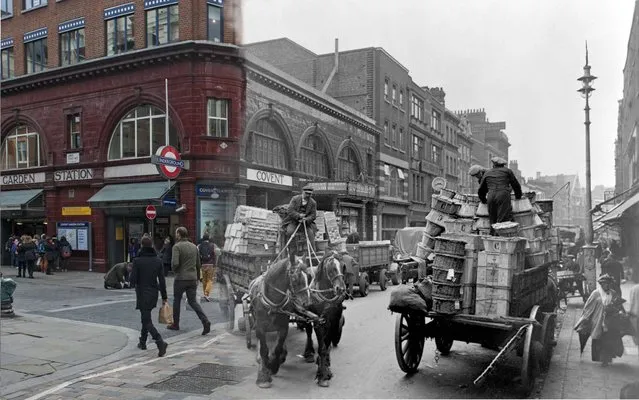
A street scene in London’s Covent Garden with the underground station and a horse and cart in the background in c.1930 and the same street in 2014. (Photo by Museum of London/Streetmuseum app)

“For most Londoners, the most common view they enjoy as they trudge to work is the back of another commuter's head. But now, thanks to the Streetmuseum app, anyone traipsing through the capital's streets can step back in time to see what London looked like in the 19th and 20th century compared with today – all in the same image”. – Joe Krishnan via The Independent. Photo: A street scene in London’s Covent Garden with the underground station and a horse and cart in the background in c.1930 and the same street in 2014. (Photo by Museum of London/Streetmuseum app)
Details
27 Feb 2014 06:48:00
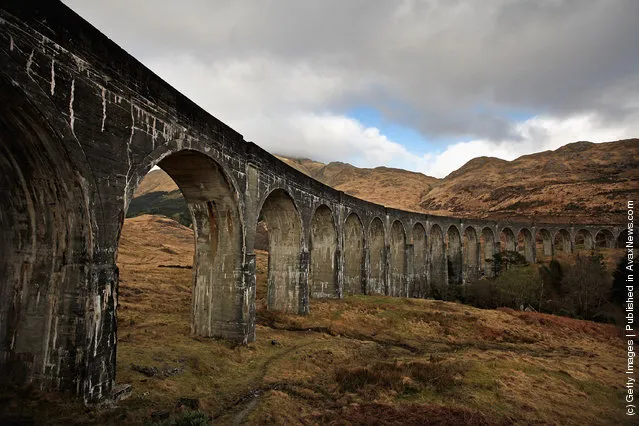
A view of the Glenfinnan Viaduct

“Glenfinnan Viaduct is a railway viaduct on the West Highland Line in Glenfinnan, Lochaber, Highland, Scotland. It was built between 1897 and 1901. Located at the top of Loch Shiel in the West Highlands of Scotland, the viaduct overlooks the Glenfinnan Monument and the waters of Loch Shiel”. – Wikipedia

Photo: A view of the Glenfinnan Viaduct on March 30, 2012 in Glenfinnan, Scotland. Built by Sir Robert McAlpine, the single track viaduct that is made up of 21 arches is considered to have been one of the largest engineering projects of its time. Today, it is still used by ScotRail and was recently used for scenes in three of the Harry Potter films. (Photo by Jeff J. Mitchell/Getty Images)
Details
31 Mar 2012 09:21:00