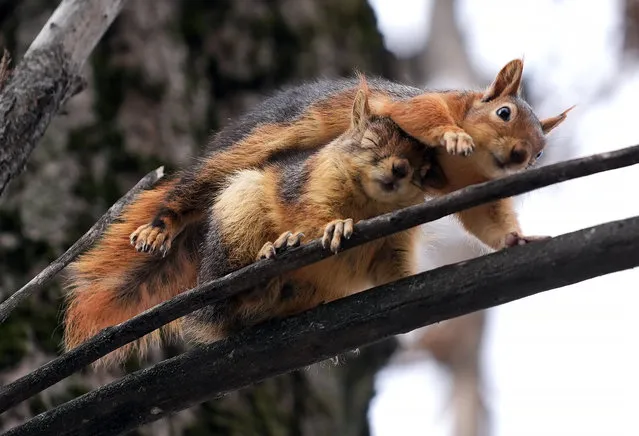
Squirrels are seen on a tree branch at a park as temperatures rise with the arrival of spring season in Ankara, Turkiye on March 27, 2024. (Photo by Evrim Aydin/Anadolu via Getty Images)
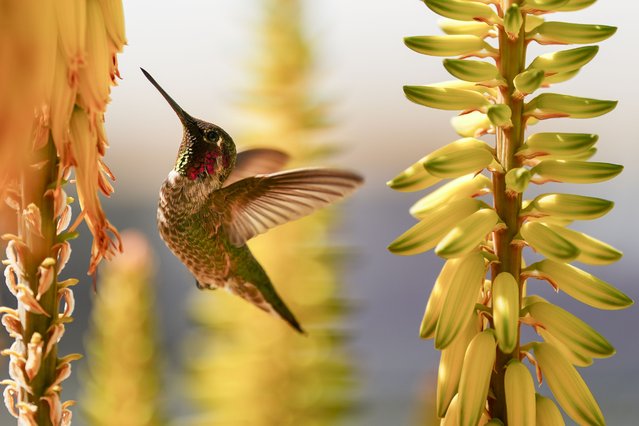
A hummingbird drinks from a flower in a garden on the outfield lawn before a spring training baseball game between the Kansas City Royals and the Athletics, Monday, February 24, 2025, in Surprise, Ariz. (Photo by Lindsey Wasson/AP Photo)
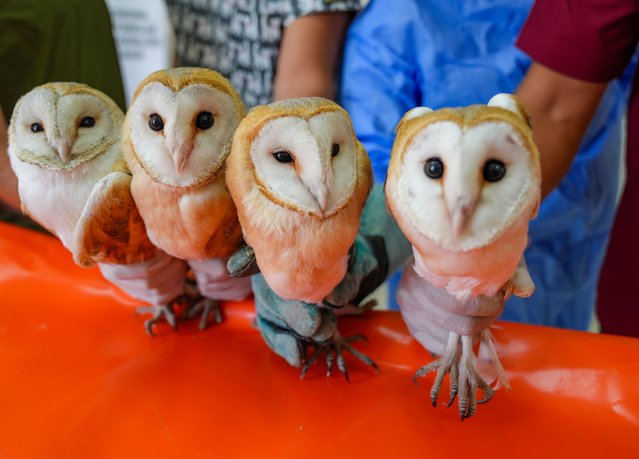
Four orphan barn owl chicks were found weak from hunger and thirst after their mother's death, are under treatment at the Dicle Wildlife Rescue and Rehabilitation Center before being released back into their natural habitat on September 23, 2025, in Diyarbakir, Turkiye. (Photo by Bestami Bodruk/Anadolu via Getty Images)
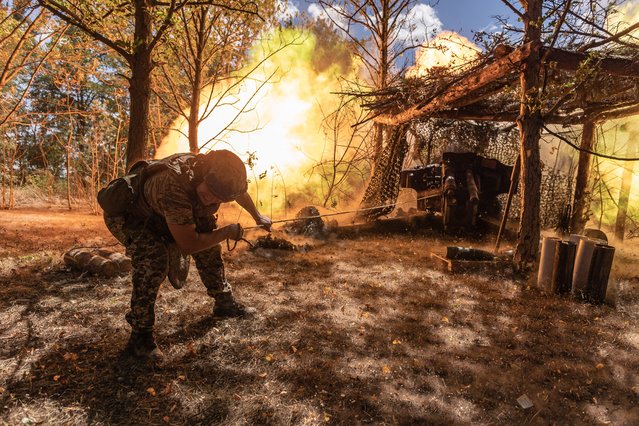
Ukrainian territorial defence soldiers from the Donetsk Oblast fire D-20 artillery in the direction of Toretsk, Ukraine, 24 July 2025. (Photo by Diego Herrera Carcedo/Anadolu via Getty Images)
Jack, a Lurcher from Dogs Trust Salisbury, walks past a window display of models in a Dogs Trust shop window in Salisbury, as part of a campaign to discourage the impulse buying of dogs ahead of Valentine's Day, on February 10, 2014. (Photo by Matt Alexander/PA Wire)
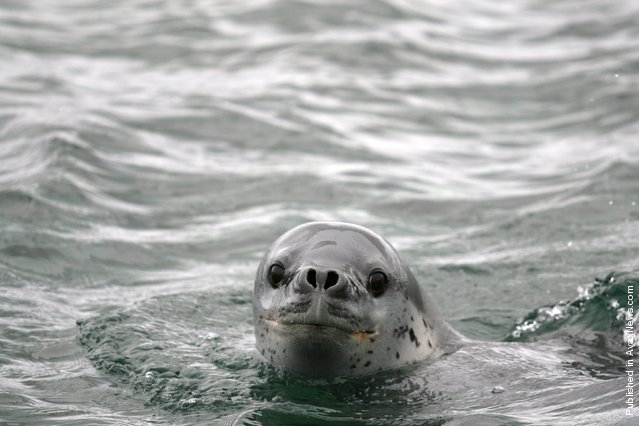
“The leopard seal (Hydrurga leptonyx), also referred to as the sea leopard, is the second largest species of seal in the Antarctic (after the southern elephant seal). It is most common in the southern hemisphere along the coast of Antarctica and on most sub-Antarctic islands, but can also be found on the coasts of southern Australia, Tasmania, South Africa, New Zealand, Lord Howe Island, Tierra del Fuego, the Cook Islands, and the Atlantic coast of South America. It can live twenty-six years, possibly more. Orcas and large sharks are the only natural predators of leopard seals”. – Wikipedia