Loading...
Done
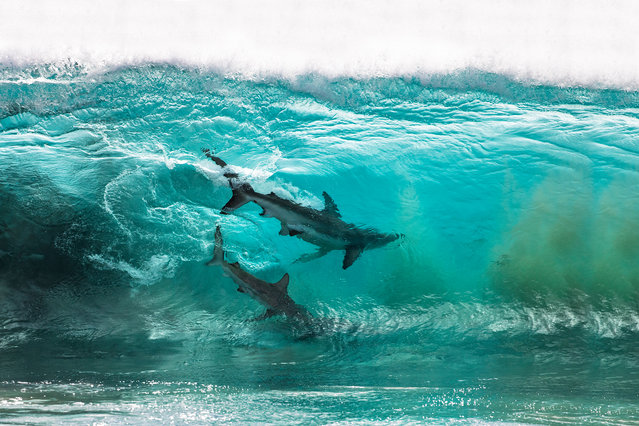
Two copper sharks ride the waves in Red Bluff Beach, Australia on July, 2020. Professional photographer Sean Scott, 43, from Burleigh Heads, Australia, caught the stunning snap. (Photo by Sean Scott/MediaDrumImages/@seanscottphotography)

Two copper sharks ride the waves in Red Bluff Beach, Australia on July, 2020. Professional photographer Sean Scott, 43, from Burleigh Heads, Australia, caught the stunning snap. (Photo by Sean Scott/MediaDrumImages/@seanscottphotography)
Details
26 Jul 2020 00:05:00
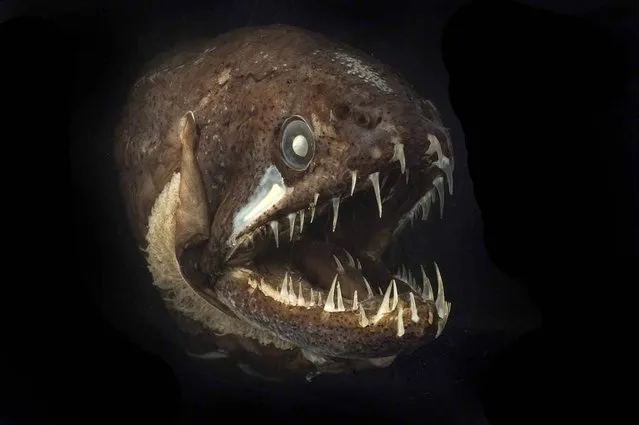
Imagine living in the sea where it is permanently dark, cold, and food is hard to find. For many animals at depth, it may be weeks to months between meals. If you find something to eat, you have to hang on to it

Imagine living in the sea where it is permanently dark, cold, and food is hard to find. For many animals at depth, it may be weeks to months between meals. If you find something to eat, you have to hang on to it. This is why so many deep-sea fishes have lots of big teeth. This dragonfish, spotted off the coast of Australia, even has teeth on its tongue. They would be terrifying animals ... if they weren’t the size of a banana. (Photo by Julian Finn/Museum Victoria)
Details
21 May 2012 12:14:00
Details
11 May 2012 03:39:00
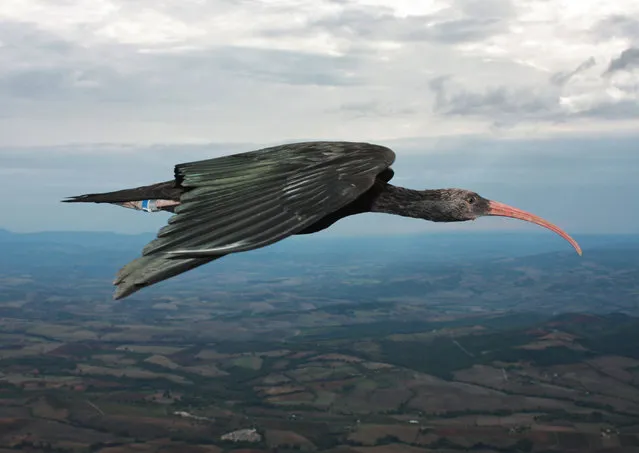
In this undated photo made available by journal Nature on January 15, 2014, a northern bald ibis (Geronticus eremita) flies in Tuscany, Italy. A new study released Wednesday, January 15, 2014 says the birds choreograph the flapping of their wings, getting a boost from an updraft of air in the wake of the flapping wings by flying behind the first bird and off to the side. When a flock of birds take advantage of these aerodynamics, they form a V. (Photo by Markus Unsöld/AP Photo)

In this undated photo made available by journal Nature on January 15, 2014, a northern bald ibis (Geronticus eremita) flies in Tuscany, Italy. A new study released Wednesday, January 15, 2014 says the birds choreograph the flapping of their wings, getting a boost from an updraft of air in the wake of the flapping wings by flying behind the first bird and off to the side. When a flock of birds take advantage of these aerodynamics, they form a V. (Photo by Markus Unsöld/AP Photo)
Details
18 Jan 2014 13:54:00
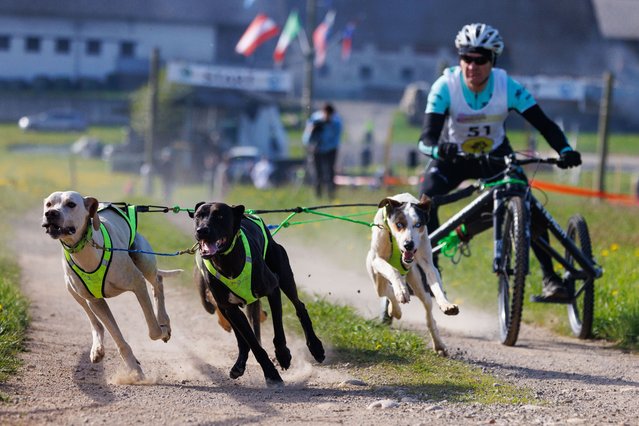
A competitor in the carting category of the Henrik Sečnik dog mushing race in Hraše, Slovenia on April 8, 2024. Over 100 dogs and their owners from Slovenia and abroad competed in the 10th edition of this international race. (Photo by Luka Dakskobler/SOPA Images/Rex Features/Shutterstock)

A competitor in the carting category of the Henrik Sečnik dog mushing race in Hraše, Slovenia on April 8, 2024. Over 100 dogs and their owners from Slovenia and abroad competed in the 10th edition of this international race. (Photo by Luka Dakskobler/SOPA Images/Rex Features/Shutterstock)
Details
16 Aug 2025 03:22:00
Participants from a North Korea military band perform during the Spasskaya Tower international military music festival in Red Square in Moscow, Russia, Friday, August 23, 2019. (Photo by Alexander Zemlianichenko/AP Photo)

Participants from a North Korea military band perform during the Spasskaya Tower international military music festival in Red Square in Moscow, Russia, Friday, August 23, 2019. (Photo by Alexander Zemlianichenko/AP Photo)
Details
16 Jan 2020 00:05:00
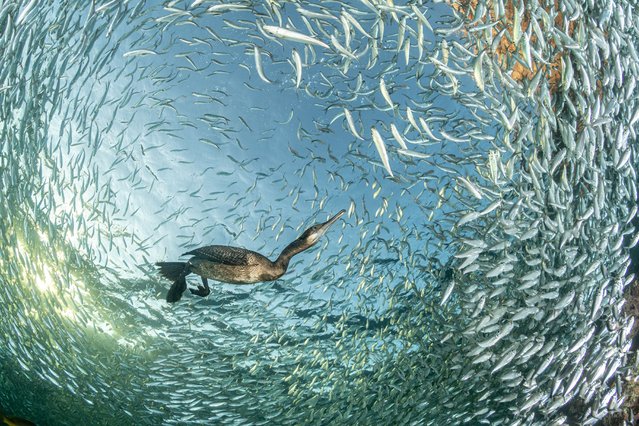
Entitled Feasting at Sunset, this photo of a Brandt’s cormorant among pilchards was the winner of the Birds in the Environment category in the 2025 Bird Photographer of the Year competition. (Photo by Franco Banfi/The Guardian)

Entitled Feasting at Sunset, this photo of a Brandt’s cormorant among pilchards was the winner of the Birds in the Environment category in the 2025 Bird Photographer of the Year competition. (Photo by Franco Banfi/The Guardian)
Details
07 Dec 2025 06:27:00
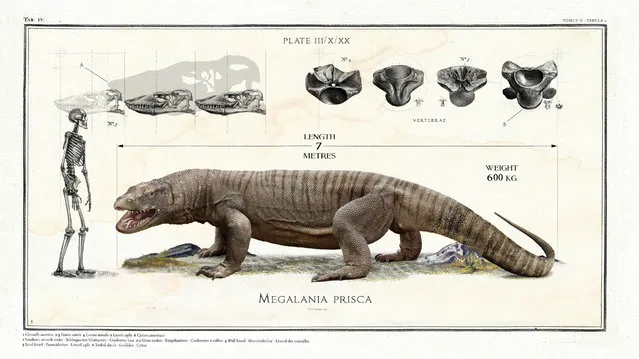
Fossil records indicate that this early lizard, Megalina prisca, was a whopping seven metres in length. (Photo by Sky TV/The Guardian)

Fossil records indicate that this early lizard, Megalania (Megalania prisca or Varanus priscus), was a whopping seven metres in length. They were part of a megafaunal assemblage that inhabited southern Australia during the Pleistocene. The youngest fossil remains date to around 50,000 years ago. The first aboriginal settlers of Australia might have encountered them and been a factor in their extinction. (Photo by Sky TV/The Guardian)
Details
12 Jun 2018 00:05:00