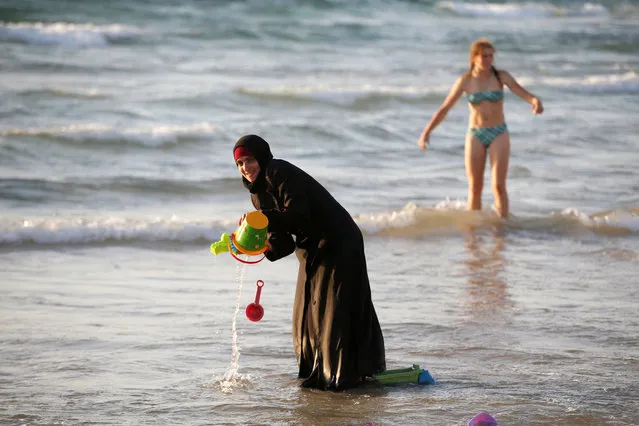
A Muslim woman wearing a Hijab stands in the waters in the Mediterranean Sea as an Israeli stands nearby on the beach in Tel Aviv, Israel August 21, 2016. (Photo by Baz Ratner/Reuters)
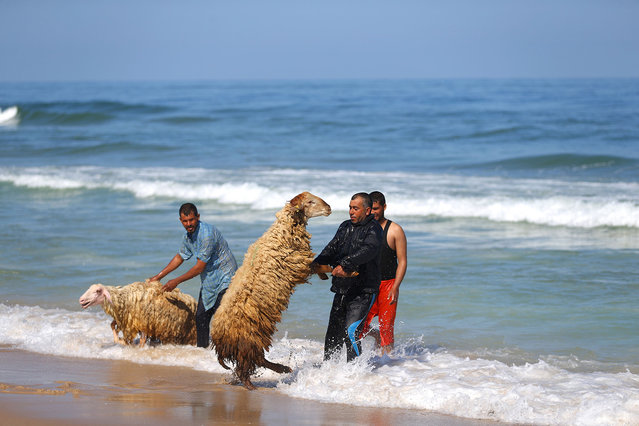
Palestinian bedouin shepherds pull their lambs into the water to wash them, in Gaza City, on April 29, 2016. Every year before the beginning of the summer, shepherds wash their herds in the sea. (Photo by Mohammed Abed/AFP Photo)
F/A-18 fighter jet takes off from the USS Harry S. Truman aircraft carrier in the eastern Mediterranean Sea June 13, 2016. (Photo by Baz Ratner/Reuters)
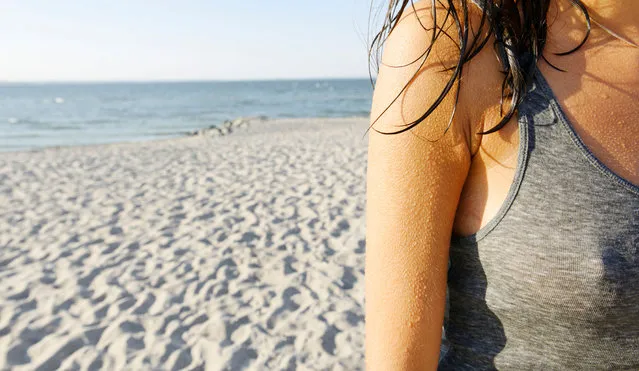
Young woman, 20+, with goose bumps, standing on the beach, Niendorf at the Baltic Sea, Schleswig-Holstein, Germany, Europe on September 1, 2016. (Photo by Alamy Stock Photo)
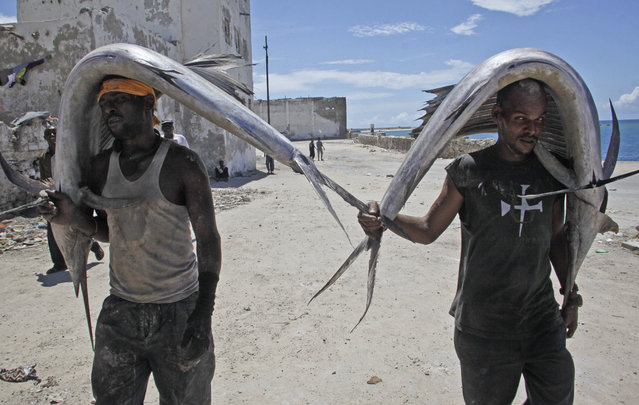
Somali men carry swordfish from the sea to a market in the capital Mogadishu, Somalia Thursday, April 23, 2015. (Photo by Farah Abdi Warsameh/AP Photo)
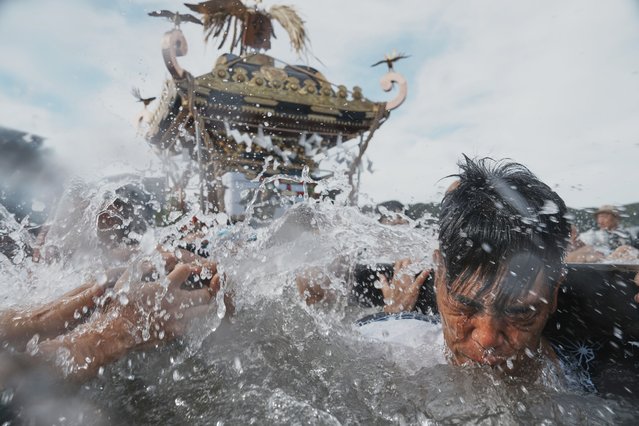
Participants carry a portable shrine, or mikoshi, into the sea during a purification rite at the annual Kurihama Sumiyoshi Shrine Festival at Kurihama, Yokosuka city, south of Tokyo Sunday, July 27, 2025. (Photo by Eugene Hoshiko/AP Photo)
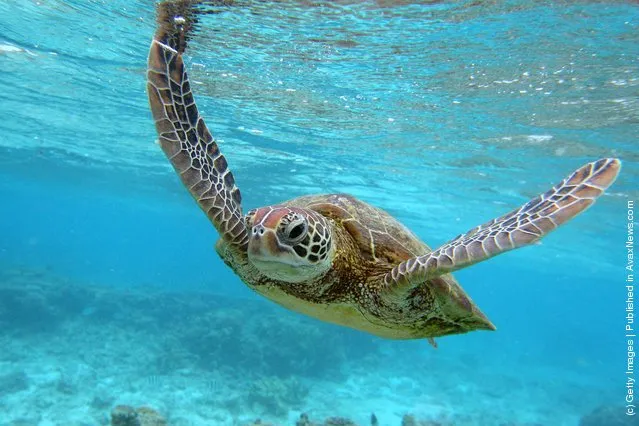
“The Great Barrier Reef is one of the most important sea turtle habitats in the world, with Lady Elliot Island being a key part of that habitat. Every year between November and March the green and loggerhead turtles lumber up the same beach on which they were born more than 50 years ago. These turtles nest on Lady Elliot Island up to nine times in a season, laying between 80 and 120 eggs per clutch. About eight weeks later, young hatchlings leave their nests and head towards the ocean (January to April)”. – Wikipedia
Photo: A Hawksbill sea turtle is seen swimming on January 15, 2012 in Lady Elliot Island, Australia. (Photo by Mark Kolbe/Getty Images)
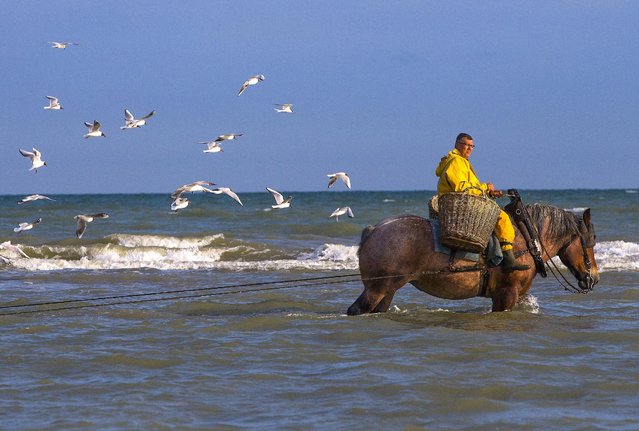
A Belgian shrimp fisherman rides a carthorse to haul a net out in the sea to catch shrimps during low tide at the coastal town of Oostduinkerke, Belgium July 3, 2015. At the end of each fishing session, the fishermen and their mounts leave the water to empty the net's contents into two wicker baskets fixed on each side of the horse. This traditional method of catching shrimps along the North Sea coast, which dates back to some 500 years, attracts tourists every summer. In 2013, Unesco recognized shrimp fishing on horseback as an intangible cultural heritage. (Photo by Yves Herman/Reuters)