Loading...
Done
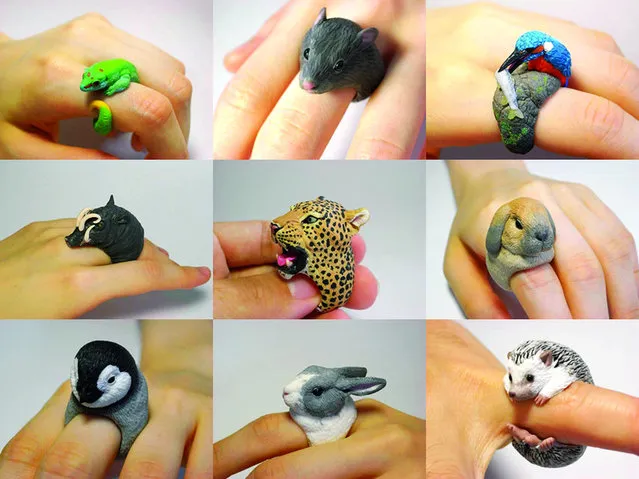
Animal Cling Rings By Jiro Miura

These Animal Cling Rings are by Japanese artist Jiro Miura, working under brand name Count Blue. Miura creates these exquisitely detailed animal rings as well as figurines; his designs have also been used to create mass produced phone plugs and rings. It's a lucky artist who sees his work become so popular.
Details
03 Apr 2014 11:34:00
Sete Tamang, 20, avalanche survivor, waits to receive the bodies of his colleagues outside a morgue at Teaching Hospital in Katmandu, Nepal, Monday, October 20, 2014. Nepal was wrapping up rescue operations in its northern mountains Monday, saying all the hikers believed to have been stranded on a trekking route by a series of deadly blizzards are now safe. (Photo by Niranjan Shrestha/AP Photo)

Sete Tamang, 20, avalanche survivor, waits to receive the bodies of his colleagues outside a morgue at Teaching Hospital in Katmandu, Nepal, Monday, October 20, 2014. Nepal was wrapping up rescue operations in its northern mountains Monday, saying all the hikers believed to have been stranded on a trekking route by a series of deadly blizzards are now safe. (Photo by Niranjan Shrestha/AP Photo)
Details
20 Oct 2014 08:51:00


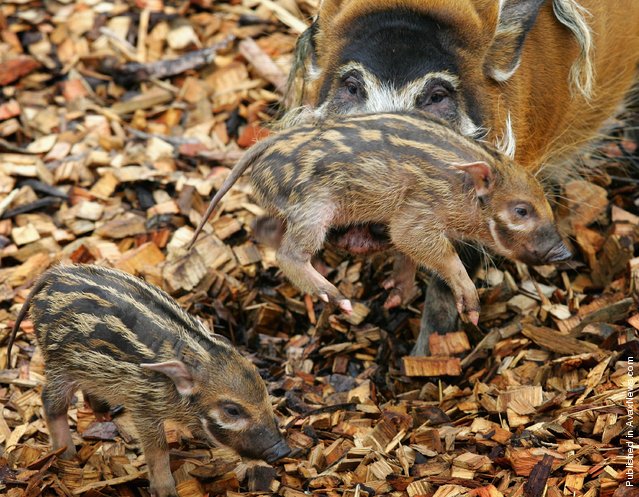
“The Red River Hog (Potamochoerus porcus), also known as the Bush Pig (but not to be confused with P. larvatus, common name “Bushpig”), is a wild member of the pig family living in Africa, with most of its distribution in the Guinean and Congolian forests. It is rarely seen away from rainforests, and generally prefers areas near rivers or swamps.

Red River Hogs eat grass, berries, roots, insects, molluscs, small vertebrates and carrion. They are capable of causing damage to plantations. Red River Hogs typically live in herds of 6-20 members led by a dominant boar. Sows rear 3-6 piglets at a time.”

Photo: Two 17 day old red river hoglet twins forage for food next to their mother Bahiti at London Zoo on August 23, 2007 in London, England. Red River hoglets inhabit the forests and swamps of West and Central Africa. The recent additions to the London Zoo pig pen have been eagerly awaited by zoo keepers. (Photo by Chris Jackson/Getty Images)

Details
18 Mar 2011 15:15:00
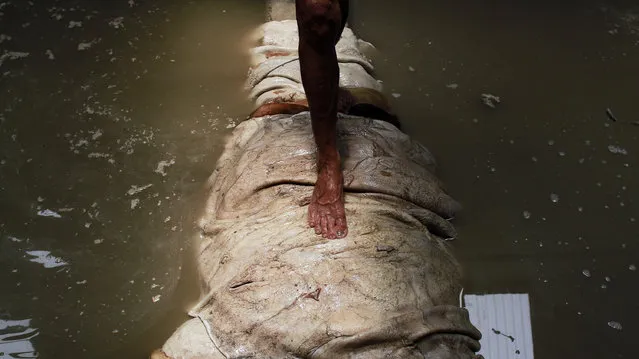
A man walks across a vat of water used to wash the hide. (Photo by Rezza Estily/JG Photo)

Sukaregang in Garut district, West Java, has long been a bustling center for Indonesia's leather trade, with some shops producing and selling various goods – including bags, shoes and jackets – since the 1940s. The industrial area is also a major supplier for high-end brands from across the globe, catering to the fashion, auto and motor-sports industry. Here: a man walks across a vat of water used to wash the hide. (Photo by Rezza Estily/JG Photo)
Details
31 Mar 2015 13:29:00
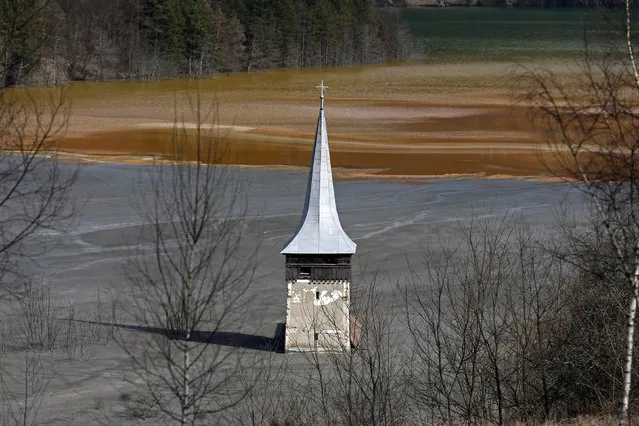
The old church of Geamana village is seen partially submerged by polluted water tainted with cyanide and other chemicals near Rosia Montana, central Romania, March 24, 2014. (Photo by Bogdan Cristel/Reuters)

The old church of Geamana village is seen partially submerged by polluted water tainted with cyanide and other chemicals near Rosia Montana, central Romania, March 24, 2014. (Photo by Bogdan Cristel/Reuters)
Details
23 Sep 2014 12:48:00
Pod of dolphins surf effortlessly through the waves in the wild traveling at speeds up to 20 mph

Pod of dolphins surf effortlessly through the waves in the wild traveling at speeds up to 20 mph. (Photo by Greg Huglin)
Details
01 May 2012 11:43:00
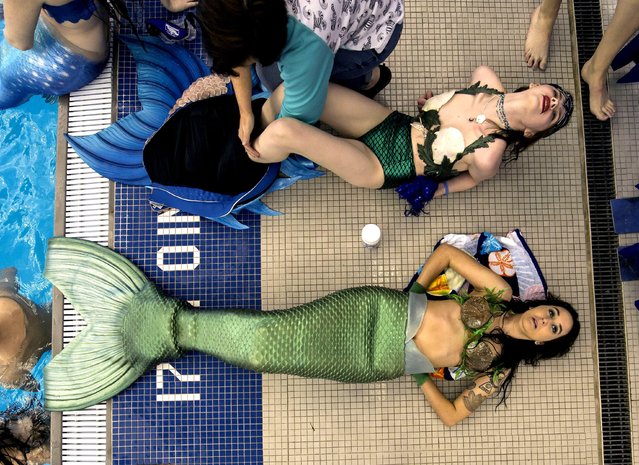
Merfolk gather at MerMania 2017, the world's largest gathering of amateur and professional mermaids and mermen in North Carloina, USA on January 21, 2017. (Photo by Brian Cahn/ZUMA Wire/Rex Features/Shutterstock)

Merfolk gather at MerMania 2017, the world's largest gathering of amateur and professional mermaids and mermen in North Carloina, USA on January 21, 2017. (Photo by Brian Cahn/ZUMA Wire/Rex Features/Shutterstock)
Details
24 Jan 2017 11:34:00
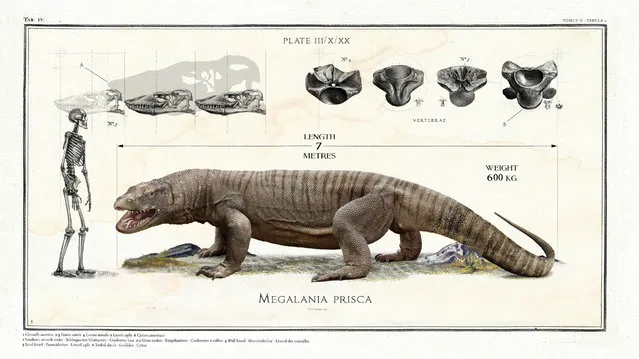
Fossil records indicate that this early lizard, Megalina prisca, was a whopping seven metres in length. (Photo by Sky TV/The Guardian)

Fossil records indicate that this early lizard, Megalania (Megalania prisca or Varanus priscus), was a whopping seven metres in length. They were part of a megafaunal assemblage that inhabited southern Australia during the Pleistocene. The youngest fossil remains date to around 50,000 years ago. The first aboriginal settlers of Australia might have encountered them and been a factor in their extinction. (Photo by Sky TV/The Guardian)
Details
12 Jun 2018 00:05:00