Loading...
Done
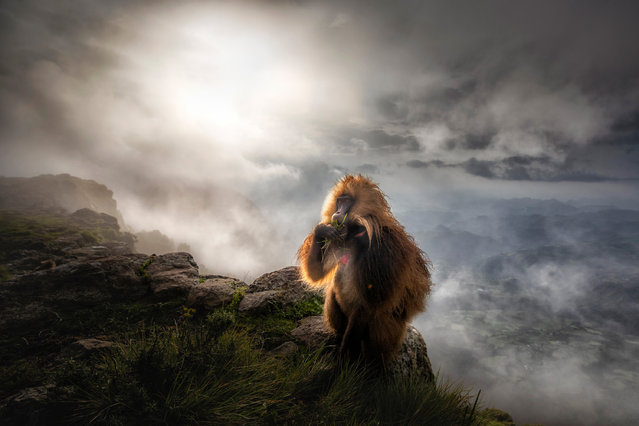
Highly commended, mammals: Gelada after the storm – Marco Gaiotti (Italy). “Gelada baboons are the only monkey species in the world that feed on grasses. They are native to the tableland of Ethiopia. Every morning large family groups wander from their sleeping places in the steep rock face, up to 1,000 metres high, to the feeding grounds at the tablelands. This image clearly depicts their feeding strategy: they pull out bunches of grass, sort the stalks and then lift them to their mouth. This shot was taken towards the end of the rainy season after a heavy storm”. (Photo by Marco Gaiotti/2019 GDT European Wildlife Photographer of the Year)

Highly commended, mammals: Gelada after the storm – Marco Gaiotti (Italy). “Gelada baboons are the only monkey species in the world that feed on grasses. They are native to the tableland of Ethiopia. Every morning large family groups wander from their sleeping places in the steep rock face, up to 1,000 metres high, to the feeding grounds at the tablelands. This image clearly depicts their feeding strategy: they pull out bunches of grass, sort the stalks and then lift them to their mouth. This shot was taken towards the end of the rainy season after a heavy storm”. (Photo by Marco Gaiotti/2019 GDT European Wildlife Photographer of the Year)
Details
31 Oct 2019 00:03:00
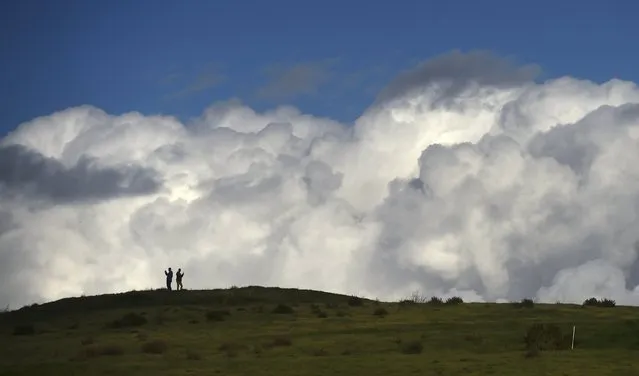
Clouds gather as walkers pause atop a ridge in Mountain View, California January 7, 2016. (Photo by Noah Berger/Reuters)

Clouds gather as walkers pause atop a ridge in Mountain View, California January 7, 2016. (Photo by Noah Berger/Reuters)
Details
22 Feb 2016 10:23:00
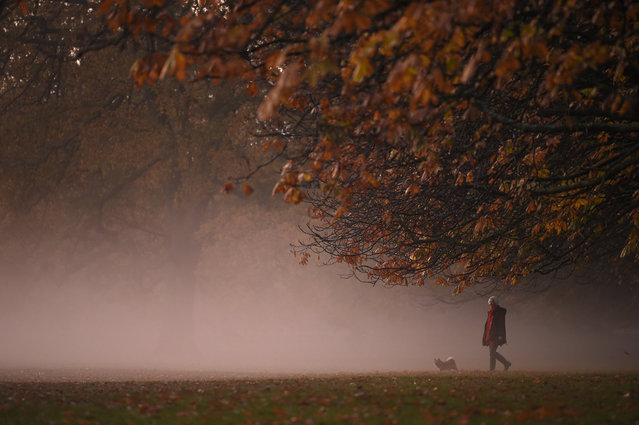
A person walks their dog in the morning mist at sunrise in Greenwich Park in south London on November 9, 2020. (Photo by Daniel Leal-Olivas/AFP Photo)

A person walks their dog in the morning mist at sunrise in Greenwich Park in south London on November 9, 2020. (Photo by Daniel Leal-Olivas/AFP Photo)
Details
21 Nov 2020 00:03:00
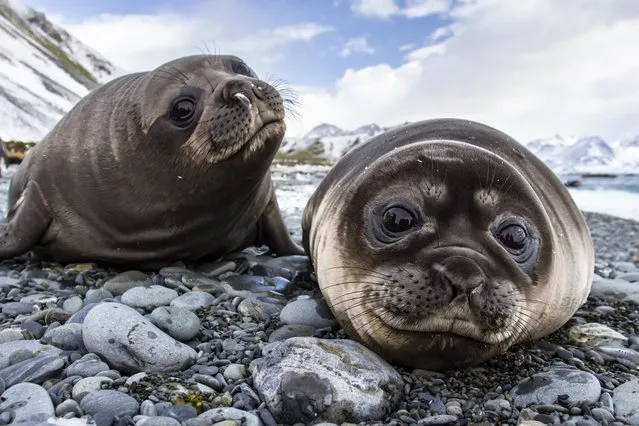
Inquisitive elephant seal pups venture towards a photographer on South Georgia, an uninhabited island near Antarctica early July 2022. The seals are not used to seeing humans and shuffled closer to Charlotte Rhodes rather than shying away. (Photo by Charlotte Rhodes/Media Drum Images)

Inquisitive elephant seal pups venture towards a photographer on South Georgia, an uninhabited island near Antarctica early July 2022. The seals are not used to seeing humans and shuffled closer to Charlotte Rhodes rather than shying away. (Photo by Charlotte Rhodes/Media Drum Images)
Details
17 Jul 2022 05:00:00
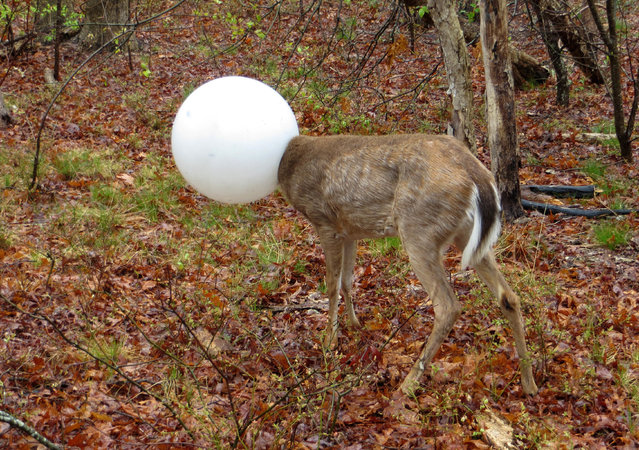
In this May 3, 2016 photo provided by the New York State Department of Environmental Conservation, a deer with its head caught in the globe from a lighting fixture over its head stands in the woods in Centereach, N.Y. The deer was able to extricate itself with the help of Environmental Conservation Officer, Jeff Hull. Hull wrestled with the deer for a while and the globe shook free in the process. (Photo by New York State Department of Environmental Conservation via AP Photo)

In this May 3, 2016 photo provided by the New York State Department of Environmental Conservation, a deer with its head caught in the globe from a lighting fixture over its head stands in the woods in Centereach, N.Y. The deer was able to extricate itself with the help of Environmental Conservation Officer, Jeff Hull. Hull wrestled with the deer for a while and the globe shook free in the process. (Photo by New York State Department of Environmental Conservation via AP Photo)

Details
08 May 2016 10:46:00
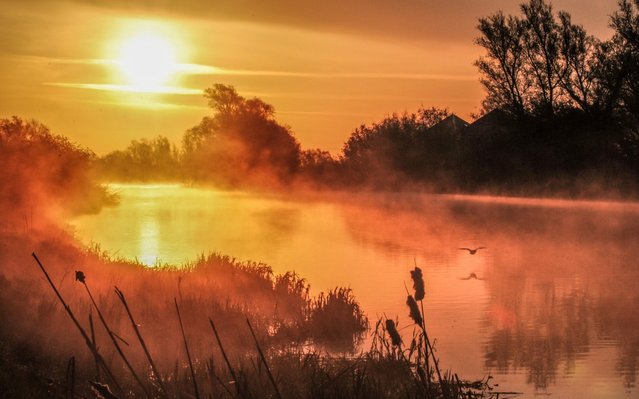
Sunrise in Ely, Cambridgeshire on April 15, 2020 by the River Great Ouse, England. The warm weather is set to continue until the weekend. (Photo by Veronica Johansson Poultney/Bav Media)

Sunrise in Ely, Cambridgeshire on April 15, 2020 by the River Great Ouse, England. The warm weather is set to continue until the weekend. (Photo by Veronica Johansson Poultney/Bav Media)
Details
21 Apr 2020 00:03:00
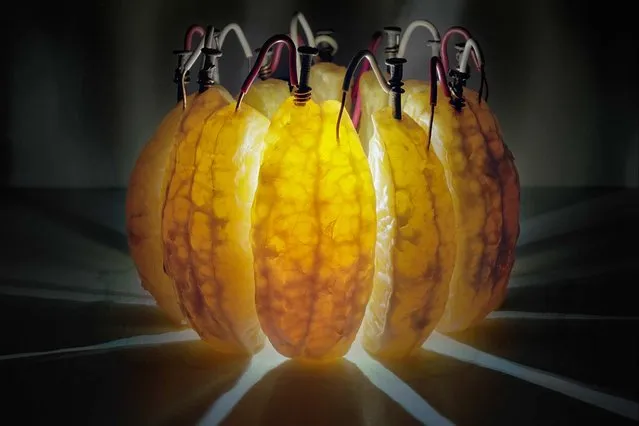
Wedges of an orange generate enough current and electrical juice – 3.5 volts – to power an LED. The fruit’s citric acid helps electrons flow from galvanized nails to copper wire in this 14-hour exposure. This image was published in September’s Visions of Earth, a trio of photos that appear in each issue of National Geographic. (Photo by Caleb Charland/National Geographic)

Wedges of an orange generate enough current and electrical juice – 3.5 volts – to power an LED. The fruit’s citric acid helps electrons flow from galvanized nails to copper wire in this 14-hour exposure. This image was published in September’s Visions of Earth, a trio of photos that appear in each issue of National Geographic. (Photo by Caleb Charland/National Geographic)
Details
06 Jan 2014 12:09:00
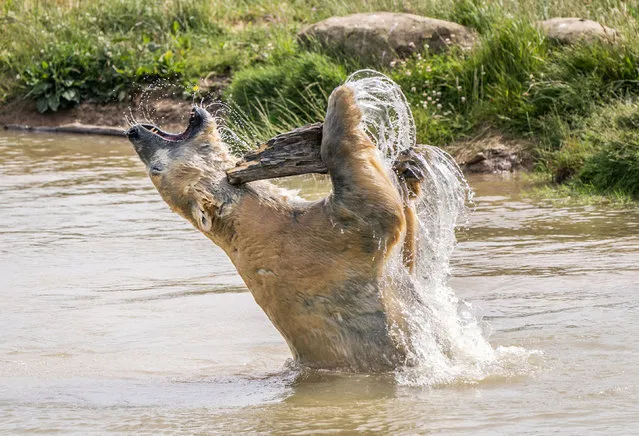
Nobby the polar bear cools down as he plays in a lake at the Yorkshire Wildlife Park in Doncaster, England, Friday June 17, 2022. A blanket of hot air stretching from the Mediterranean to the North Sea is giving much of western Europe its first heat wave of the summer, with temperatures forecast to top 30 degrees Celsius (86 degrees Fahrenheit) from Malaga to London on Friday. (Photo by Danny Lawson/PA Wire via AP Photo)

Nobby the polar bear cools down as he plays in a lake at the Yorkshire Wildlife Park in Doncaster, England, Friday June 17, 2022. A blanket of hot air stretching from the Mediterranean to the North Sea is giving much of western Europe its first heat wave of the summer, with temperatures forecast to top 30 degrees Celsius (86 degrees Fahrenheit) from Malaga to London on Friday. (Photo by Danny Lawson/PA Wire via AP Photo)
Details
26 Jun 2022 04:06:00