Loading...
Done
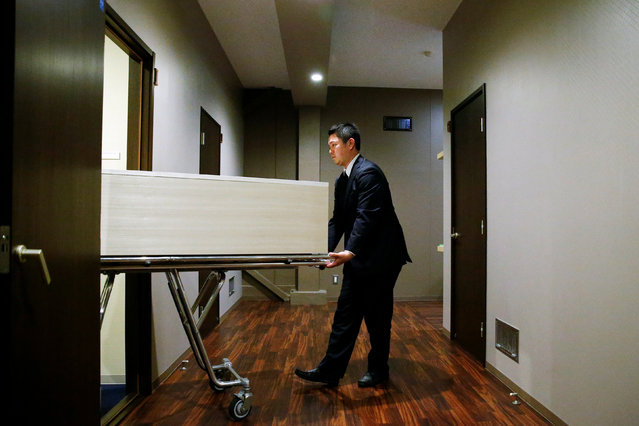
A staff member removes a coffin from a room of the “Corpse Hotel” in Kawasaki, Japan, April 20, 2016. (Photo by Thomas Peter/Reuters)

A staff member removes a coffin from a room of the “Corpse Hotel” in Kawasaki, Japan, April 20, 2016. Many so-called corpse hotels have emerged as a flourishing business in the city following a crunch in crematoriums. Families can rent a room in Sousou on a daily charge of 9,000 Japanese yen (£58, €74, $84) to keep the body of the deceased relative for up to four days until they find a crematorium. (Photo by Thomas Peter/Reuters)
Details
30 Apr 2016 09:46:00
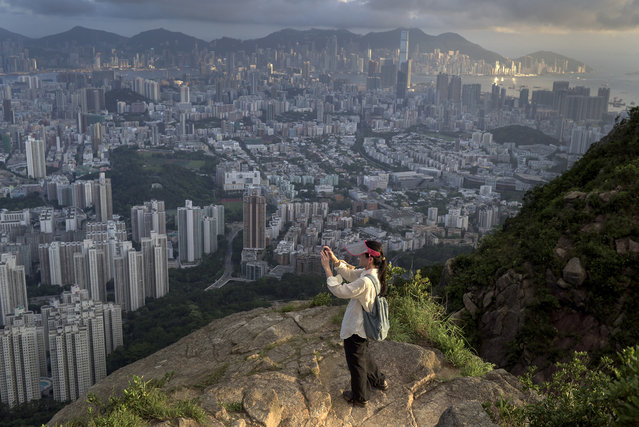
In this photograph taken on June 28, 2015, a hiker in Hong Kong takes a picture of the city from a walking trail. The southern Chinese territory is crisscrossed by more than 180 miles of designated hiking trails. (Photo by Alex Ogle/AFP Photo)

In this photograph taken on June 28, 2015, a hiker in Hong Kong takes a picture of the city from a walking trail. The southern Chinese territory is crisscrossed by more than 180 miles of designated hiking trails. (Photo by Alex Ogle/AFP Photo)
Details
30 Jun 2015 12:47:00
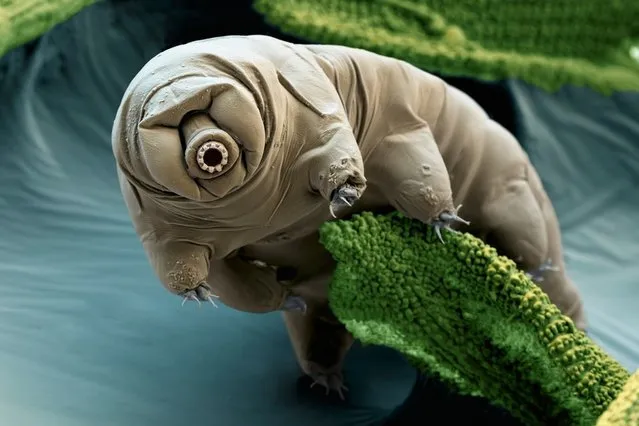
Tardigrades (commonly known as waterbears or moss piglets). (Photo by SPL/East News)

“Tardigrades (commonly known as waterbears or moss piglets) are small, water-dwelling, segmented animals with eight legs. Tardigrades were first discovered in 1773 by Johann August Ephraim Goeze, who called them kleiner Wasserbär, meaning “little water bear” in German. The name Tardigrada means “slow walker” and was given by Lazzaro Spallanzani in 1777. The name water bear comes from the way they walk, reminiscent of a bear's gait. The biggest adults may reach a body length of 1.5 millimetres (0.059 in), the smallest below 0.1 mm. Freshly hatched tardigrades may be smaller than 0.05 mm”. – Wikipedia. Photo: Tardigrades. (Photo by SPL/East News)
Details
26 Sep 2012 09:55:00
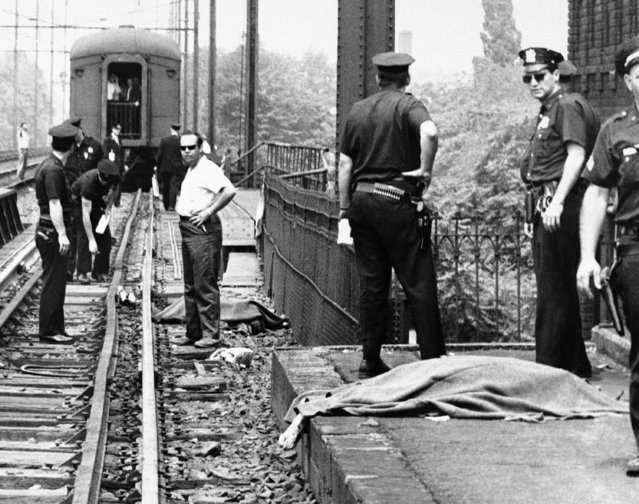
Blankets cover the bodies of a woman (right) and a man (left background) hit by a northbound Penn Central train (background) as they waited with a crowd at Pennsylvania Railroad station in Elizabeth, N.J. on June 8, 1968 to view the southbound train carrying the body of Sen. Robert F. Kennedy to Washington. The woman was identified as Mrs. Antoinette Severini, 54, and the man, John Curia (age unavailable), both of Elizabeth. (Photo by AP Photo)

Blankets cover the bodies of a woman (right) and a man (left background) hit by a northbound Penn Central train (background) as they waited with a crowd at Pennsylvania Railroad station in Elizabeth, N.J. on June 8, 1968 to view the southbound train carrying the body of Sen. Robert F. Kennedy to Washington. The woman was identified as Mrs. Antoinette Severini, 54, and the man, John Curia (age unavailable), both of Elizabeth. (Photo by AP Photo)
Details
09 Dec 2017 02:15:00
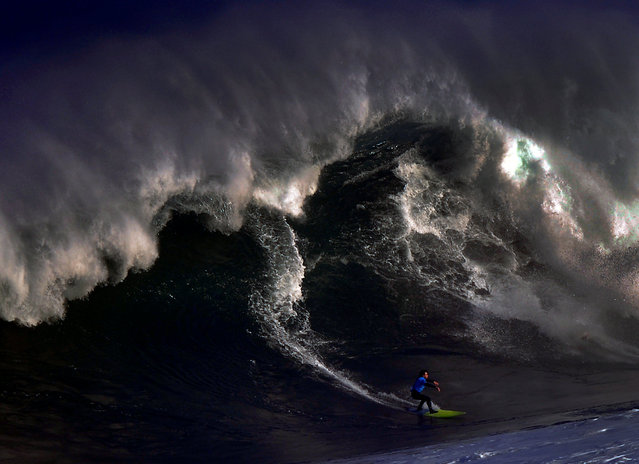
A surfer rides a large wave at El Bocal during the Vaca Gigante (Big Cow) giant wave surf competition in Santander, northern Spain December 17, 2016. (Photo by Vincent West/Reuters)

A surfer rides a large wave at El Bocal during the Vaca Gigante (Big Cow) giant wave surf competition in Santander, northern Spain December 17, 2016. (Photo by Vincent West/Reuters)
Details
19 Dec 2016 07:06:00
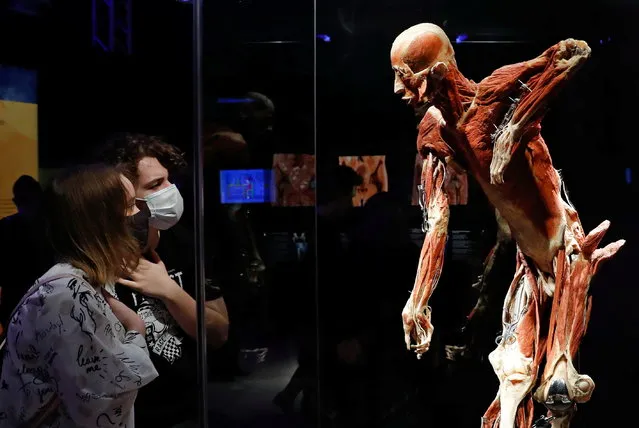
Visitors look at a plastinated human body during the “Body Worlds” exhibition by German anatomist Gunther von Hagens at a pavilion of the Exhibition of Achievements of National Economy (VDNKh) in Moscow, Russia on March 24, 2021. Head of Russian Investigative Committee Alexander Bastrykin ordered a probe of the exhibition after it sparked outrage among conservative religious groups and public figure. (Photo by Evgenia Novozhenina/Reuters)

Visitors look at a plastinated human body during the “Body Worlds” exhibition by German anatomist Gunther von Hagens at a pavilion of the Exhibition of Achievements of National Economy (VDNKh) in Moscow, Russia on March 24, 2021. Head of Russian Investigative Committee Alexander Bastrykin ordered a probe of the exhibition after it sparked outrage among conservative religious groups and public figure. (Photo by Evgenia Novozhenina/Reuters)
Details
25 Mar 2021 09:38:00
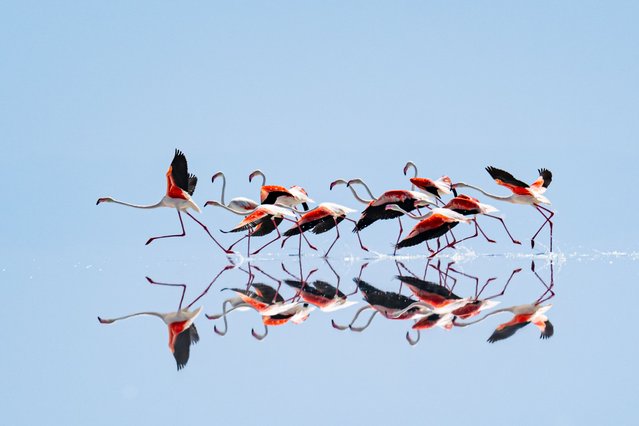
Flamingos preparing to take flight are reflected on Lake Tuz, which hosts thousands of flamingos every year, in Ankara, Turkiye, on June 24, 2025. This year, the lake has seen a decline in flamingo numbers due to drought, prompting the birds to shift their migration route to other wetlands across Turkiye. (Photo by Harun Ozalp/Anadolu via Getty Images)

Flamingos preparing to take flight are reflected on Lake Tuz, which hosts thousands of flamingos every year, in Ankara, Turkiye, on June 24, 2025. This year, the lake has seen a decline in flamingo numbers due to drought, prompting the birds to shift their migration route to other wetlands across Turkiye. (Photo by Harun Ozalp/Anadolu via Getty Images)
Details
31 Jul 2025 02:48:00
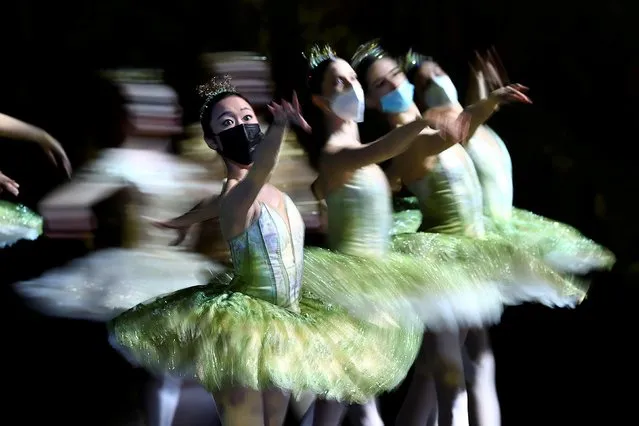
Dancer of the Berlin State Ballet (Staatsballett Berlin) wear face masks as they perform during the dress rehearsal of Don Quixote in a production choreographed by Victor Ullate, amid the coronavirus disease (COVID-19) pandemic at Deutsche Oper opera house in Berlin, Germany, December 1, 2021. (Photo by Fabrizio Bensch/Reuters)

Dancer of the Berlin State Ballet (Staatsballett Berlin) wear face masks as they perform during the dress rehearsal of Don Quixote in a production choreographed by Victor Ullate, amid the coronavirus disease (COVID-19) pandemic at Deutsche Oper opera house in Berlin, Germany, December 1, 2021. (Photo by Fabrizio Bensch/Reuters)
Details
03 Dec 2021 09:40:00