Loading...
Done
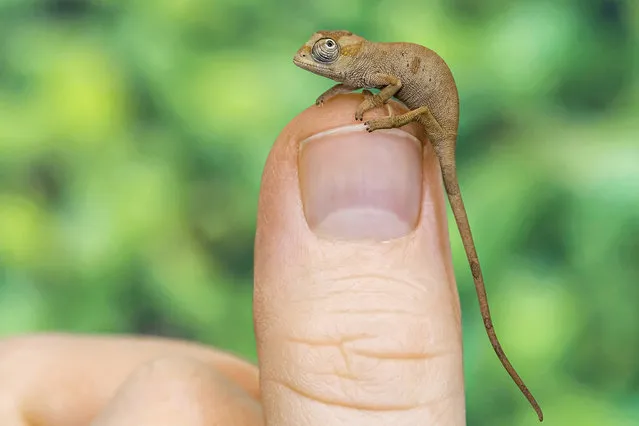
A young rednose dwarf chameleon (Kinyongia oxyrhina) perches on a zookeeper’s thumb at the Tiergarten Schönbrunn in Vienna on September 12, 2023. The chameleons were found by customs officers in a suitcase in 2021, and have bred at the zoo. (Photo by Daniel Zupanc/Newsflash)

A young rednose dwarf chameleon (Kinyongia oxyrhina) perches on a zookeeper’s thumb at the Tiergarten Schönbrunn in Vienna on September 12, 2023. The chameleons were found by customs officers in a suitcase in 2021, and have bred at the zoo. (Photo by Daniel Zupanc/Newsflash)
Details
24 Sep 2023 03:17:00
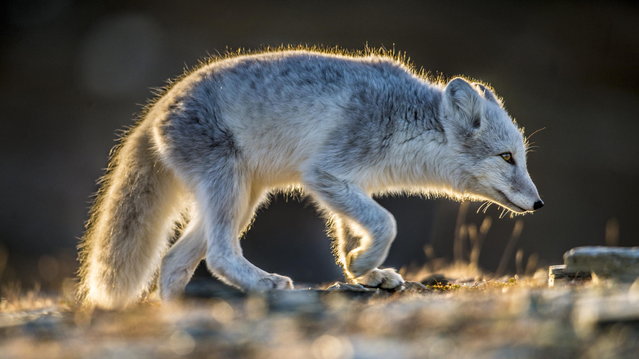
Arctic Fox. (Photo by Trond Eriksen)

“The arctic fox (Vulpes lagopus), also known as the white fox, polar fox, or snow fox, is a small fox native to the Arctic regions of the Northern Hemisphere and is common throughout the Arctic tundra biome. It is well adapted to living in cold environments. It has a deep thick fur which is brown in summer and white in winter. It averages in size at about 85.3 cm (33.6 in) in body length, with a generally rounded body shape to minimize the escape of body heat. – Wikipedia. (Photo by Trond Eriksen)
Details
26 May 2014 14:09:00
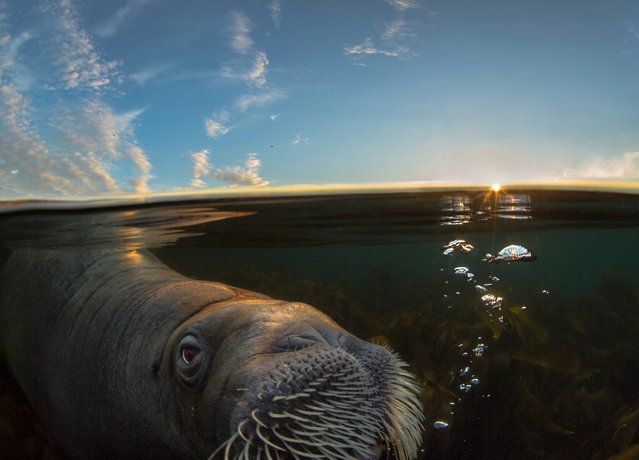
The Wildscreen festival is the world’s biggest celebration of screen-based natural history storytelling which takes place every two years in Bristol. Here: “Walrus in Midnight Sun”. Walrus feed mostly on bivalves in productive, shallow and often sandy habitats in the Arctic. This individual, though, arrived on a beach outside Tromsø, northern Norway, and found comfort on a stranded dead sperm whale. After two weeks he approached Audun, and only half a metre away he stretched his tusk forward and touched his hand gently. “This was one of the most memorable moments of my life”, Rikardsen says. He named the 500kg male Buddy. After two months, the dead whale was decomposed and Buddy suddenly disappeared. (Photo by Audun Rikardsen/Wildscreen 2016)

The Wildscreen festival is the world’s biggest celebration of screen-based natural history storytelling which takes place every two years in Bristol. Here: “Walrus in Midnight Sun”. Walrus feed mostly on bivalves in productive, shallow and often sandy habitats in the Arctic. This individual, though, arrived on a beach outside Tromsø, northern Norway, and found comfort on a stranded dead sperm whale. After two weeks he approached Audun, and only half a metre away he stretched his tusk forward and touched his hand gently. “This was one of the most memorable moments of my life”, Rikardsen says. He named the 500kg male Buddy. After two months, the dead whale was decomposed and Buddy suddenly disappeared. (Photo by Audun Rikardsen/Wildscreen 2016)
Details
07 Oct 2016 10:02:00
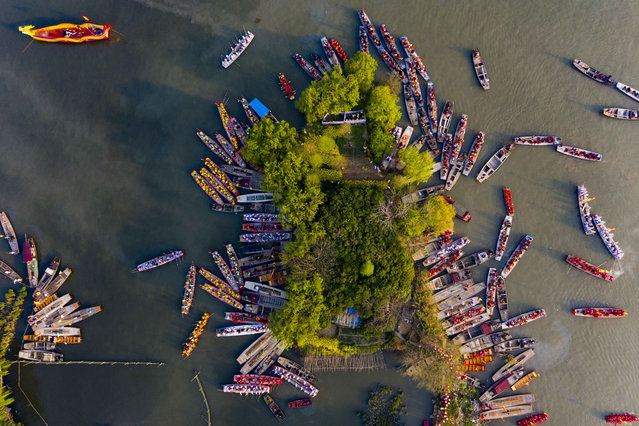
Performers on boats take part in the Qintong Boat Festival at Qin Lake National Wetland Park on April 6, 2019 in Taizhou, Jiangsu Province of China. The boat festival is held around the Qingming Festival every year, and up to 10,000 participants from nearby villages and towns, with more than 500 boats, took part in the event this year. (Photo by Tang Dehong/VCG via Getty Images)

Performers on boats take part in the Qintong Boat Festival at Qin Lake National Wetland Park on April 6, 2019 in Taizhou, Jiangsu Province of China. The boat festival is held around the Qingming Festival every year, and up to 10,000 participants from nearby villages and towns, with more than 500 boats, took part in the event this year. (Photo by Tang Dehong/VCG via Getty Images)
Details
18 May 2019 00:05:00
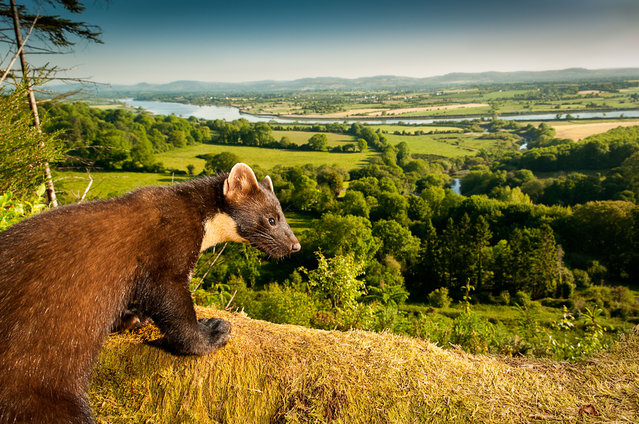
A pine marten – one of a few wild mammals doing well in Britain (although they number just 3,700). A fifth of the country’s wild mammals are at high risk of extinction, research shows. (Photo by Maurice Flynn/The Mammal Society)

A pine marten – one of a few wild mammals doing well in Britain (although they number just 3,700). A fifth of the country’s wild mammals are at high risk of extinction, research shows. (Photo by Maurice Flynn/The Mammal Society)
Details
08 Jul 2018 00:01:00


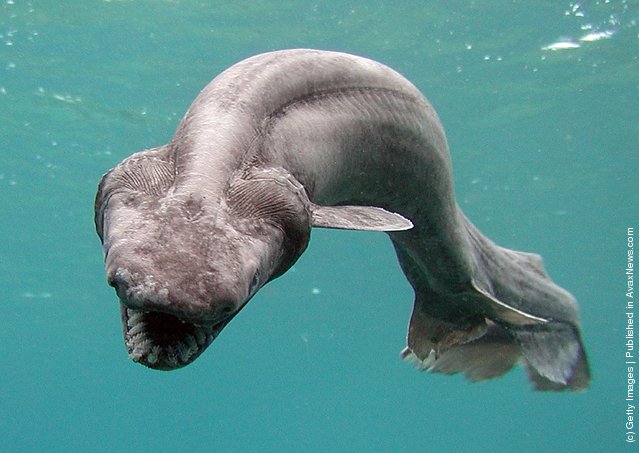
“The frilled shark (Chlamydoselachus anguineus) is one of two extant species of shark in the family Chlamydoselachidae, with a wide but patchy distribution in the Atlantic and Pacific Oceans. This uncommon species is found over the outer continental shelf and upper continental slope, generally near the bottom though there is evidence of substantial upward movements. It has been caught as deep as 1,570 m (5,150 ft), whereas in Suruga Bay, Japan it is most common at depths of 50–200 m (160–660 ft). Exhibiting several “primitive” features, the frilled shark has often been termed a «living fossil»”. – Wikipedia

Photo: A 1.6 meter long Frill shark swims in a tank after being found by a fisherman at a bay in Numazu, on January 21, 2007 in Numazu, Japan. The frill shark, also known as a Frilled shark usually lives in waters of a depth of 600 meters and so it is very rare that this shark is found alive at sea-level. It's body shape and the number of gill are similar to fossils of sharks which lived 350,000,000 years ago. (Photo by Awashima Marine Park/Getty Images)

Details
05 May 2011 10:01:00
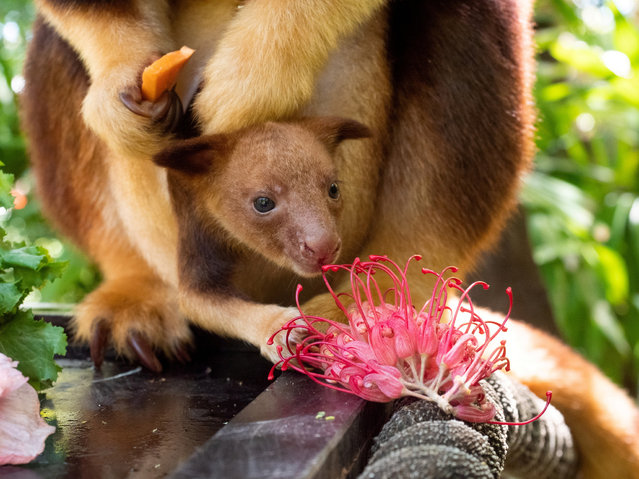
A Goodfellow's Tree Kangaroo joey with its mother at Sydney Zoo in Australia on January 22, 2021. The 28-week-old male joey, who is yet to be named, has only just begun to pop his head and shoulders out of his mum's pouch. (Photo by Taronga Zoo via Reuters)

A Goodfellow's Tree Kangaroo joey with its mother at Sydney Zoo in Australia on January 22, 2021. The 28-week-old male joey, who is yet to be named, has only just begun to pop his head and shoulders out of his mum's pouch. (Photo by Taronga Zoo via Reuters)
Details
31 Jan 2021 08:44:00
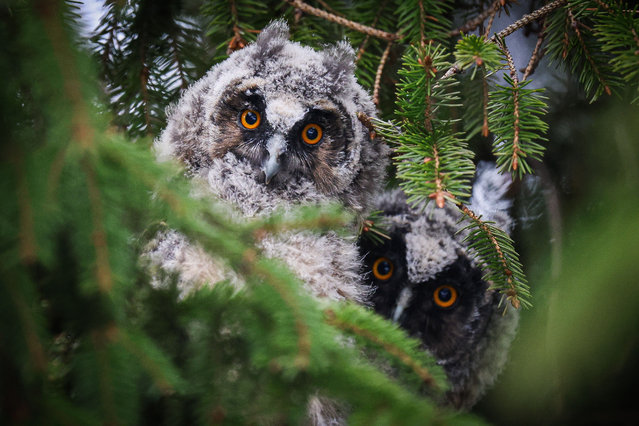
Long-eared owl chicks sit on a spruce branch in a park near St Petersburg, Russia on March 3, 2025. (Photo by Artem Priakhin/SOPA Images/Rex Features/Shutterstock)

Long-eared owl chicks sit on a spruce branch in a park near St Petersburg, Russia on March 3, 2025. (Photo by Artem Priakhin/SOPA Images/Rex Features/Shutterstock)
Details
23 Mar 2025 03:00:00