Loading...
Done
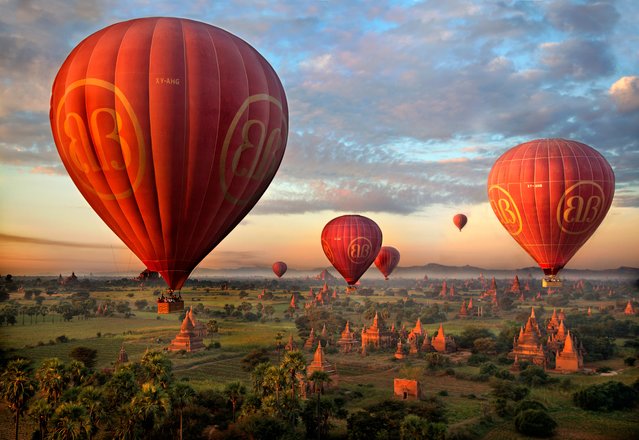
“The fantastic landscape of Bagan in Myanmar features hundreds of temples and pagodas as far as the eye can see. Experiencing this sight at dawn from the basket of a hot air balloon will remain engraved in my memory for ever. Mick Ryan, judge – What a magical photograph and place. The Buddhist temples and pagodas fill the plains of Bagan in Myanmar at sunrise… the golden hour providing beautiful light to illuminate the retrogression of the temples and balloons toward a misty, mountainous distance. An excellent, exotic photograph that makes you want to book a flight”. (Photo by Alastair Swan/The Guardian)

“The fantastic landscape of Bagan in Myanmar features hundreds of temples and pagodas as far as the eye can see. Experiencing this sight at dawn from the basket of a hot air balloon will remain engraved in my memory for ever. Mick Ryan, judge – What a magical photograph and place. The Buddhist temples and pagodas fill the plains of Bagan in Myanmar at sunrise… the golden hour providing beautiful light to illuminate the retrogression of the temples and balloons toward a misty, mountainous distance. An excellent, exotic photograph that makes you want to book a flight”. (Photo by Alastair Swan/The Guardian)
Details
04 Jul 2016 08:36:00
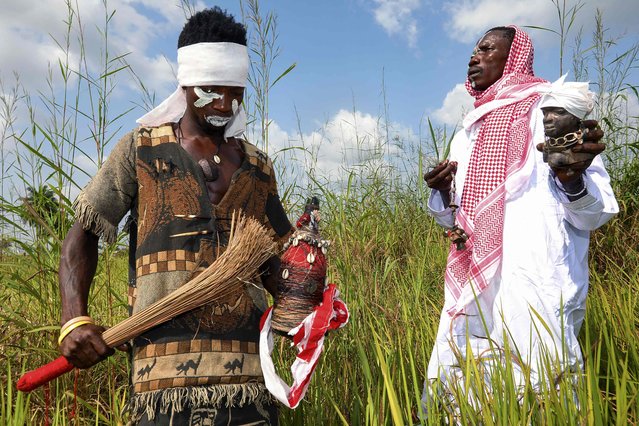
Raka Soko, a traditional healer and Poro society member is deep in prayer while holding a broom and a bottle filled with spiritual wine that is purified to show gratitude to the gods before a ceremony in Waterloo on November 26, 2018. Standing across the field from him another member, Amos Nicol, holds a statue of the spiritual god Sama Yorbu which is used to communicate directly to other gods for permission to perform. (Photo by Lynn Rossi/AFP Photo)

Raka Soko, a traditional healer and Poro society member is deep in prayer while holding a broom and a bottle filled with spiritual wine that is purified to show gratitude to the gods before a ceremony in Waterloo on November 26, 2018. Standing across the field from him another member, Amos Nicol, holds a statue of the spiritual god Sama Yorbu which is used to communicate directly to other gods for permission to perform. (Photo by Lynn Rossi/AFP Photo)
Details
07 Aug 2019 00:01:00
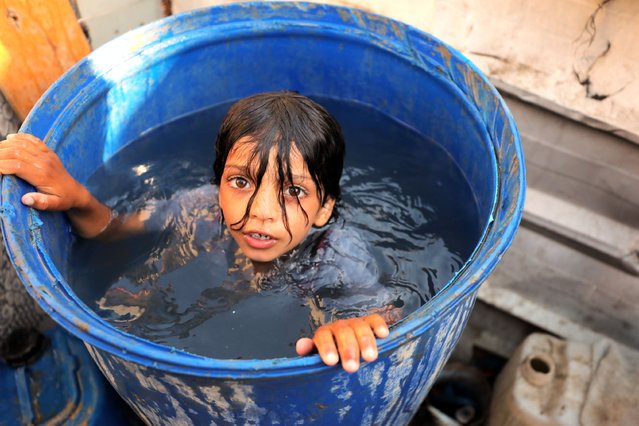
A Palestinian girl is seen inside the giant jerry can filled with water as displaced Palestinians, sheltering in tents they have set up in schools and along roadsides, experience the increasing temperatures in Deir al-Balah, Gaza, on June 11, 2024. Especially children are the most affected by the extremely hot weather conditions, while the number of Palestinians migrating to Deir al-Balah is increasing day by day due to Israeli attacks on different parts of Gaza. (Photo by Hasan Jedi/Anadolu via Getty Images)

A Palestinian girl is seen inside the giant jerry can filled with water as displaced Palestinians, sheltering in tents they have set up in schools and along roadsides, experience the increasing temperatures in Deir al-Balah, Gaza, on June 11, 2024. Especially children are the most affected by the extremely hot weather conditions, while the number of Palestinians migrating to Deir al-Balah is increasing day by day due to Israeli attacks on different parts of Gaza. (Photo by Hasan Jedi/Anadolu via Getty Images)
Details
25 Jun 2024 03:11:00


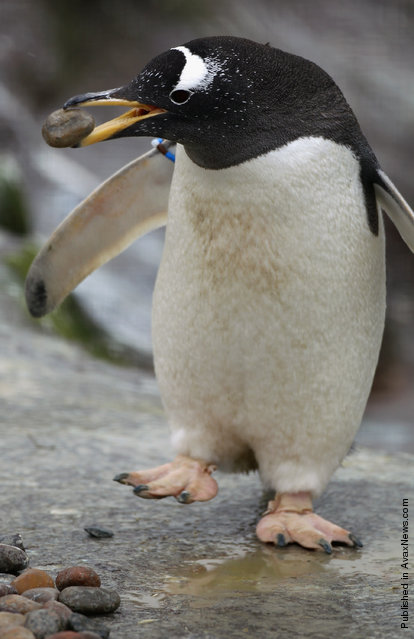
Gentoo penguins begin the breeding season at Edinburgh Zoo on March 1, 2011 in Edinburgh, Scotland. The zoo keepers have just installed the nest rings in the penguin enclosure. The male penguins will then collect pebbles and offer them to the females to fill nest rings with, this helps keep the eggs and chick up off the ground and is part of their courtship display. (Photo by Jeff J Mitchell/Getty Images)ю EDINBURGH, SCOTLAND – MARCH 01
Details
07 Mar 2011 13:54:00
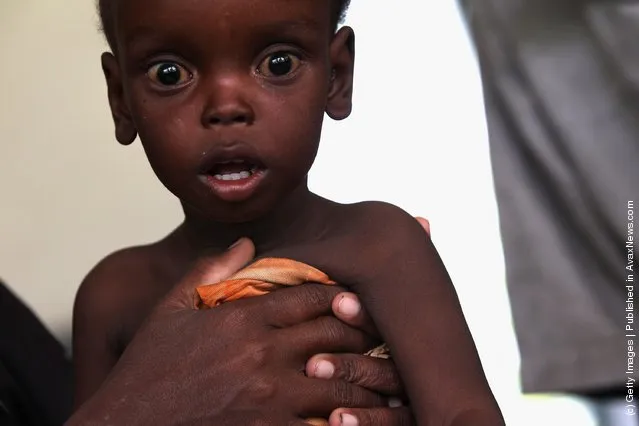
Somali Famine Refugees Seek Aid In Mogadishu

Weakened by sickness and malnutrition, Arbty Mohammad, 2, lies in the Banadir Hospital on August 12, 2011 in Mogadishu, Somalia. Some 100,000 Somalis have flooded into Mogadishu from drought and famine stricken areas of the country. The UN warned Friday that a cholera epidemic could spread through Mogadishu, as Somalis fill unsanitary makeshift camps throughout the capital. (Photo by John Moore/Getty Images)
Details
14 Aug 2011 14:13:00
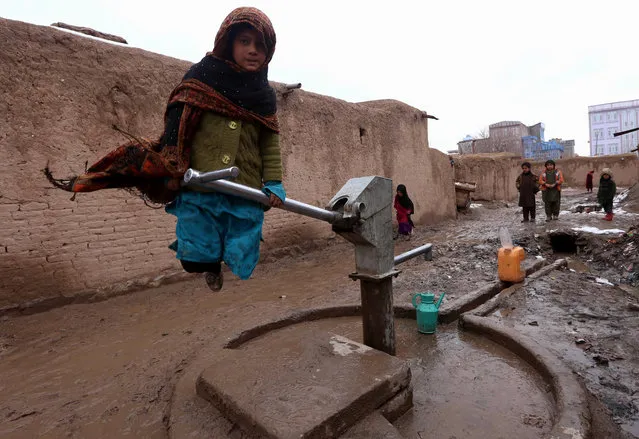
An Afghan woman fills containers with water near her temporary shelter at an internally displaced person's (IDP) camp on the outskirts of Herat, Afghanistan, January 21, 2015. Dozens of families are living in temporary shelters even in harsh winters and most depend on aid distributions by the United Nations High Commissioner for Refugees (UNHCR). (Photo by Jalil Rezayee/EPA)

An Afghan woman fills containers with water near her temporary shelter at an internally displaced person's (IDP) camp on the outskirts of Herat, Afghanistan, January 21, 2015. Dozens of families are living in temporary shelters even in harsh winters and most depend on aid distributions by the United Nations High Commissioner for Refugees (UNHCR). (Photo by Jalil Rezayee/EPA)
Details
23 Jan 2015 12:35:00


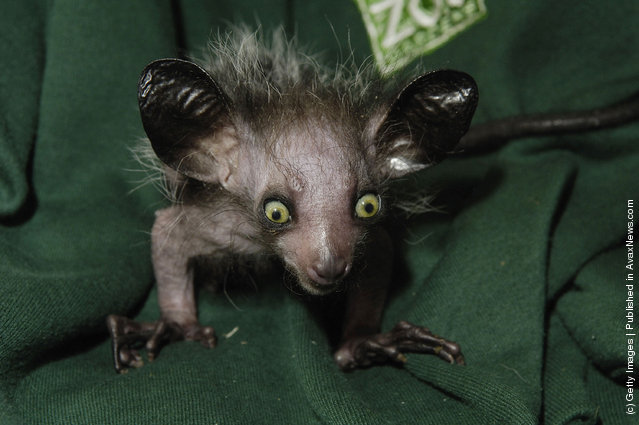
“The aye-aye (Daubentonia madagascariensis) is a lemur, a strepsirrhine primate native to Madagascar that combines rodent-like teeth and a special thin middle finger to fill the same ecological niche as a woodpecker. It is the world's largest nocturnal primate, and is characterized by its unusual method of finding food; it taps on trees to find grubs, then gnaws holes in the wood and inserts its narrow middle finger to pull the grubs out. The only other animal species known to find food in this way is the striped possum. From an ecological point of view the aye-aye fills the niche of a woodpecker as it is capable of penetrating wood to extract the invertebrates within”. – Wikipedia

Photo: In this handout image from Bristol Zoo is seen the first captive bred aye-aye in the UK named “Kintana” (meaning star in Malagasy) April 15, 2005 at Bristol Zoo Gardens, England. The zoo announced today only the second baby aye-aye to be hand-reared in the world (the first was in Jersey Zoo) and has now made his first public appearance since his birth on 11 February 2005. (Photo by Rob Cousins/Bristol Zoo via Getty Images)
Details
13 Apr 2011 13:33:00
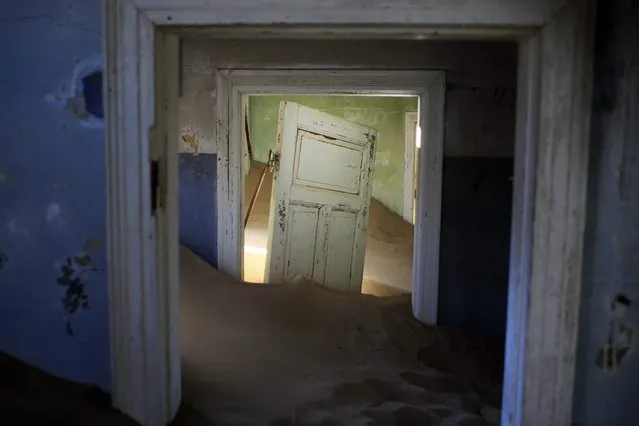
In this July 23, 2013 photo, sand fills an abandoned house in Kolmanskop, Namibia. Kolmanskop, was a diamond mining town south of Namibia, build in 1908 and deserted in 1956. SInce then, the desert slowly reclaims its territory, with sand invading the buildings where 350 German colonists and more than 800 local workers lived during its hay-days of the 1920s. (Photo by Jerome Delay/AP Photo)

In this July 23, 2013 photo, sand fills an abandoned house in Kolmanskop, Namibia. Kolmanskop, was a diamond mining town south of Namibia, build in 1908 and deserted in 1956. SInce then, the desert slowly reclaims its territory, with sand invading the buildings where 350 German colonists and more than 800 local workers lived during its hay-days of the 1920s. (Photo by Jerome Delay/AP Photo)
Details
14 Nov 2014 14:34:00