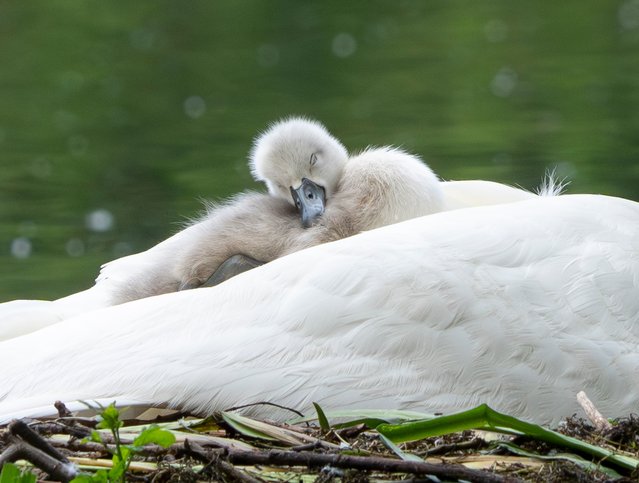
A cygnet keeps snug under its mother’s wing at Heronry Pond in Wanstead Park in east London in the last decade of May 2024. (Photo by Jeff Moore/The Times)
Personnel from Maharashtra Home Guards, a volunteer force practice yoga near the Gateway of India monument as they mark International Yoga Day in Mumbai, India, Friday, June 21, 2024. (Photo by Rajanish Kakade/AP Photo)
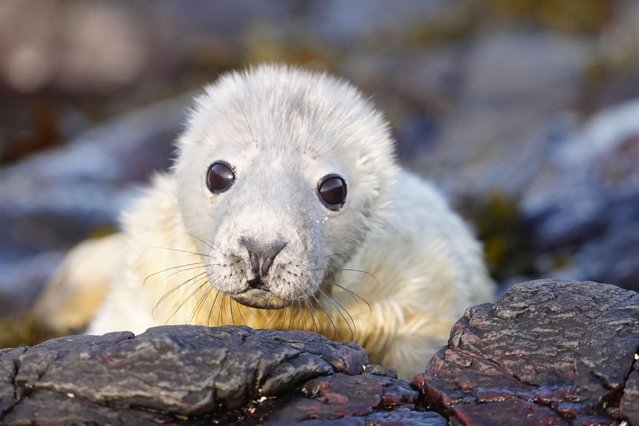
Seals on Wednesday, November 12, 2025 on the Farne Islands during the annual census of pup numbers at one of England's largest grey seal colonies. The islands, off the Northumberland coast, is an important haven for thousands of seabirds and hundreds of adult seals, and are looked after by the National Trust. (Photo by Owen Humphreys/PA Wire)
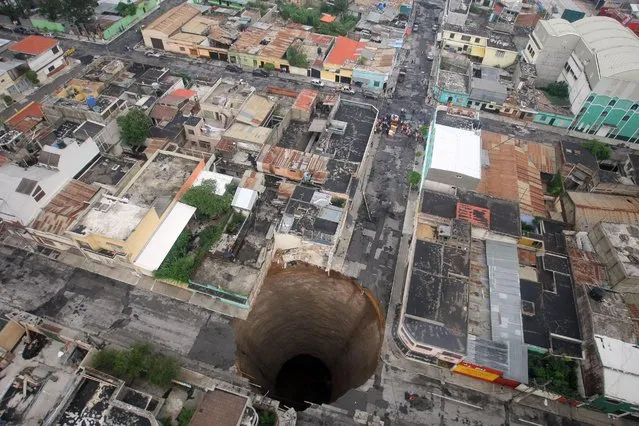
A giant sinkhole in Guatemala City, on May 31, 2010. More than 94,000 were evacuated as the storm buried homes under mud, swept away a highway bridge near Guatemala City and opened up several sinkholes in the capital. (Photo by Casa Presidencial/Reuters via The Atlantic)
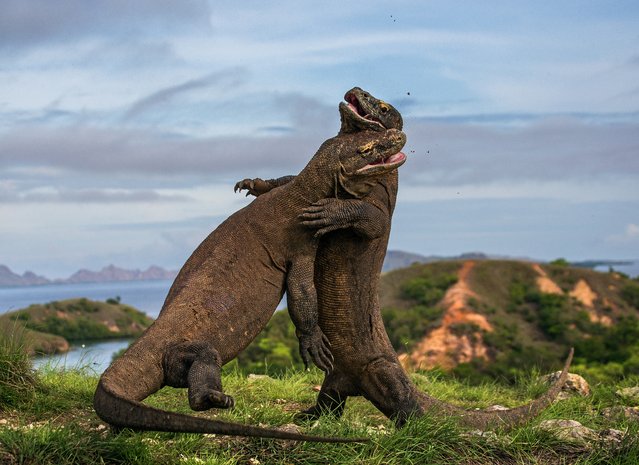
Komodo Judo by Andrey Gudkov. Finalist, Amphibians & Reptiles. Two large male Komodo dragons hissing angrily at each other in Indonesia’s Komodo national park. Komodo dragons can grow up to 8ft. (Photo by Andrey Gudkov/Wildlife Photographer of the Year 2015)
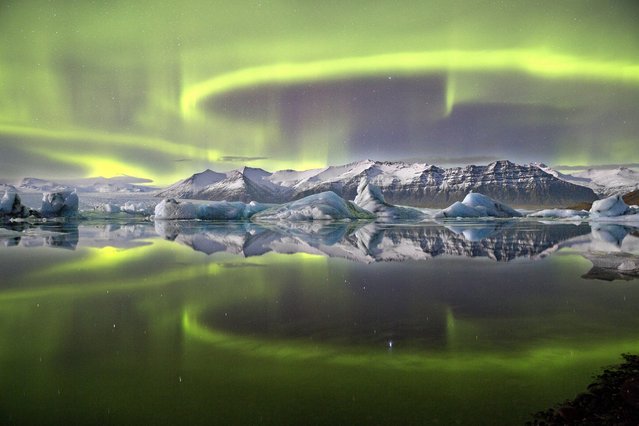
“Aurora over a glacier lagoon”. A vivid green overheaded aurrora pictured in Iceland's Vatnajokull National Park reflected almost symetrically in Jokulsrlon Glacier lagoon. A complete lack of wind and currrent combin in this sheltred lagoon scene to crete an arresting mirror effect giving the image a sensation of utter stillness. Despite theis there is motion on a suprising scale, as the loops and arcs of the aurora are shaped by the shifting forces of the Earth's magnetic field. James Woodend of Great Britain won the grand prize with the image, beating out more than 2,500 other entries. The Astronomy Photographer of the Year 2014 contest is judged by the Royal Observatory Greenwich and BBC Sky at Night magazine. (Photo by James Woodend/The Astronomy Photographer of the Year 2014 Contest)
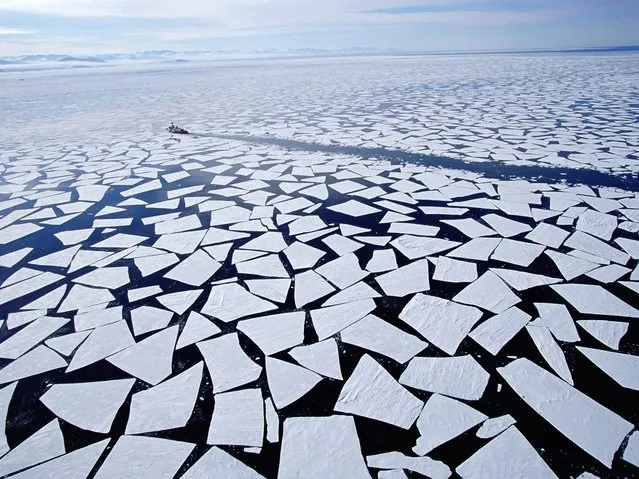
McMurdo Station is a U.S. Antarctic research centre located on the southern tip of Ross Island, which is in the New Zealand-claimed Ross Dependency on the shore of McMurdo Sound in Antarctica. It is operated by the United States through the United States Antarctic Program, a branch of the National Science Foundation. The station is the largest community in Antarctica, capable of supporting up to 1,258 residents, and serves as the United States Antarctic science facility. All personnel and cargo going to or coming from Amundsen–Scott South Pole Station first pass through McMurdo.