Loading...
Done
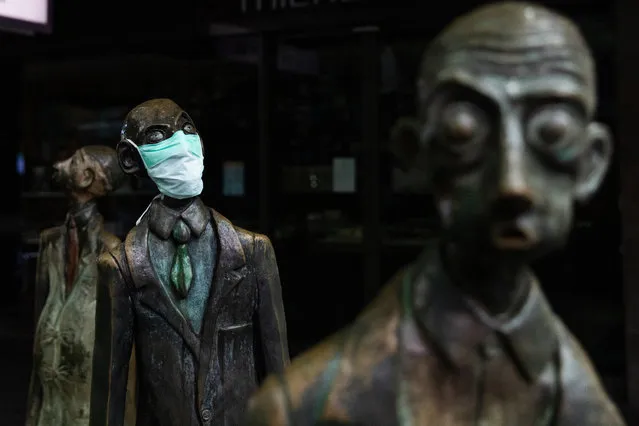
A face mask is placed on one of the 'Three business men who brought lunch' statues on Swanston street on March 29, 2020 in Melbourne, Australia. All international arrivals into Australia from midnight on Saturday will be placed into mandatory quarantine in hotels for 14 days as the Federal Government increases restrictions to stop the spread of COVID-19. All libraries, museums, galleries, beauty salons, tattoo parlours, shopping centre food courts, auctions, open houses, amusement parks, arcades, indoor and outdoor play centres, swimming pools are closed and indoor exercise activities are now banned. This is in addition to the closure of bars, pubs and nightclubs which came into effect on Monday. Restaurants and cafes are restricted to providing takeaway only. Weddings will now be restricted to five people including the couple while funerals are limited to 10 mourners. All Australians are now expected to stay at home except for essential outings such as work, grocery shopping and medical appointments. Exercising outdoors alone is still permitted. Australia now has more than 3,600 confirmed cases of COVID-19 while the death toll now stands at 16. (Photo by Asanka Ratnayake/Getty Images)

A face mask is placed on one of the 'Three business men who brought lunch' statues on Swanston street on March 29, 2020 in Melbourne, Australia. All international arrivals into Australia from midnight on Saturday will be placed into mandatory quarantine in hotels for 14 days as the Federal Government increases restrictions to stop the spread of COVID-19. (Photo by Asanka Ratnayake/Getty Images)
Details
31 Mar 2020 00:07:00
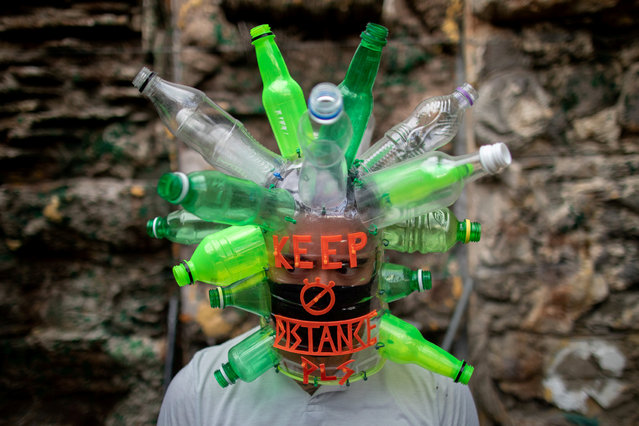
Filipino artist Leeroy New poses with a makeshift mask he designed with recycled materials as he adapts to the effects of the coronavirus disease (COVID-19) pandemic in the art industry, in his studio in Quezon City, Metro Manila, Philippines, May 28, 2020. (Photo by Eloisa Lopez/Reuters)

Filipino artist Leeroy New poses with a makeshift mask he designed with recycled materials as he adapts to the effects of the coronavirus disease (COVID-19) pandemic in the art industry, in his studio in Quezon City, Metro Manila, Philippines, May 28, 2020. (Photo by Eloisa Lopez/Reuters)
Details
30 May 2020 00:07:00
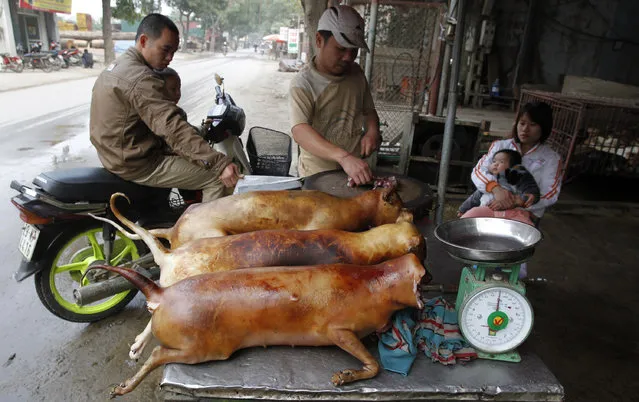
A vendor (C) cuts slaughtered dogs for sale at his roadside stall in Duong Noi village, outside Hanoi December 16, 2011. While animal rights activists have condemned eating dog meat as cruel treatment of the animals, it is still an accepted popular delicacy for some Vietnamese, as well in some other Asian countries. (Photo by Reuters/Kham)

A vendor (C) cuts slaughtered dogs for sale at his roadside stall in Duong Noi village, outside Hanoi December 16, 2011. While animal rights activists have condemned eating dog meat as cruel treatment of the animals, it is still an accepted popular delicacy for some Vietnamese, as well in some other Asian countries. Duong Noi is well-known as a dog-meat village, where hundreds of dogs are killed each day for sale as popular traditional food. Dog-eating as a custom is rooted in Vietnam and was developed as a result of poverty. One kilogram of dog meat costs about 130,000 dongs ($6.2). (Photo by Reuters/Kham)
Details
16 Jul 2013 11:40:00
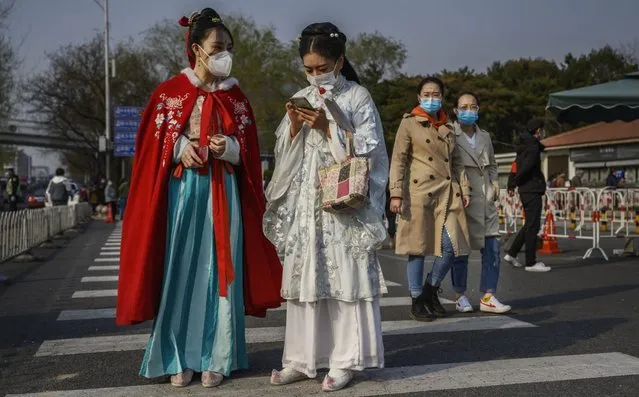
Chinese women wear protective masks as they are dressed in traditional clothing from the Qing Dynasty era outside a park on March 29, 2020 in Beijing, China. A limited section of the iconic tourist site was re-opened to the public this week allowing a smaller number of visitors to reserve tickets online in advance and to enter after passing health screening. With the pandemic hitting hard across the world, China recorded its first day with no new domestic cases of the coronavirus last week, since the government imposed sweeping measures to keep the disease from spreading. For two months, millions of people across China have been restricted in how they move from their homes, while other cities have been locked down in ways that appeared severe at the time but are now being replicated in other countries trying to contain the virus. Officials believe the worst appears to be over in China, though there are concerns of another wave of infections as the government attempts to reboot the worlds second largest economy. In Beijing, it is mandatory to wear masks outdoors, retail stores operate on reduced hours, restaurants employ social distancing among patrons, and tourist attractions at risk of drawing large crowds remain closed. Monitoring and enforcement of virus-related measures and the quarantine of anyone arriving to Beijing is carried out by neighborhood committees and a network of Communist Party volunteers who wear red arm bands. A primary concern for Chinese authorities remains the arrival of flights from Europe and elsewhere, given the exposure of passengers in regions now regarded as hotbeds for transmission. Since January, China has recorded more than 81,000 cases of COVID-19 and at least 3200 deaths, mostly in and around the city of Wuhan, in central Hubei province, where the outbreak first started. (Photo by Kevin Frayer/Getty Images)

Chinese women wear protective masks as they are dressed in traditional clothing from the Qing Dynasty era outside a park on March 29, 2020 in Beijing, China. A limited section of the iconic tourist site was re-opened to the public this week allowing a smaller number of visitors to reserve tickets online in advance and to enter after passing health screening. (Photo by Kevin Frayer/Getty Images)
Details
01 Apr 2020 00:05:00
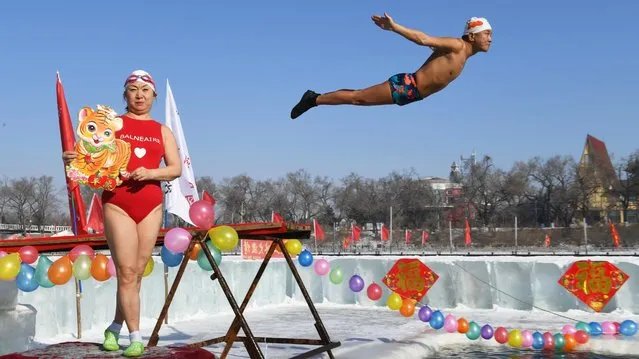
A winter swimmer jumps into a pool in the frozen Songhua River during an activity for welcoming the Chinese New Year on January 30, 2022 in Harbin, Heilongjiang Province of China. (Photo by Liu Yang/VCG via Getty Images)

A winter swimmer jumps into a pool in the frozen Songhua River during an activity for welcoming the Chinese New Year on January 30, 2022 in Harbin, Heilongjiang Province of China. (Photo by Liu Yang/VCG via Getty Images)
Details
07 Feb 2022 07:34:00


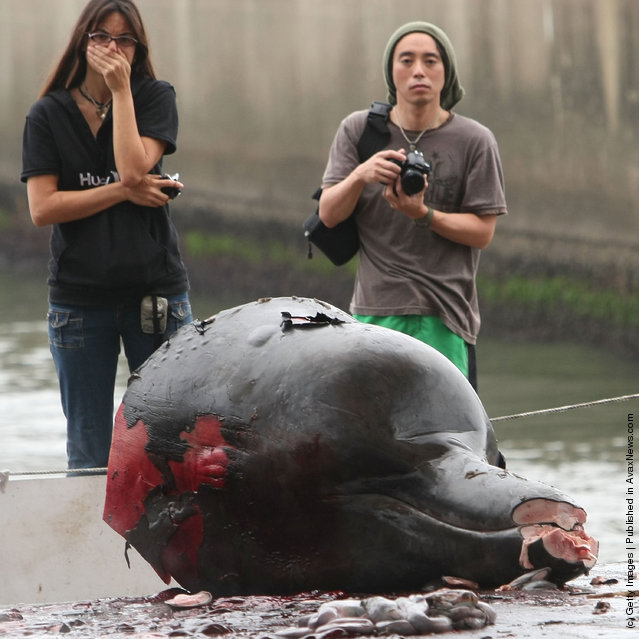
Fishermen slaughter a 9.61m Baird's Beaked whale at Wada Port on June 28, 2008 in Minami Boso, Chiba, Japan. Only five ports are allowed whaling under the coastal whaling program which tries to keep whaling tradition that dates back to the seventeenth century. Japan is only allowed to hunt a limited number of whales every year. (Photo by Koichi Kamoshida/Getty Images)
Details
26 Apr 2011 08:07:00
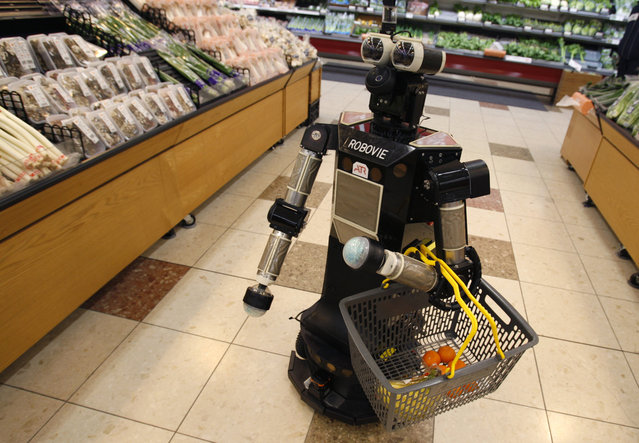
A robot named “Robovie-II”, developed by Japanese robotics research institution ATR, moves around at a grocery store during a shopping assisting experiment by utilizing the robot in an ubiquitous network technology platform in Kyoto, western Japan January 6, 2010. The robot greets the shopper at the entrance of the store, follows him to the shelves while holding a grocery basket and reminds him of the items on a shopping list, which the shopper would have entered beforehand in a specialized mobile device. The experiment is aimed to gather data in order to provide livelihood support for the elderly by using robots and network technologies, ATR's researcher Satoshi Koizumi said. (Photo by Yuriko Nakao/Reuters)

A robot named “Robovie-II”, developed by Japanese robotics research institution ATR, moves around at a grocery store during a shopping assisting experiment by utilizing the robot in an ubiquitous network technology platform in Kyoto, western Japan January 6, 2010. (Photo by Yuriko Nakao/Reuters)
Details
02 Feb 2018 06:54:00
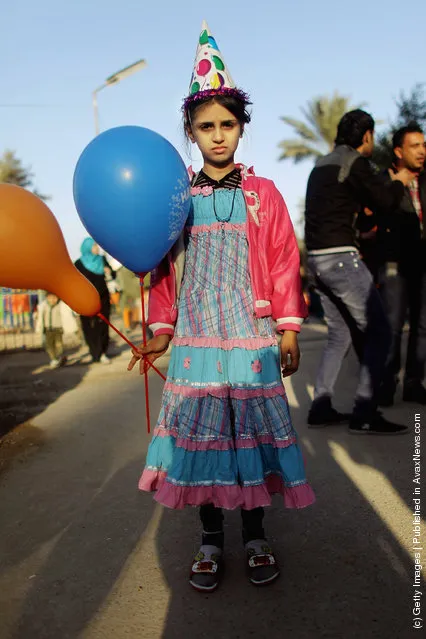
Nora Muaid stands in Zawraa Park

Nora Muaid stands in Zawraa Park on December 2, 2011 in Baghdad, Iraq. The park's 180-foot tall Ferris wheel opened earlier this year and is the second largest in the Middle East. (Photo by Mario Tama/Getty Images)
Details
04 Dec 2011 11:49:00