Loading...
Done
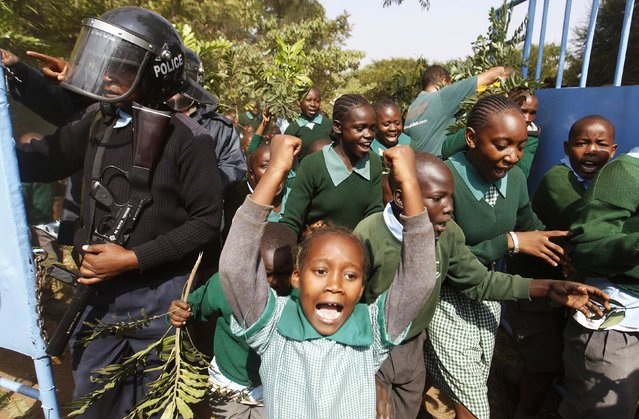
Students from Langata primary school run past riot police as they protest against a perimeter wall illegally erected by a private developer around their school playground in Kenya's capital Nairobi January 19, 2015. (Photo by Thomas Mukoya/Reuters)

Students from Langata primary school run past riot police as they protest against a perimeter wall illegally erected by a private developer around their school playground in Kenya's capital Nairobi January 19, 2015. Riot police used teargas to disperse students at a school in Nairobi as the children protested against the potential loss of their playground. The playground was fenced off in December, during the school holidays, by a prominent developer who also claims ownership of the land. The title to the contested site is said to be in the name of Airport View Housing Limited, according to local media, with plans to use the space to build a parking lot for a hotel. (Photo by Thomas Mukoya/Reuters)
Details
20 Jan 2015 13:04:00
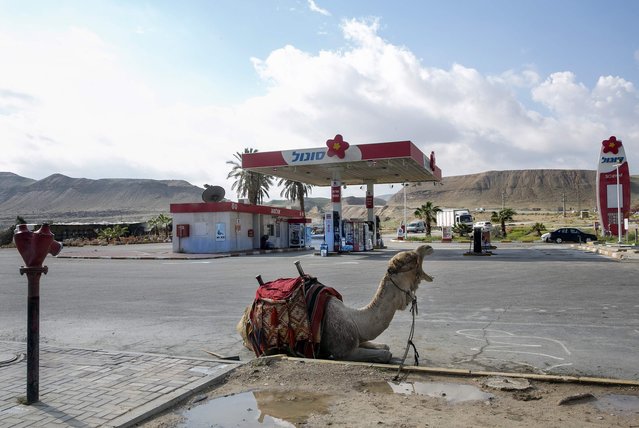
A camel rests at a fuel station in the Judean desert near the West Bank city of Jericho January 11, 2015. Reuters photographers from Mali to Mexico have shot a series of pictures of fuel stations. Whether it is plastic bottles by the roadside in Malaysia or a futuristic forecourt in Los Angeles, fuel stations help define our world. (Photo by Baz Ratner/Reuters)

A camel rests at a fuel station in the Judean desert near the West Bank city of Jericho January 11, 2015. Reuters photographers from Mali to Mexico have shot a series of pictures of fuel stations. Whether it is plastic bottles by the roadside in Malaysia or a futuristic forecourt in Los Angeles, fuel stations help define our world. Oil prices steadied above $48 a barrel on Tuesday, recovering from earlier losses as the dollar weakened against the euro. Oil prices have dropped nearly 60 percent since peaking in June 2014 on ample global supplies from the U.S. shale oil boom and a decision by OPEC to keep its production quotas unchanged. (Photo by Baz Ratner/Reuters)
Details
28 Jan 2015 12:15:00
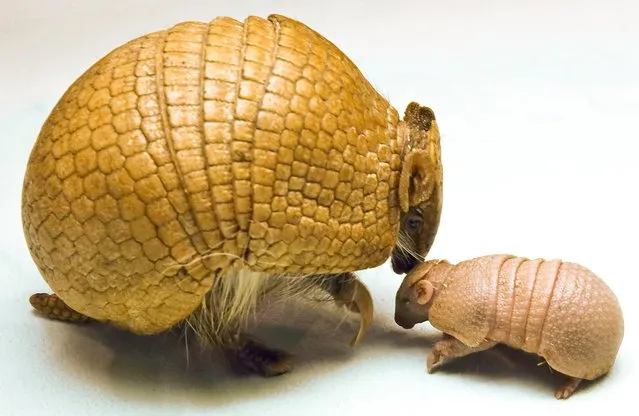
In this Sunday, April 27, 2014 handout photo provided by Busch Gardens Tampa, mother armadillo Zowie, left, welcomes her newborn Southern three-banded armadillo baby at the Animal Ambassador Team, in Tampa, Fla. The baby was able to walk and roll into a ball within moments of its birth. Southern three-banded armadillos are the only species of armadillo that can fully roll up into a ball. The baby armadillo currently weighs 118 grams, which is about the weight equivalent to an average cell phone. (Photo by AP Photo/Busch Gardens Tampa)

In this Sunday, April 27, 2014 handout photo provided by Busch Gardens Tampa, mother armadillo Zowie, left, welcomes her newborn Southern three-banded armadillo baby at the Animal Ambassador Team, in Tampa, Fla. The baby was able to walk and roll into a ball within moments of its birth. Southern three-banded armadillos are the only species of armadillo that can fully roll up into a ball. (Photo by AP Photo/Busch Gardens Tampa)
Details
03 May 2014 16:16:00
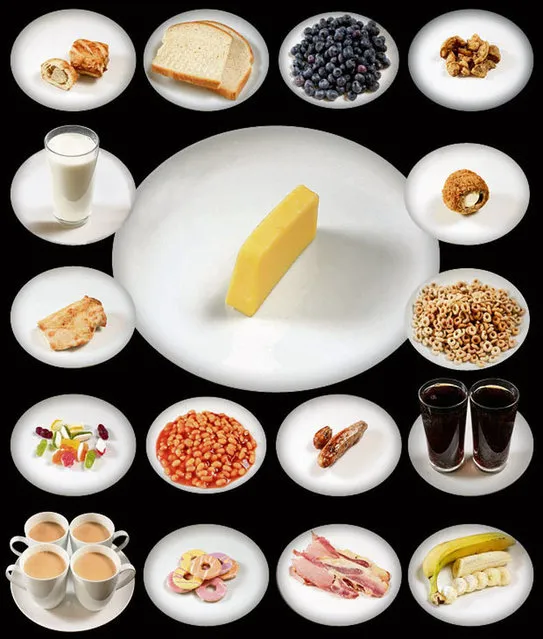
What 200 Calories Looks Like In Different Foods Part 1

Some foods have significantly more Calories than others but what does the difference actually look like. Each of the photographs below represents 200 Calories of the particular type of food; the images are sorted from low to high calorie density. When you consider that an entire plate of broccoli contains the same number of Calories as a small spoonful of peanut butter, you might think twice the next time you decide what to eat. According to the U.S. Department of Agriculture, the average adult needs to consume about 2000 - 2500 Calories to maintain their weight. In other words, you have a fixed amount of Calories to "spend" each day; based on the following pictures, which would you eat?


See Also: Ppart 2 _ Part 3
Details
30 Jul 2014 10:18:00
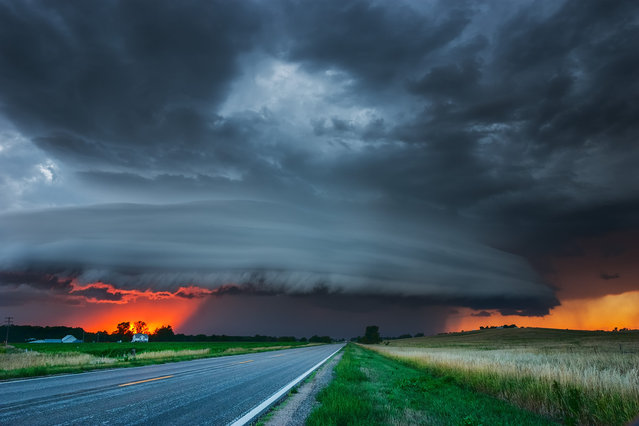
Vivid sunset under severe storm in central Nebraska August 17, 2005. (Photo by Mike Hollingshead)

Storm chasing photographer Mike Hollingshead makes a living following the worst storms in America, from snarling tornadoes chewing up the Kansas farmland to supercell thunderstorms massing over the Dakotas. His style is to get right in the path of the storm. While he says it’s less scary than you think – because most of the storm consists of heavy rain – it’s still extremely stressful. Photo: Vivid sunset under severe storm in central Nebraska August 17, 2005. (Photo by Mike Hollingshead)
Details
13 Aug 2014 11:25:00
Reading the Metro, enjoying some Swedish meatballs. (Photo by Svetlana Valyiskaya/Mercury)

It's often said that pets and their owners can start to look alike, but these adorable photographs take the old mantra to a new extreme. They are the work of Svetlana Valyiskaya (27), from St Petersburg, who snaps pets in everyday poses in her spare time from her job as a commercial photographer. The vibrant costumes and scenes, which Svetlana designs herself, have made the photos a hit in her native Russia – and it's not hard to see why. She said: “I really love animals, they are loyal, faithful and true and always interesting to work with – plus they never criticise the photographs afterwards”. (Photo by Svetlana Valyiskaya/Mercury)
Details
03 Sep 2014 10:44:00
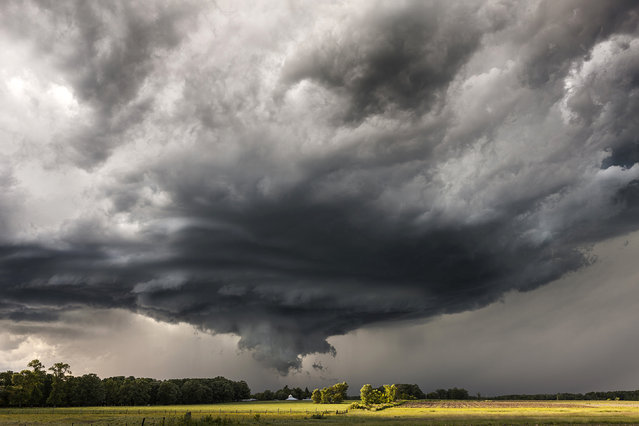
Supercell in Minnesota, near Browerville, Minnesota in 2014. (Photo by Camille Seaman/Caters News)

These stunning images show the phwoar-some power of some of Americas most extreme weather. Camille Seaman’s wondrous work features huge super cells, crashing lightning and gale-force winds. The roaming photographer has chased storms across the US from Iowa to Wyoming and from Minnesota to Texas. Her favorite places to chase are Kansas, Nebraska and South Dakota – notorious hotspots for spectacular storms. Here: Supercell in Minnesota, near Browerville, Minnesota in 2014. (Photo by Camille Seaman/Caters News)
Details
26 Jan 2015 12:10:00
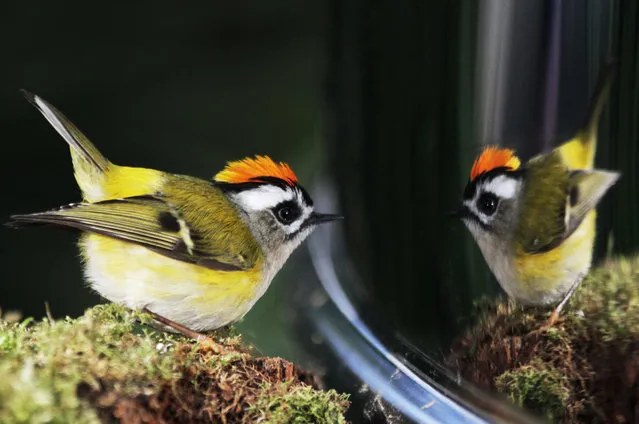
Golden-Crowned Kinglet

Golden-crowned Kinglets boldly bear their flashy lemon-yellow crest and a black eyebrow stripe. Taking a good look at them might be rather challenging, since they spend most of their time in the dense fir foliage or spruce. However, if you’re patient enough to find them, listen for their shrill, thin song. Though these “little Kings” are only a tad bit larger than a hummingbird, they can survive easily extreme cold by huddling close together. They breed in montane west and the far north and only visit North America during winter.
Details
21 Jan 2015 13:20:00