Loading...
Done
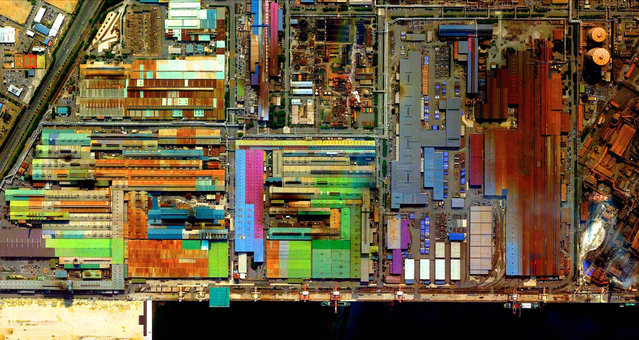
Industrial Sector, Tokai, Japan. (Photo by Benjamin Grant/Digital Globe/Caters News)

This series of pictures shot by satellite, show the man-made world as astronauts see it. Artist Benjamin Grant uses Google Earth to find the most compelling satellite images of human civilization. The stunning pictures of sprawling metropolises and vast reservoirs are sometimes unidentifiable until zoomed in. In order to find an extraordinary picture in the practically endless supply of satellite data, Benjamin focuses on the themes of current events or environmental issues. Here: Industrial Sector, Tokai, Japan. (Photo by Benjamin Grant/Digital Globe/Caters News)
Details
04 Feb 2015 12:21:00
A Hindu devotee performs a ritual on Bagmati River during Kuse Aunse (Father's Day) at Gokarna Temple in Kathmandu, Nepal September 13, 2015. (Photo by Navesh Chitrakar/Reuters)

A Hindu devotee performs a ritual on Bagmati River during Kuse Aunse (Father's Day) at Gokarna Temple in Kathmandu, Nepal September 13, 2015. Hindus all over the country, whose fathers have passed away, come to the temple for worship, holy dips, and to present offerings on this occasion. (Photo by Navesh Chitrakar/Reuters)
Details
14 Sep 2015 13:20:00
Maeklong Railway Market. (Photo by Trent Strohm)

“Maeklong Railway Market, located in Samut Songkhram, Thailand, around 37 miles west of Bangkok, looks like any other open-air market in Asia. HOWEVER...”. – Kaushik via Amusing Planet. Photo: Maeklong Railway Market (Photo by Trent Strohm)
Details
04 Jan 2013 16:16:00


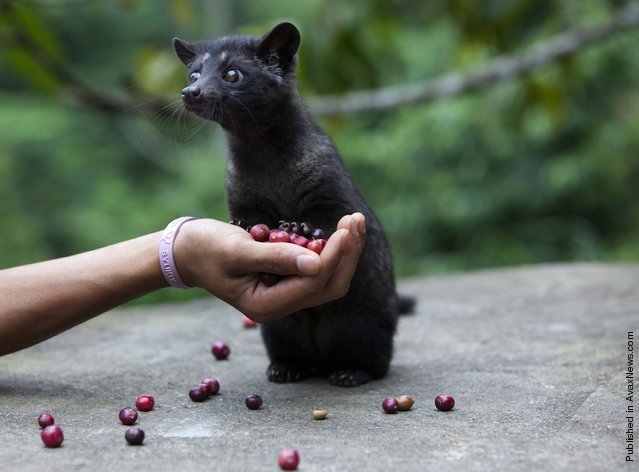
“Kopi luwak (Malay pronunciation), or civet coffee, is one of the world's most expensive and low-production coffee. It is made from the beans of coffee berries which have been eaten by the Asian Palm Civet (Paradoxurus hermaphroditus) and other related civets, then passed through its digestive tract. ...
Details
19 Mar 2011 18:41:00


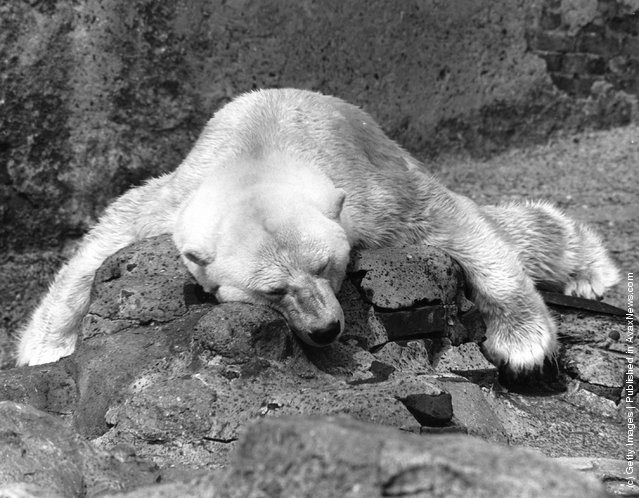
A polar bear fast asleep at London Zoo. (Photo by Fox Photos/Getty Images). 1961
Details
23 Jul 2011 12:00:00
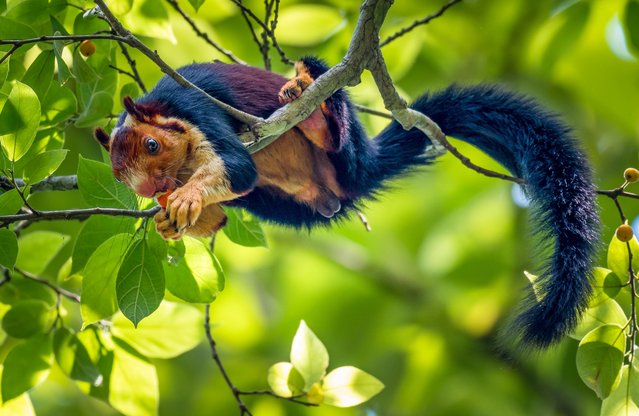
Its main predators are the birds of prey and the leopard. The Giant Squirrel is mostly active in the early hours of the morning and in the evening, resting in the midday. They are typically solitary animals that only come together for breeding. (Photo by Kaushik Vijayan/South West News Service)

The Malabar Giant squirrel – double the size of their grey relatives and measuring up to 36 inches (91.5 cm) from head to tail – lives deep in the forests of India. The athletic animals can leap an incredible 20 feet (6 m) between trees. Photographer Kaushik Vijayan, 39, snapped the animals in their native habit to produce these stunning images. Kaushik, from Kerala State, India, said: “Up until that point I had never heard about a squirrel like that or seen one. The sight was an absolute feast for my eyes. The squirrels fascinated me and I got excited to capture this beauty on my camera”. (Photo by Kaushik Vijayan/South West News Service)
Details
04 Apr 2019 00:03:00
Mr. Grindell Matthews with his latest invention, the new photographic gun which is the latest development in sky signs. 1933. It can throw a beam of light 15 miles into the sky. (Photo by Fox Photos)

Mr. Grindell Matthews with his latest invention, the new photographic gun which is the latest development in sky signs. 1933. It can throw a beam of light 15 miles into the sky. (Photo by Fox Photos)
Details
12 Dec 2012 06:03:00
Ophiocordyceps Sinensis A.K.A. Caterpillar Fungus

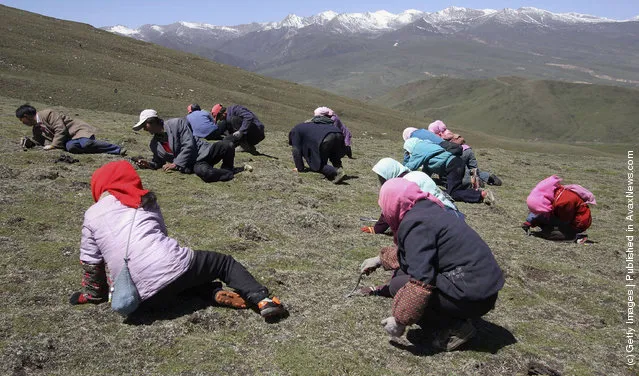
“There are over 680 documented species of the sac fungus genus Ophiocordyceps, and one of the best known of these is Ophiocordyceps sinensis, colloquially known as caterpillar fungus. The fungus is known in Tibetan as yartsa gunbu or yatsa gunbu. O. sinensis is known in the West as a medicinal mushroom and its use has a long history in Traditional Chinese medicine as well as Traditional Tibetan medicine. The highly valuable fungus-caterpillar combination is hand-collected and is used as an aphrodisiac and as a treatment for a variety of ailments from fatigue to cancer”. – Wikipedia

Photo: Nomads dig for Chinese caterpillar fungus from a mountain May 25, 2007 in Guide County, Hainan Prefecture, Qinghai Province, China. Nomads can earn about 2,000 yuan to 5,000 yuan (about U.S. $260 to $653 ) through their work during the fifty-day Chinese caterpillar fungus gathering season. (Photo by China Photos/Getty Images)
Details
26 Sep 2011 10:47:00