Loading...
Done
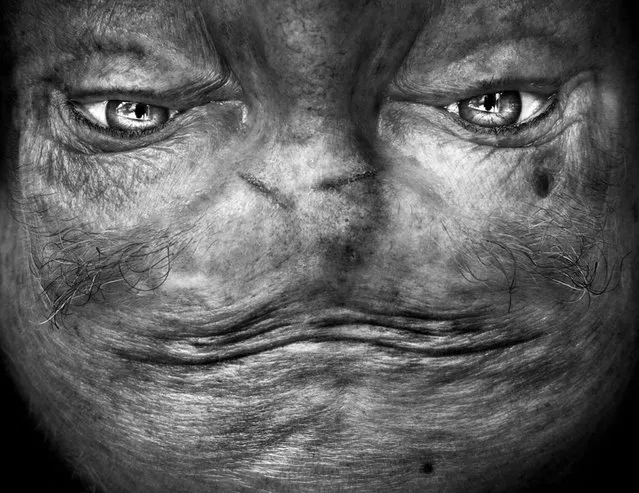
Upside-Down Portrait Photos By Anelia Loubser

This latest photo series by Anelia Loubser, a photographer in Cape Town, reminds us that even the simplest change in perspective can change how things look drastically. By selectively cropping and flipping the dark portraits in her “Alienation” series, Loubser makes basic human portraits look like creepy alien close-ups.
Details
12 Sep 2014 16:54:00
Photo by Polixeni Papapetrou

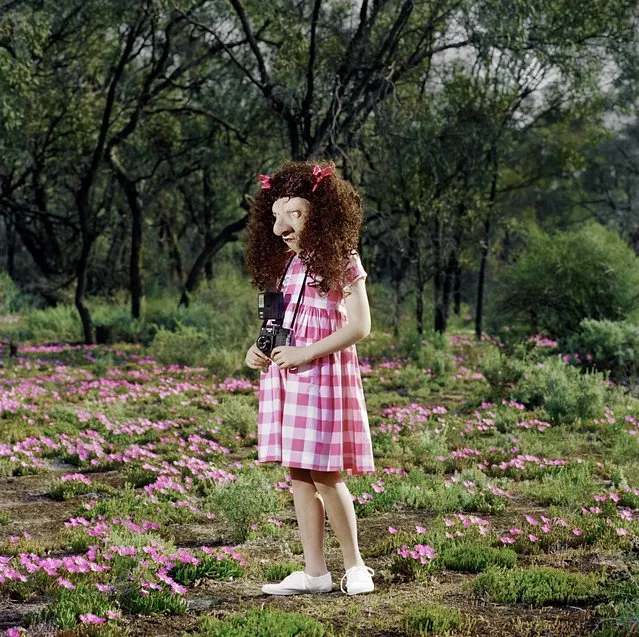
Australian artist Polixeni Papapetrou trends the line between fantasy/theatre, mythology/reality, archetype/play, male/female, child/adult and animal/human. As with all her work the series The Dreamkeepers tells a story that includes her autobiographical relationship with her children, but it also says a lot more about the condition of childhood - its place in our culture and how we react to images of children in photography.

Details
06 Aug 2012 08:09:00
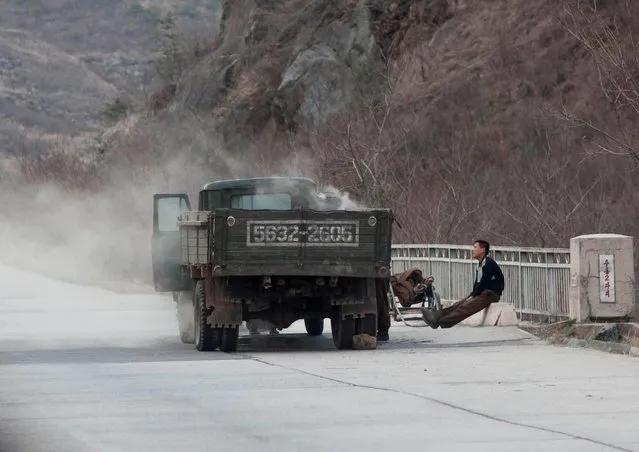
The kind of scene you can see along the highway. Overloaded trucks but broken down with lot of smoke coming out... I was allowed to make those pics as after lunch, my guides were enjoying the confort of the bus seats and snoring... (Photo by Eric Lafforgue/Exclusivepix Media)

Taking the highways in North Korea is a great experience as it allows to see the daily life of the country not controled by the government like in Pyongyang. They connect the main towns of the countries and are totally empty of cars. Here: The kind of scene you can see along the highway. Overloaded trucks but broken down with lot of smoke coming out... I was allowed to make those pics as after lunch, my guides were enjoying the confort of the bus seats and snoring... (Photo by Eric Lafforgue/Exclusivepix Media)
Details
24 Jul 2017 09:19:00
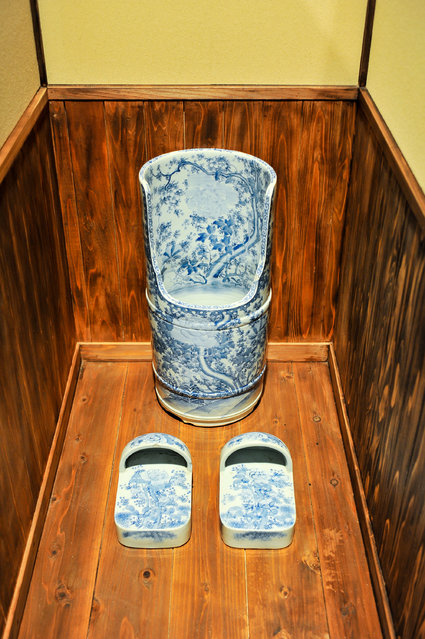
An old toilet is displayed during the “Toilet!? Human Waste and Earth's Future” exhibition at The National Museum of Emerging Science and Innovation – Miraikan on July 1, 2014 in Tokyo, Japan. The exhibition focuses on how the toilet has changed our daily lives and discovers what the most environment-friendly and ideal toilet is. (Photo by Keith Tsuji/Getty Images)

An old toilet is displayed during the “Toilet!? Human Waste and Earth's Future” exhibition at The National Museum of Emerging Science and Innovation – Miraikan on July 1, 2014 in Tokyo, Japan. The exhibition focuses on how the toilet has changed our daily lives and discovers what the most environment-friendly and ideal toilet is. (Photo by Keith Tsuji/Getty Images)
Details
03 Jul 2014 11:34:00


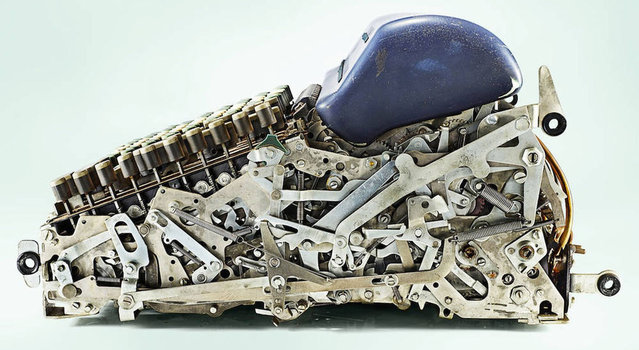
In his newest series of photos called Low Tech, Kevin Twomey artfully captures the complexity of old-style typewriters and similar machines. Despite being completely outdated, you cannot help being amazed at how complicated those “simple” devises really are. Hundreds of little parts were meticulously put together to form a machine that would perform such “basic” functions by today’s standards. Similarly, very few modern people actually think about how complicated the current technology really is. We take for granted streaming videos, GPS, and countless devises that we use every day, while in reality, these things would seem like magic to even the most prominent scientists from only half a century ago. (Photo by Kevin Twomey)
Details
21 Nov 2014 12:42:00
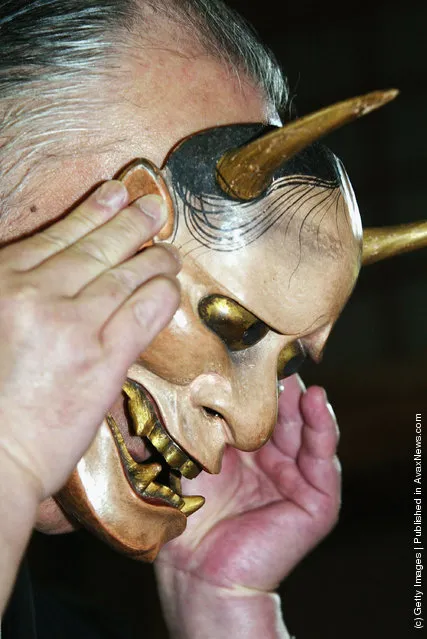
A renowned Noh actor, Otoshige Sakai, demostrates how to put on a Noh mask

“Noh, or Nogaku – derived from the Japanese word for “skill” or “talent” – is a major form of classical Japanese musical drama that has been performed since the 14th century. Many characters are masked, with men playing male and female roles. Traditionally, a Noh “performance day” lasts all day and consists of five Noh plays interspersed with shorter, humorous kyōgen pieces. However, present-day Noh performances often consist of two Noh plays with one Kyōgen play in between”. – Wikipedia

Photo: A renowned Noh actor, Otoshige Sakai, demostrates how to put on a Noh mask, on May 17, 2004 in Tokyo, Japan. (Photo by Koichi Kamoshida/Getty Images)
Details
02 Aug 2011 14:09:00
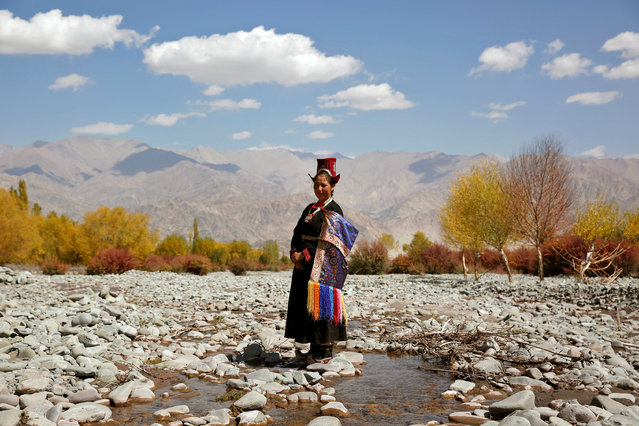
Tsewang Dolma, 33, a farmer and housewife poses for a photograph in Matho, a village nestled high in the Indian Himalayas, India September 29, 2016. When asked how living in the world's fastest growing major economy had affected life, Dolma replied: “Our culture is spoiled now. We don't wear our traditional dress”. (Photo by Cathal McNaughton/Reuters)

Tsewang Dolma, 33, a farmer and housewife poses for a photograph in Matho, a village nestled high in the Indian Himalayas, India September 29, 2016. When asked how living in the world's fastest growing major economy had affected life, Dolma replied: “Our culture is spoiled now. We don't wear our traditional dress”. (Photo by Cathal McNaughton/Reuters)
Details
13 Oct 2016 11:32:00
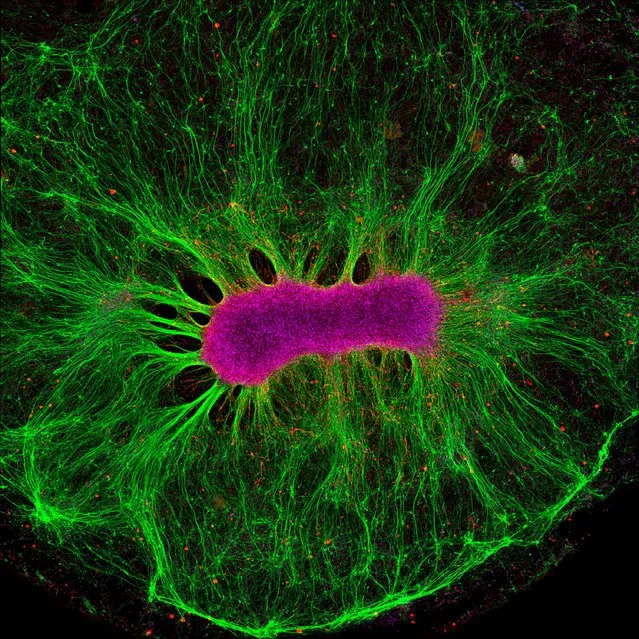
Brain-on-a-chip. Dazzling in green and magenta this image shows the nerve fibres (in green) produced by neural stem cells (in magenta) as they grow on a synthetic gel. Captured by a technique known as confocal microscopy, the image is part of research shedding light on how tinkering with the environment can affect the way in which nerve fibres grow. (Photo by Collin Edington and Iris Lee/Massachusetts Institute of Technology/Wellcome Images)

Brain-on-a-chip. Dazzling in green and magenta this image shows the nerve fibres (in green) produced by neural stem cells (in magenta) as they grow on a synthetic gel. Captured by a technique known as confocal microscopy, the image is part of research shedding light on how tinkering with the environment can affect the way in which nerve fibres grow. (Photo by Collin Edington and Iris Lee/Massachusetts Institute of Technology/Wellcome Images)
Details
17 Mar 2017 00:01:00