Loading...
Done
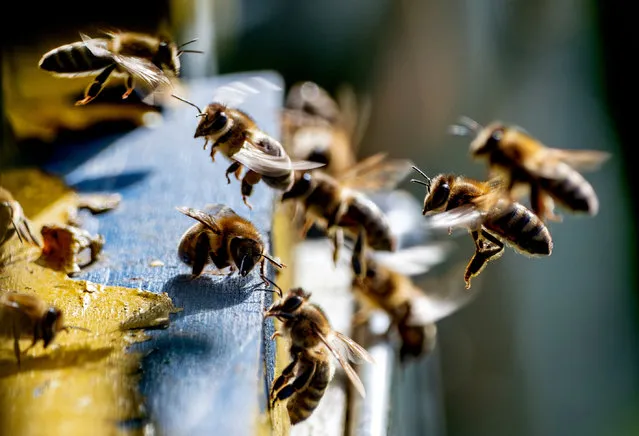
Bees fly in front of a beehive in the outskirts of Frankfurt, Germany, Monday, April 8, 2024. (Photo by Michael Probst/AP Photo)

Bees fly in front of a beehive in the outskirts of Frankfurt, Germany, Monday, April 8, 2024. (Photo by Michael Probst/AP Photo)
Details
22 Apr 2024 04:16:00
Protesters wear gas masks in the front of the Romanian Environment Ministry in Bucharest March 4, 2019, to demand better air. Dozens of people holding placards reading “Our children don't breath air anymore” gather in the front of the Environment Ministry to ask for better breathable air in Bucharest. (Photo by Daniel Mihailescu/AFP Photo)

Protesters wear gas masks in the front of the Romanian Environment Ministry in Bucharest March 4, 2019, to demand better air. Dozens of people holding placards reading “Our children don't breath air anymore” gather in the front of the Environment Ministry to ask for better breathable air in Bucharest. (Photo by Daniel Mihailescu/AFP Photo)
Details
07 Mar 2020 00:07:00
Sparks fly in front of the Milky Way in Himachal Pradesh, India on May 12, 2023.  Lit steel wool is spun in front of the stunning cluster of stars and over a pool of water. The scene was pictured in the Himalayas, by using a 30 second exposure to capture the stars and movement of sparks. (Photo by Ganesh Bagal/Solent News/Rex Features/Shutterstock)

Sparks fly in front of the Milky Way in Himachal Pradesh, India on May 12, 2023. Lit steel wool is spun in front of the stunning cluster of stars and over a pool of water. The scene was pictured in the Himalayas, by using a 30 second exposure to capture the stars and movement of sparks. (Photo by Ganesh Bagal/Solent News/Rex Features/Shutterstock)
Details
26 May 2023 04:14:00
Anti-government demonstrators perform in front of burning barricades as they attend a protest against a constitutional amendment, known as PEC 55, that limit public spending, in front of Brazil's National Congress in Brasilia, Brazil, November 29, 2016. (Photo by Adriano Machado/Reuters)

Anti-government demonstrators perform in front of burning barricades as they attend a protest against a constitutional amendment, known as PEC 55, that limit public spending, in front of Brazil's National Congress in Brasilia, Brazil, November 29, 2016. (Photo by Adriano Machado/Reuters)
Details
01 Dec 2016 12:43:00


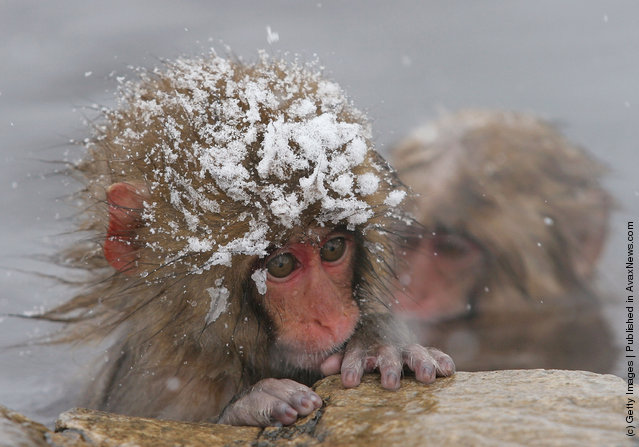
Japanese macaque monkeys enjoy sitting in the hot springs at Jigokudani-Onsen (Hell Valley) on January 23, 2005 in Jigokudani, Nagano-Prefecture, Japan. Japanese Macaques, also known as snow monkeys are the most northerly nonhuman primate in the world. In 1963 a female Macaque ventured into the hot springs to retrieve some soybeans. This behaviour was adopted by other monkeys, and eventually by the entire troop. This Macaque troop regularly visits the Jigokudani-Onsen springs to escape the cold. The hot springs are said to help relieve nerve pain and fatigue. (Photo by Koichi Kamoshida/Getty Images)
Details
20 May 2011 08:04:00
Lisa Yu crawls through a mud pit under low slung barbed wire as she competes in The Tough Bloke Challenge

Lisa Yu crawls through a mud pit under low slung barbed wire as she competes in The Tough Bloke Challenge on March 4, 2012 in Melbourne, Australia. The Tough Bloke Challenge is one of the most gruelling adventure runs in Australia consisting of 18 obstacles over a 6 km cross-country course laden with thick mud-pits and ice-cold water crossings. (Photo by Scott Barbour/Getty Images)
Details
04 Mar 2012 12:36:00
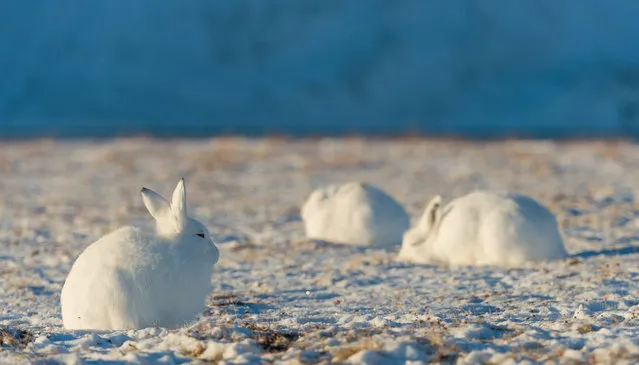
Arctic Hare

The arctic hare, or polar rabbit, is a species of hare which is adapted largely to polar and mountainous habitats. The arctic hare survives with a thick coat of fur and usually digs holes in the ground or under snow to keep warm and sleep. Arctic hares look like rabbits but have shorter ears, are taller when standing, and, unlike rabbits, can thrive in cold climates. They can travel together with many other hares, sometimes huddling with dozens or more, but are usually found alone, taking, in some cases, more than one partner. The arctic hare can run up to 60 kilometres per hour (40 mph). Its predators include the arctic wolf, arctic fox, and ermine.
Details
17 Mar 2014 13:56:00
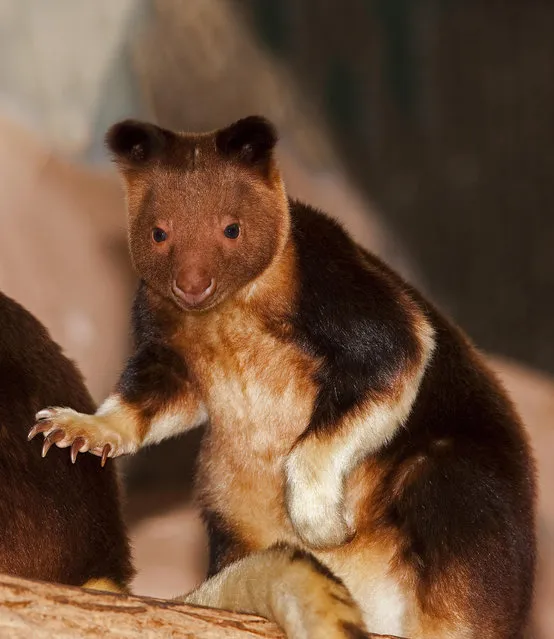
Goodfellow's Tree-Kangaroo

For some reason, everything that comes from Australia is either very cute or very poisonous; sometimes cute and poisonous at the same time. For example, Slow Loris, which you probably have seen eating a ball of rice on YouTube, is actually a very poisonous creature, despite its extreme cuteness. Goodfellow’s tree-kangaroos, on the other hand, are all cuteness and no poison. Just look at its cute little snout and furry paws, as it gingerly scratches its stomach, while sitting on its hind legs! If you don’t find this creature adorable, nothing will be able to thaw your stone-cold heart.
Details
30 Nov 2014 13:38:00