Loading...
Done
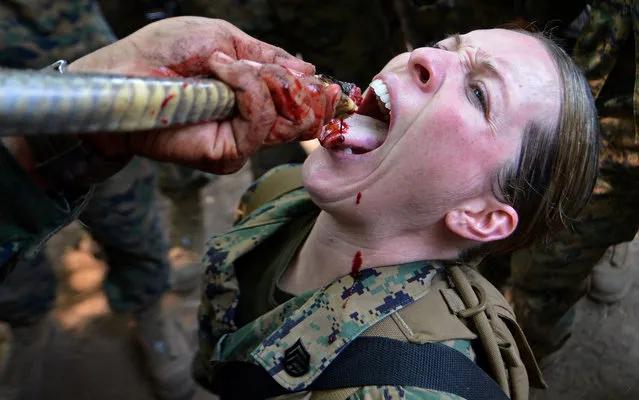
In a military base in the Thai province of Chon Buri February 20 U.S. Marines Navy with Thailand began their studies in jungle survival. The event is held in joint military exercises “Cobra Gold 2013”. During a jungle survival program February 20, 2013 taught by Royal Thai Special Forces in Sannapit, Thailand, U.S. Marines learned to catch cobras and drink their fresh blood, not to mention eat forest insects and pull the heads off of chicken. The training was part of Operation Cobra Gold 13, the 32nd edition of international military exercises hosted by the Thai. According to a U.S. Marines press release, Cobra Gold is the largest exercise of its kind in Asia and incorporates troops from five other nations in addition to the U.S. and Thailand. The Daily Mail reports that the Marines were invited to experience the local custom of drinking cobra blood after being taught to catch and kill cobras in the wild. As CNN notes, Cobra blood is believed to be a panacea and aphrodiasic in parts of Southeast Asia. In Jakarta, vendors can earn over $100 a night selling shots of cobra blood mixed with liquor. (Photo by Pornchai Kittiwongsakul/AFP Photo)

During a jungle survival program February 20, 2013 taught by Royal Thai Special Forces in Sannapit, Thailand, U.S. Marines learned to catch cobras and drink their fresh blood, not to mention eat forest insects and pull the heads off of chicken. The training was part of Operation Cobra Gold 13, the 32nd edition of international military exercises hosted by the Thai. According to a U.S. Marines press release, Cobra Gold is the largest exercise of its kind in Asia and incorporates troops from five other nations in addition to the U.S. and Thailand. The Daily Mail reports that the Marines were invited to experience the local custom of drinking cobra blood after being taught to catch and kill cobras in the wild. As CNN notes, Cobra blood is believed to be a panacea and aphrodiasic in parts of Southeast Asia. In Jakarta, vendors can earn over $100 a night selling shots of cobra blood mixed with liquor. (Photo by Pornchai Kittiwongsakul/AFP Photo)
Details
23 Feb 2013 11:52:00
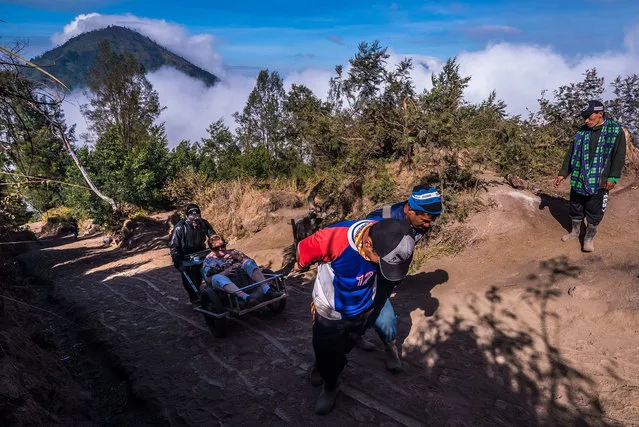
Miners pulling up lazy tourists to the rim of Kawah Ijen (Ijen Volcano), East Java, Indonesia on September 21, 2017. They will earn as much as they would bring down a load of sulfur. Nomadic Explorer, Cultural Lifestyle Photographer Claudio Sieber captured striking images of miners working at Ijen volcanic range in East Java, Indonesia. The sulphur miners risk their lives daily as they climb the active volcano carrying heavy loads, which they sell to sugar refineries. Shortly after midnight curious tourists are flocking in hundreds through the gate of Ijen's foothills to be right on time, driven by the images others took before them. Kawah Ijen is the one of the world's largest acidic volcanic crater lake; famous for its turquoise color as well as the unreal atmosphere it offers during darkness. A dusty path zigzags 3 kilometers up to the crater rim. This doesn't mean anything challenging; in particular, special sights have to be deserved anyway. The irritating smell of sulfur announces the near of the crater's existence. Arriving on the crater's rim the reward for the torture becomes visible. Blue fire darts its tongues through the fumes of sulfur dioxide. Somehow, the spectacle isn't as romantic as expected, since it is also the rough working space of approx. 150 sulfur miners who start their shift at 1 am. Lately, harvesting the abundance of devil's gold received international attention. This did obviously not really improve a miner's lifestyle; neither did it contribute to a better wage. (Photo by Claudio Sieber/Barcroft Images)

Miners pulling up lazy tourists to the rim of Kawah Ijen (Ijen Volcano), East Java, Indonesia on September 21, 2017. They will earn as much as they would bring down a load of sulfur. Nomadic Explorer, Cultural Lifestyle Photographer Claudio Sieber captured striking images of miners working at Ijen volcanic range in East Java, Indonesia. The sulphur miners risk their lives daily as they climb the active volcano carrying heavy loads, which they sell to sugar refineries. (Photo by Claudio Sieber/Barcroft Images)
Details
02 Oct 2017 08:31:00
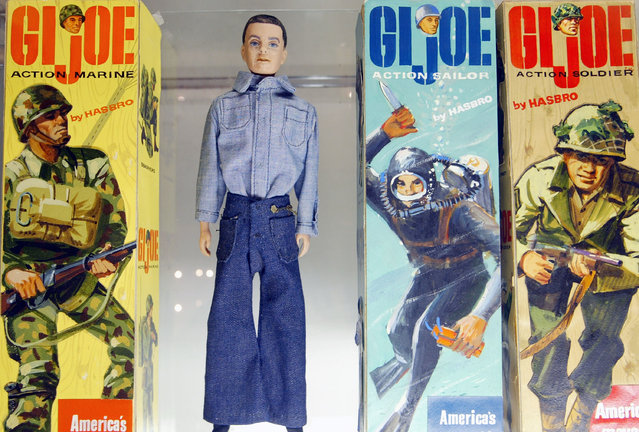
Vintage G.I. Joe figurers are on display at the 2003 Hasbro International G.I. Joe Collectors' Convention June 27, 2003 in Burlingame, California. Hundreds of G.I. Joe fans from around the country are attending the convention to buy, sell and trade G.I. Joe and military action figures. (Photo by Justin Sullivan/Getty Images)

“G.I. Joe is a line of action figures produced by the toy company Hasbro. The term G.I. stands, in popular usage, for Government Issued and after the First World War became a generic term for U.S. soldiers. The origin of the term dates to World War I, when much of the equipment issued to U.S. soldiers was stamped “G.I.”, meaning that it was made from galvanized iron. The development of G.I. Joe led to the coining of the term “action figure”. G.I. Joe's appeal to children has made it an American icon among toys”. – Wikipedia. Photo: Vintage G.I. Joe figurers are on display at the 2003 Hasbro International G.I. Joe Collectors' Convention June 27, 2003 in Burlingame, California. (Photo by Justin Sullivan/Getty Images)
Details
27 Mar 2014 07:46:00
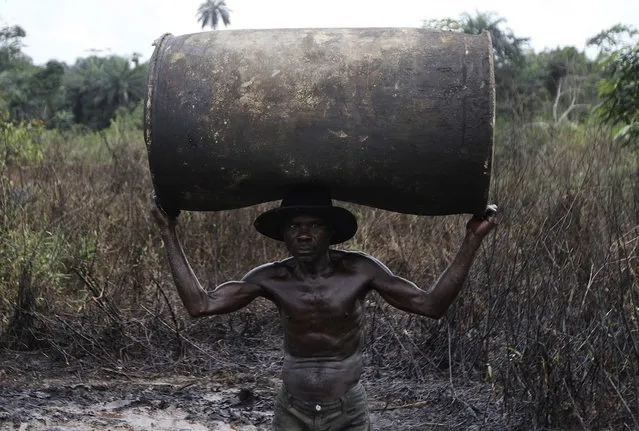
Ebiowei, 48, carries an empty oil container on his head to a place where it would be filled with refined fuel at an illegal refinery site near river Nun in Nigeria's oil state of Bayelsa November 27, 2012. (Photo by Akintunde Akinleye/Reuters)

Ebiowei, 48, carries an empty oil container on his head to a place where it would be filled with refined fuel at an illegal refinery site near river Nun in Nigeria's oil state of Bayelsa November 27, 2012. Locals in the industry say workers can earn $50 to $60 a day. Thousands of people in Nigeria engage in a practice known locally as “oil bunkering” – hacking into pipelines to steal crude then refining it or selling it abroad. The practice, which leaves oil spewing from pipelines for miles around, managed to lift around a fifth of Nigeria's two million barrel a day production last year according to the finance ministry. (Photo by Akintunde Akinleye/Reuters)
Details
18 Jan 2013 14:29:00
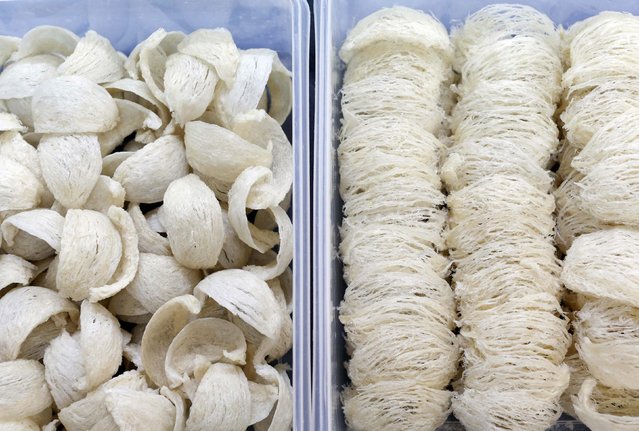
Two styles of cleaned bird's nest, Yan Zhan (L) and Su Zhan (R) await repacking at a processing plant in Kuala Lumpur, February 17, 2015. Prized in China for is alleged health benefits for hundreds of years, nests made from swiftlets' saliva are being mixed into coffee and cereal as the Southeast Asian producers of the delicacy seek to broaden its appeal, and their profit margins. (Photo by Olivia Harris/Reuters)

Two styles of cleaned bird's nest, Yan Zhan (L) and Su Zhan (R) await repacking at a processing plant in Kuala Lumpur, February 17, 2015. Prized in China for is alleged health benefits for hundreds of years, nests made from swiftlets' saliva are being mixed into coffee and cereal as the Southeast Asian producers of the delicacy seek to broaden its appeal, and their profit margins. The nests are among the world's most expensive foods, selling for up to $2,500 a kg and the swiftlets that weave them are indigenous to Indonesia, Malaysia, Thailand and Vietnam. (Photo by Olivia Harris/Reuters)
Details
24 Feb 2015 13:57:00
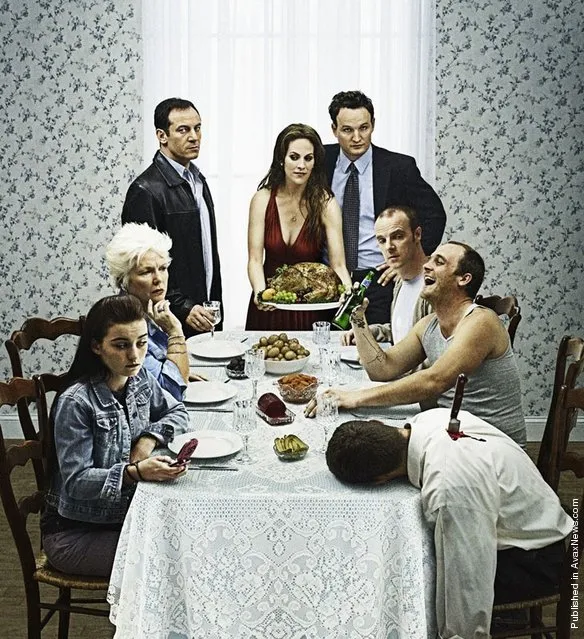
Photographers: Jim Fiscus

“Jim Fiscus is an American photographer specializing in editorial and advertising photography, including several highly regarded campaigns for the Showtime series Dexter, starring Michael C. Hall. Fiscus, who is based in Athens, Georgia, has won many awards for his work, including at the 2005 International Photo Awards for his portraits of hip-hop and R&B artists Jay-Z, Usher, and Outkast. Also in 2005, he was named International Photographer of the Year at the Lucies, and he is the winner of the 2008 International Aperture Award for his photograph of English chef and best-selling cookbook author Jamie Oliver, commissioned by Channel 4 in the U.K. In 2009, his photographic novella, “The Unfortunate Moment of Misunderstanding”, was displayed at Industrial Color’s M Project Gallery in New York in June 2009”. – Wikipedia
Details
03 Apr 2012 11:05:00


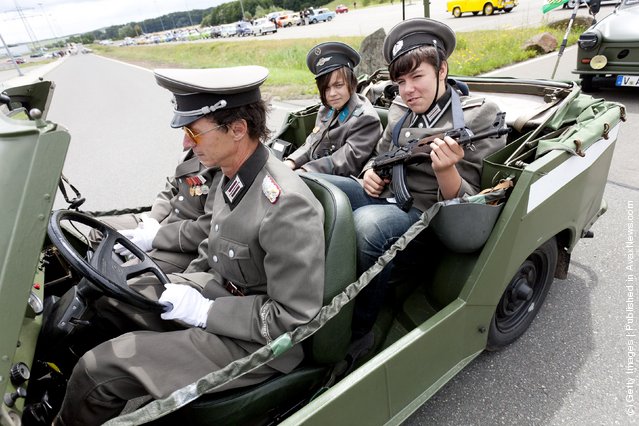
“The Trabant is a car that was produced by former East German auto maker VEB Sachsenring Automobilwerke Zwickau in Zwickau, Sachsen. It was the most common vehicle in East Germany, and was also exported to countries both inside and outside the communist bloc. The main selling points was that it had room for four adults and luggage in a compact, light and durable shell and that it was fast (when introduced) and durable. With its mediocre performance, smoky two-stroke engine, and production shortages, the Trabant is often cited as an example of the disadvantages of centralized planning; on the other hand, it is regarded with derisive affection as a symbol of the failed former East Germany and of the fall of communism (in former West Germany, as many East Germans streamed into West Berlin and West Germany in their Trabants after the opening of the Berlin Wall in 1989). It was in production without any significant changes for nearly 30 years with 3,096,099 Trabants produced in total”. – Wikipedia

Photo: Enthusiasts weared in uniforms of the former eastern german army trive in a military Trabant car as fans and owners of East German-era Trabant cars gather at the 2011 International Trabantfahrer Treffen (International Trabant Drivers Meeting) on June 26, 2011 in Zwickau, Germany. The Trabant, also known as the Trabi, was among the main cars produced in communist East Germany and built by VEB Sachsenring Automobilwerke in Zwickau for 30 years until 1989. Today the car has cult status for many followers and one company, IndiKar, is even seeking to revive the brand in a modern, electric version. (Photo by Carsten Koall/Getty Images)
Details
27 Jun 2011 12:21:00
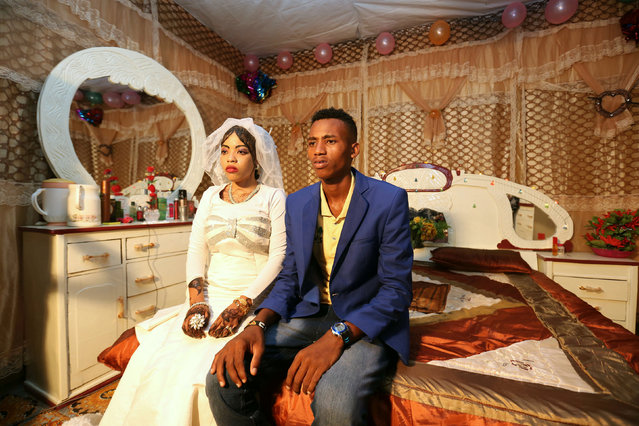
Somali couple Mohamed Noor (L) and Huda Omar pose for a photograph at their makeshift home during their wedding ceremony in Mogadishu's Rajo camp, Somalia August 17, 2016. Having met two years ago, the pair have just married at Rajo camp, where some 400 families live. Most, like Noor's parents, came here in the early 1990s to flee famine. They stayed on as years of conflict ravaged the Horn of Africa nation. As at any wedding, there is plenty of dancing and sweet treats for the young couple as they start married life in Noor's simple home, made of iron and plastic sheets. Noor works as a mason with his father. Others here are builders or sell sweets, nuts and stick toothbrushes to make money. Some beg around the seaside city, which like the rest of Somalia has been gripped by violence since the toppling of dictator Mohamed Siad Barre in 1991. (Photo by Feisal Omar/Reuters)

Somali couple Mohamed Noor (L) and Huda Omar pose for a photograph at their makeshift home during their wedding ceremony in Mogadishu's Rajo camp, Somalia August 17, 2016. Having met two years ago, the pair have just married at Rajo camp, where some 400 families live. Most, like Noor's parents, came here in the early 1990s to flee famine. (Photo by Feisal Omar/Reuters)
Details
14 Sep 2016 10:35:00