A Hindu devotee lies on a road as she worships the Sun god during the religious festival of Chhath Puja in Kolkata, India October 26, 2017. (Photo by Rupak De Chowdhuri/Reuters)
Japanese artist Sachi shows off her creation of a realistic 3D cat portrait, made by using felted wool, at her house in Sagamihara, Japan, January 21, 2022. (Photo by Akira Tomoshige/Reuters)
Undated handout photo issued by Andrew H Williams/WPR of resident Rosemary Lester at Sherwood Grange care home in Kingston Vale, south west London, focusses her attention during a nude life drawing class. Issue date: Monday July 25, 2022. (Photo by Andrew H Williams/Care UK/PA Wire)
Waura Indians wrestle during this year's “quarup”, a ritual held over several days to honour in death a person of great importance to them, in Xingu National Park, Mato Grosso State, Brazil August 25, 2013. (Photo by Ueslei Marcelino/Reuters)
Many laws still in existence throughout the united states are wildly outdated, rendering them completely ridiculous, useless and bizarre. The absurdity is illustrated by new York-based photographer Olivia Locher, who catalogs the crazy rules and regulations of each state in a playful photographic series ‘I fought the law’. Readers might be surprised to learn that in Rhode island, it is illegal to wear transparent clothing, nobody is allowed to ride a bicycle in a swimming pool in California and Arizona residents may not have more than two dildos in a house. Take a look at the ongoing series below to find out more about the peculiar oddities present in the American legal system.
A female Chinese People's Liberation Army soldier looks at members of an honor guard preparing for a welcome ceremony for visiting German President Joachim Gauck, outside the Great Hall of the People in Beijing, Monday, March 21, 2016. (Photo by Andy Wong/AP Photo)
U.S. Army soldiers with the 1st Battalion, 501st Infantry Regiment deployed to Combat Outpost Sabari, Afghanistan scan their area as they begin a multi-day air assault mission near the Pakistani border of eastern Afghanistan's Khost province May 2, 2012. (Photo by Staff Sgt. Joshua L. DeMotts/U.S. Air Force)
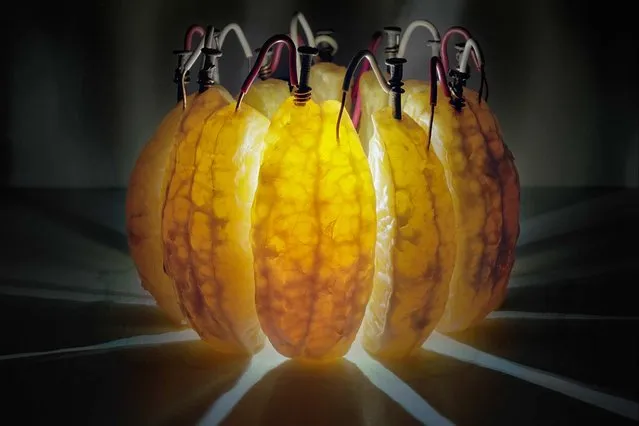
Wedges of an orange generate enough current and electrical juice – 3.5 volts – to power an LED. The fruit’s citric acid helps electrons flow from galvanized nails to copper wire in this 14-hour exposure. This image was published in September’s Visions of Earth, a trio of photos that appear in each issue of National Geographic. (Photo by Caleb Charland/National Geographic)