Loading...
Done


“With a fourth explosion rocking the Fukushima nuclear plant on Tuesday, danger of the spent nuke fuel pool boiling and radiation levels at the facility's gate increasing hundredfold, fears of a meltdown in Japan skyrocket”. – Russia Today

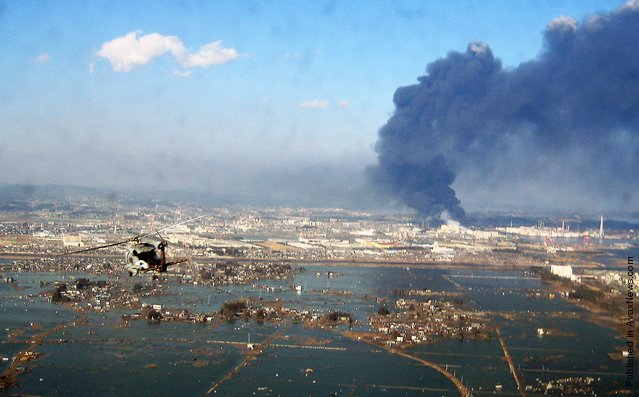
Photo: In this handout image provided by U.S. Navy, an aerial view of tsunami and earthquake damage is seen from an SH-60B helicopter assigned to the Chargers of Helicopter Antisubmarine Squadron (HS) 14 from Naval Air Facility Atsugi March 12, 2011 seen from the air of Sendai, Japan. (Photo by U.S. Navy via Getty Images)
Details
16 Mar 2011 10:19:00
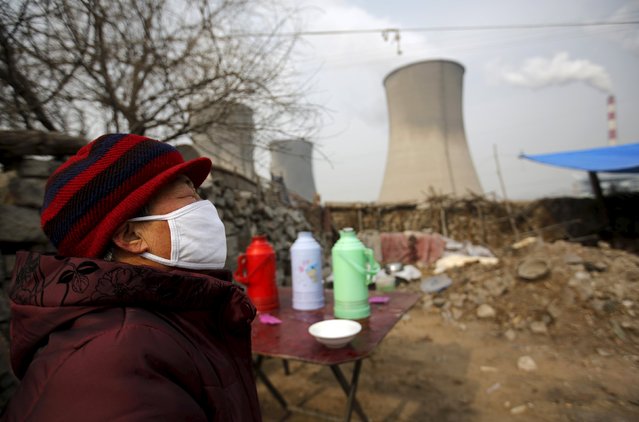
A woman wearing a mask reacts at her garden which  locates next to chimneys of coal-fired power plant in Shijiazhuang, Hebei province, China, January 28, 2015. Beijing introduced tougher regulations this year to combat pollution, keen to overhaul China's unwanted image of smog-choked cities, fouled waterways and heavy-metal tainted soil. (Photo by Kim Kyung-Hoon/Reuters)

A woman wearing a mask reacts at her garden which locates next to chimneys of coal-fired power plant in Shijiazhuang, Hebei province, China, January 28, 2015. Beijing introduced tougher regulations this year to combat pollution, keen to overhaul China's unwanted image of smog-choked cities, fouled waterways and heavy-metal tainted soil. (Photo by Kim Kyung-Hoon/Reuters)
Details
22 May 2015 12:06:00
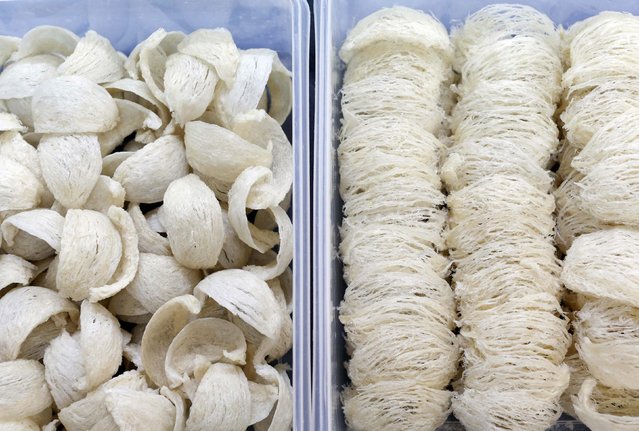
Two styles of cleaned bird's nest, Yan Zhan (L) and Su Zhan (R) await repacking at a processing plant in Kuala Lumpur, February 17, 2015. Prized in China for is alleged health benefits for hundreds of years, nests made from swiftlets' saliva are being mixed into coffee and cereal as the Southeast Asian producers of the delicacy seek to broaden its appeal, and their profit margins. (Photo by Olivia Harris/Reuters)

Two styles of cleaned bird's nest, Yan Zhan (L) and Su Zhan (R) await repacking at a processing plant in Kuala Lumpur, February 17, 2015. Prized in China for is alleged health benefits for hundreds of years, nests made from swiftlets' saliva are being mixed into coffee and cereal as the Southeast Asian producers of the delicacy seek to broaden its appeal, and their profit margins. The nests are among the world's most expensive foods, selling for up to $2,500 a kg and the swiftlets that weave them are indigenous to Indonesia, Malaysia, Thailand and Vietnam. (Photo by Olivia Harris/Reuters)
Details
24 Feb 2015 13:57:00
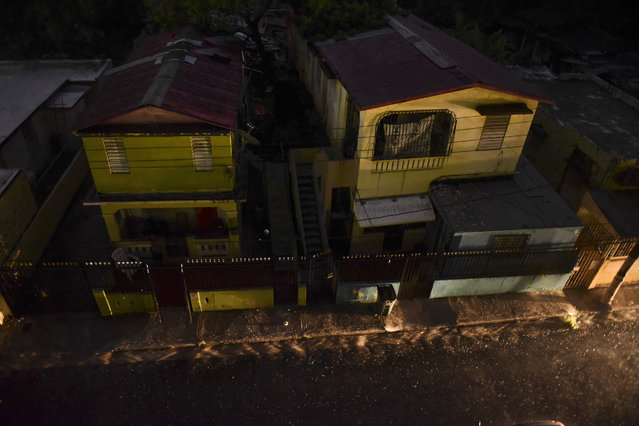
Vehicle lights illuminate a street after a massive blackout, in San Juan, Puerto Rico, Thursday, September 22, 2016. Puerto Ricans faced another night of darkness Thursday as crews slowly restored electricity a day after a fire at a power plant caused the aging utility grid to fail and blacked out the entire island. (Photo by Carlos Giusti/AP Photo)

Vehicle lights illuminate a street after a massive blackout, in San Juan, Puerto Rico, Thursday, September 22, 2016. Puerto Ricans faced another night of darkness Thursday as crews slowly restored electricity a day after a fire at a power plant caused the aging utility grid to fail and blacked out the entire island. (Photo by Carlos Giusti/AP Photo)
Details
24 Sep 2016 10:31:00
Women wearing flower and sprout-like hairpins walk past an advertisement board in Beijing, China, September 25, 2015. (Photo by Kim Kyung-Hoon/Reuters)

Women wearing flower and sprout-like hairpins walk past an advertisement board in Beijing, China, September 25, 2015. Wearing antenna styled hairpins in the shape of various flowers and plants at scenic spots has become a new trend in Beijing. (Photo by Kim Kyung-Hoon/Reuters)
Details
28 Sep 2015 08:02:00
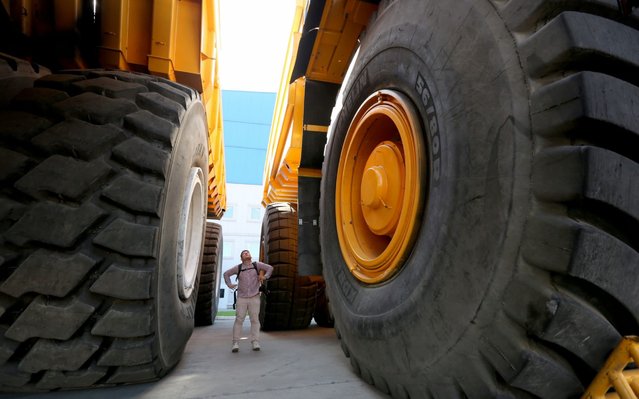
A visitor is dwared between the wheels of BelAZ 450-ton dump truck (L) and BelAZ 360-ton dump truck (R) at the plant of Belarusian manufacturer of heavy trucks and equipment for earthmoving, BelAZ, in Zhodino, some 55 km from Minsk, Belarus, 27 August 2019. The company mostly delivers its products to CIS mining companies, mainly from Russia and Ukraine. (Photo by Tatyana Zenkovich/EPA/EFE/Rex Features/Shutterstock)

A visitor is dwared between the wheels of BelAZ 450-ton dump truck (L) and BelAZ 360-ton dump truck (R) at the plant of Belarusian manufacturer of heavy trucks and equipment for earthmoving, BelAZ, in Zhodino, some 55 km from Minsk, Belarus, 27 August 2019. The company mostly delivers its products to CIS mining companies, mainly from Russia and Ukraine. (Photo by Tatyana Zenkovich/EPA/EFE/Rex Features/Shutterstock)
Details
29 Aug 2019 00:05:00
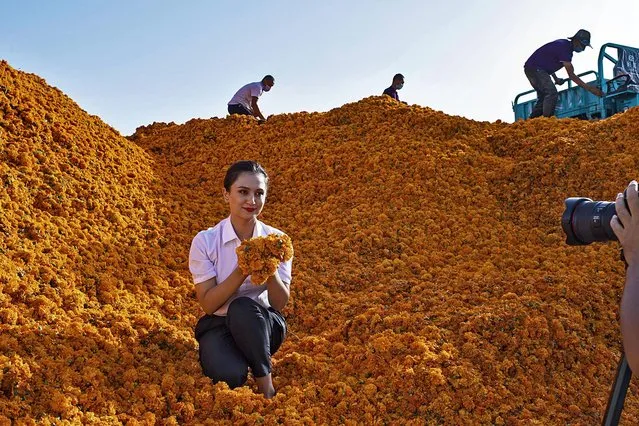
A staff member of Yutian County poses for a video on marigold industry at an agricultural industrial park in Yutian County, northwest China's Xinjiang Uygur Autonomous Region, September 20, 2020. As one of the five counties in Hotan Prefecture that have not been lifted out of poverty, Yutian County is accelerating its steps to shake off poverty by planting marigold. (Photo by Chine Nouvelle/SIPA Press/Rex Features/Shutterstock)

A staff member of Yutian County poses for a video on marigold industry at an agricultural industrial park in Yutian County, northwest China's Xinjiang Uygur Autonomous Region, September 20, 2020. As one of the five counties in Hotan Prefecture that have not been lifted out of poverty, Yutian County is accelerating its steps to shake off poverty by planting marigold. (Photo by Chine Nouvelle/SIPA Press/Rex Features/Shutterstock)
Details
01 Oct 2020 00:05:00
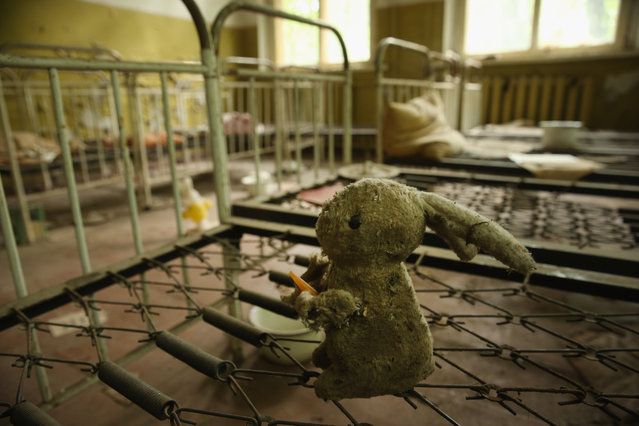
A stuffed rabbit doll sits among children's beds standing in the abandoned kindergarten of Kopachi village located inside the Chernobyl Exclusion Zone on September 29, 2015 near Chornobyl, Ukraine. Kopachi, a village that before 1986 had a population of 1,114, lies only a few kilometers south of the former Chernobyl nuclear power plant, where in 1986 workers inadvertantly caused reactor number four to explode, creating the worst nuclear accident in history. Radiation fallout was so high that authorities bulldozed and buried all of Kopachi's structures except for the kindergarten. (Photo by Sean Gallup/Getty Images)

A stuffed rabbit doll sits among children's beds standing in the abandoned kindergarten of Kopachi village located inside the Chernobyl Exclusion Zone on September 29, 2015 near Chornobyl, Ukraine. Kopachi, a village that before 1986 had a population of 1,114, lies only a few kilometers south of the former Chernobyl nuclear power plant, where in 1986 workers inadvertantly caused reactor number four to explode, creating the worst nuclear accident in history. (Photo by Sean Gallup/Getty Images)
Details
27 Apr 2016 09:28:00