Loading...
Done
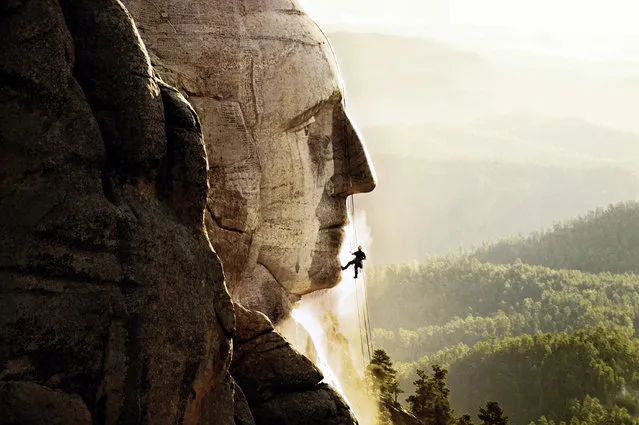
Thorsten Mowes has a more intimate knowledge of the worlds most famous monuments than perhaps anyone else on the planet – because hes spent his entire career cleaning them. As a cultural cleaning expert with nearly 25 years experience, he has been commissioned to make wonders all over the world shine like new - from the London Eye to Christ the Redeemer. The places he has been to, stood on top of, or even hung halfway down include Mount Rushmore and the Space Needle in America, the London Eye, the Statue of Christ in Brazil and the Forbidden City in China. Here: A man cleans a part of Mount Rushmore. (Photo by Caters News Agency)

Thorsten Mowes has a more intimate knowledge of the worlds most famous monuments than perhaps anyone else on the planet – because hes spent his entire career cleaning them. As a cultural cleaning expert with nearly 25 years experience, he has been commissioned to make wonders all over the world shine like new – from the London Eye to Christ the Redeemer. The places he has been to, stood on top of, or even hung halfway down include Mount Rushmore and the Space Needle in America, the London Eye, the Statue of Christ in Brazil and the Forbidden City in China. Here: A man cleans a part of Mount Rushmore. (Photo by Caters News Agency)
Details
29 Jul 2016 12:24:00
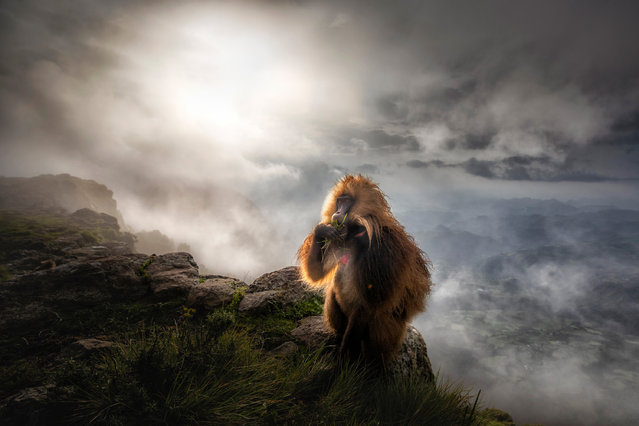
Highly commended, mammals: Gelada after the storm – Marco Gaiotti (Italy). “Gelada baboons are the only monkey species in the world that feed on grasses. They are native to the tableland of Ethiopia. Every morning large family groups wander from their sleeping places in the steep rock face, up to 1,000 metres high, to the feeding grounds at the tablelands. This image clearly depicts their feeding strategy: they pull out bunches of grass, sort the stalks and then lift them to their mouth. This shot was taken towards the end of the rainy season after a heavy storm”. (Photo by Marco Gaiotti/2019 GDT European Wildlife Photographer of the Year)

Highly commended, mammals: Gelada after the storm – Marco Gaiotti (Italy). “Gelada baboons are the only monkey species in the world that feed on grasses. They are native to the tableland of Ethiopia. Every morning large family groups wander from their sleeping places in the steep rock face, up to 1,000 metres high, to the feeding grounds at the tablelands. This image clearly depicts their feeding strategy: they pull out bunches of grass, sort the stalks and then lift them to their mouth. This shot was taken towards the end of the rainy season after a heavy storm”. (Photo by Marco Gaiotti/2019 GDT European Wildlife Photographer of the Year)
Details
31 Oct 2019 00:03:00
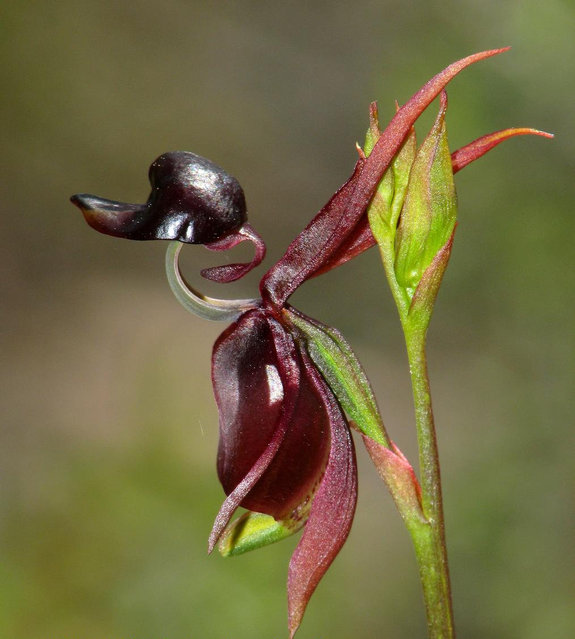
The Flying Duck Orchid

Caleana major, the Flying Duck Orchid is a small orchid found in eastern and southern Australia. This terrestrial plant features a remarkable flower, resembling a duck in flight. The flower is an attractant to insects, such as male sawflies which pollinate the flower in a process known as pseudocopulation. In 1986 this orchid was featured on an Australian postage stamp.


See Also: Monkey Orchid
Details
22 Apr 2013 10:56:00
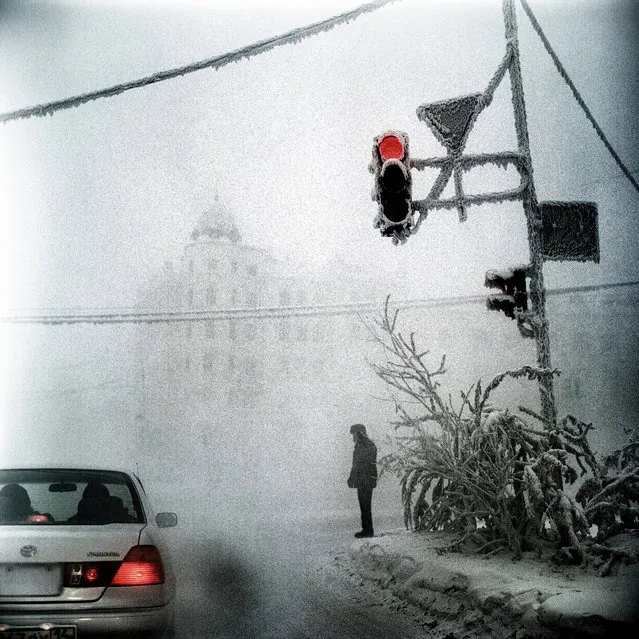
January 2013. A scene in Yakutsk, Siberia, the coldest city in the world. (Photo by Steeve Iuncker/Agence VU)

Yakutsk, a remote city in Eastern Siberia along the Lena River, is the coldest city in the world. Located 1840 km away from Irkoustk and 5000 km away from Moscow, this city founded in 1632 by the Cossacks imposes upon its inhabitants an extreme way of life. And yet, despite particularly harsh conditions, Yakutsk boasts a population of 270,000, or a quarter of the entire population of Siberia. No other place on the planet experiences the temperature extreme found here: in winter, the temperatures regularly fall to minus 40° (the coldest temperature recorded was –64°C) and in summer often reaches temperatures above 30°C. Photo: January 2013. A scene in Yakutsk, Siberia, the coldest city in the world. (Photo by Steeve Iuncker/Agence VU)
Details
29 Apr 2013 10:30:00
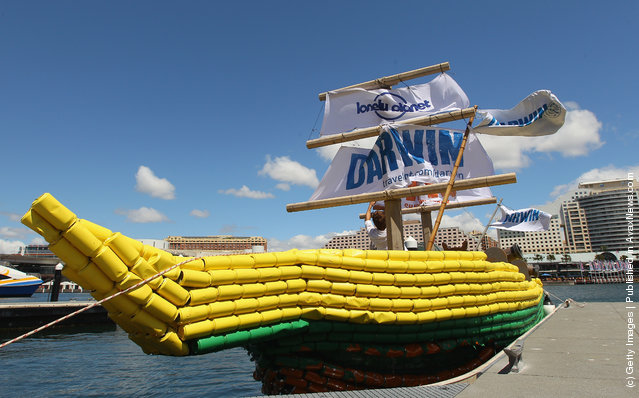
Darwin's Beer Can Boat Cruises Into Sydney Harbour

“The Darwin Beer Can Regatta is an event which has been held annually since 1974 in Darwin, Northern Territory, Australia at Mindil Beach. Participants create boats using empty beer cans, soft drink (soda) cans, soft drink bottle and milk cartons. The vessels are not tested for seaworthiness, prior to water events, and those that fall apart are part of the day's entertainment. A great many sundry events go along with the regatta, including concerts, a thong-throwing contest and the "Henley-on-Mindil" competition (named after the Henley-on-Todd Regatta), where participants run their "boats" around like Flintstones cars”. – Wikipedia

Photo: A Darwin Beer Can Boat sails in Darling Harbour on October 31, in Sydney, Australia. Darwin has been named as one of Lonely Planet's top ten cities in the world to visit in it's Best in Travel publication. (Photo by Mark Kolbe/Getty Images for Tourism NT)
Details
31 Oct 2011 10:50:00
Human Barbie Doll Valeria Lukyanova aka Naamah From The Ukraine

This is a “swami” - Valeria Lukyanova (born August 23, 1985), from Odessa, Ukraine. Her other names: Naamah (Нахема; Na'amah (Hebrew: נעמה‎) – is a demonic legendary creature, the mother of divination), Amatue, Nagval and Goddess (бАгиня). She is fond of esoteric, believes that 2012 will be the end of the world, and waits for the planet Nibiru (I'm not kidding). This girl had amused the Russian-language Internet (because the Russians are cynical and heartless people). IMHO she is very beautiful (technical characteristics – Chest: 88cm (34,64 in; may be longer already); Waist: 47cm (18,5 in; may be lesser already) and Hips: 88cm (34,64 in)). Enjoy. (Photos by Valeria Lukyanova)
Details
06 Aug 2012 11:35:00
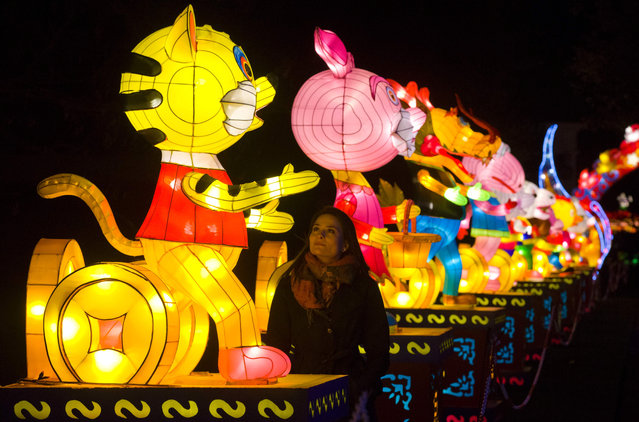
A woman poses for a photograph with light sculptures depicting animals that make up the twelve animals of the zodiac during a photocall to promote the Magical Lantern Festival at Chiswick House Gardens in west London on January 29, 2016. (Photo by Justin Tallis/AFP Photo)

A woman poses for a photograph with light sculptures depicting animals that make up the twelve animals of the zodiac during a photocall to promote the Magical Lantern Festival at Chiswick House Gardens in west London on January 29, 2016. The festival, to celebrate Chinese New Year 2016 – the Year of the Monkey, uses more than 50 hand-sculpted lanterns and is set to run from Febuary 3 to March 6, 2016. (Photo by Justin Tallis/AFP Photo)
Details
30 Jan 2016 13:35:00
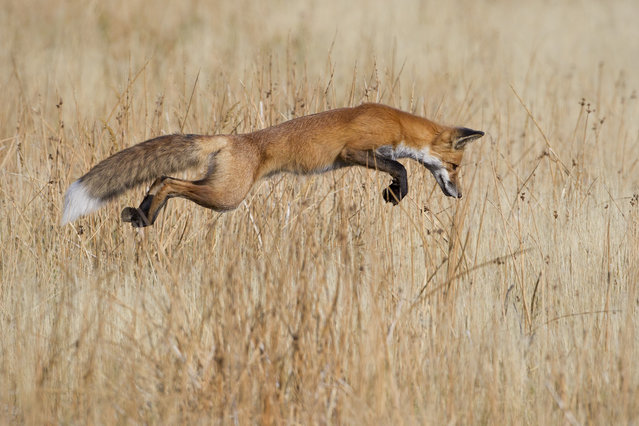
Canada: “Lucky pounce”. (Photo by Connor Stefanison/Wildlife Photographer of the Year 2013)

The winners of The London’s Natural History Museum's prestigious Wildlife Photographer of the Year for 2013 have finally been unveiled. Selected from almost 43,000 entries from 96 countries, the winners offer a glimpse of the stunning array of natural beauty on our planet. Photo: Canada: “Lucky pounce”. “Anticipating the pounce – that was the hardest part”, says Connor, who had come to Yellowstone National Park, Wyoming, USA, in search of wildlife as much as the spectacular landscape. He had found this fox, his first ever, on his last day in the park. It was so absorbed in hunting that Connor had plenty of time to get out of the car and settle behind a rock. It quartered the grassland, back and forth, and then started staring intently at a patch of ground, giving Connor just enough warning of the action to come. When it sprung up, Connor got his shot. And when it landed, the fox got his mouse. (Photo by Connor Stefanison/Wildlife Photographer of the Year 2013)
Details
17 Oct 2013 08:12:00