Loading...
Done
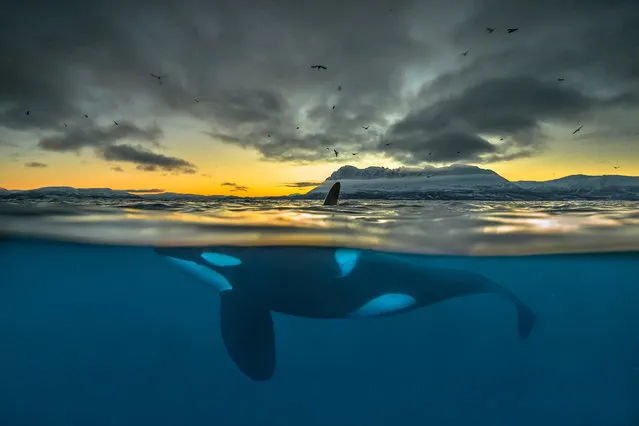
Split-view of a killer whale at sunrise off the coast of Northern Norway. At least half of the world’s killer whale populations are doomed to extinction due to pollution of the oceans, a new study says. (Photo by Audun Rikardsen/Science)

Split-view of a killer whale at sunrise off the coast of Northern Norway. At least half of the world’s killer whale populations are doomed to extinction due to pollution of the oceans, a new study says. (Photo by Audun Rikardsen/Science)
Details
16 Dec 2018 00:03:00
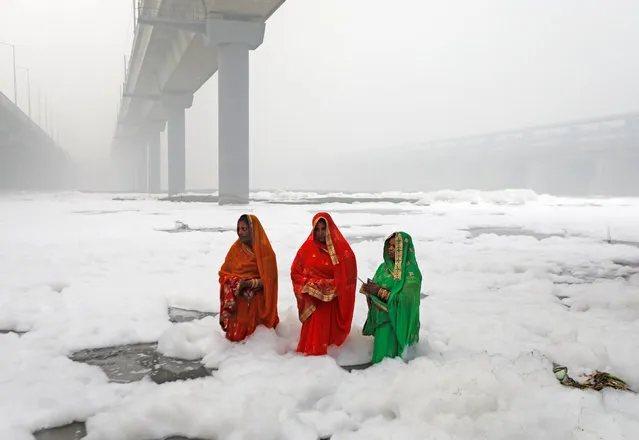
Hindu women worship the Sun god in the polluted waters of the river Yamuna during the Hindu religious festival of Chatth Puja in New Delhi, India, November 3, 2019. (Photo by Adnan Abidi/Reuters)

Hindu women worship the Sun god in the polluted waters of the river Yamuna during the Hindu religious festival of Chatth Puja in New Delhi, India, November 3, 2019. (Photo by Adnan Abidi/Reuters)
Details
05 Nov 2019 00:05:00
Chinese artist Kong Ning walks in her costume made of hundreds of orange plastic blowing horns during her art performance raising awareness of the hazardous smog in front of the Drum tower in a historical part of Beijing on a very polluted day December 7, 2015. (Photo by Damir Sagolj/Reuters)

Chinese artist Kong Ning walks in her costume made of hundreds of orange plastic blowing horns during her art performance raising awareness of the hazardous smog in front of the Drum tower in a historical part of Beijing on a very polluted day December 7, 2015. Kong, whose works include themes related to China's air pollution problem, named her new performance “The Orange Horns Bride Marries the Blue Sky” and presented it dressed in orange, the colour of the second highest pollution alert level issued again in Beijing as hazardous smog blankets the capital. (Photo by Damir Sagolj/Reuters)
Details
09 Dec 2015 08:05:00
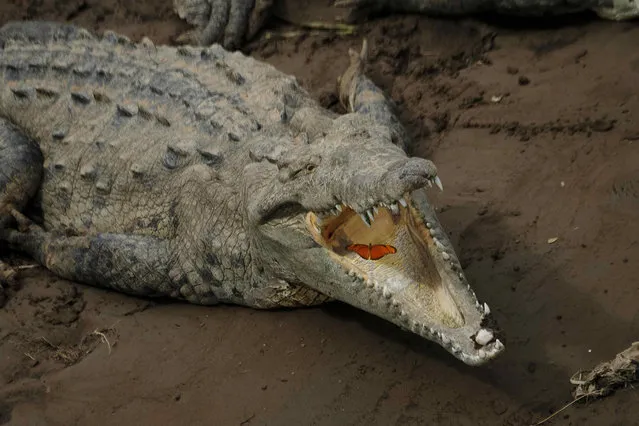
A butterfly flies into the jaws of a crocodile inhabiting the Tarcoles River, the most polluted basin in Central America and one of the most polluted in Latin America, in the place of Tarcoles, province of Puntarenas, Costa Rica, 05 June 2018. Costa Rica, a country recognized worldwide for its environmental policies, seeks to be a leader in the replacement of single-use plastic with renewable and compostable alternatives, despite its lag in terms of recycling and integrated waste management. (Photo by Jeffrey Arguedas/EPA/EFE)

A butterfly flies into the jaws of a crocodile inhabiting the Tarcoles River, the most polluted basin in Central America and one of the most polluted in Latin America, in the place of Tarcoles, province of Puntarenas, Costa Rica, 05 June 2018. Costa Rica, a country recognized worldwide for its environmental policies, seeks to be a leader in the replacement of single-use plastic with renewable and compostable alternatives, despite its lag in terms of recycling and integrated waste management. (Photo by Jeffrey Arguedas/EPA/EFE)
Details
17 Jun 2018 00:03:00
Artist Kong Ning wears a wedding dress made from respirators to highlight concerns about air quality and pollution in Beijing, China on December 1, 2015. (Photo by Luo Xiaoguang/Xinhua Press/Corbis)

Artist Kong Ning wears a wedding dress made from respirators to highlight concerns about air quality and pollution in Beijing, China on December 1, 2015. (Photo by Luo Xiaoguang/Xinhua Press/Corbis)
Details
03 Dec 2015 08:02:00


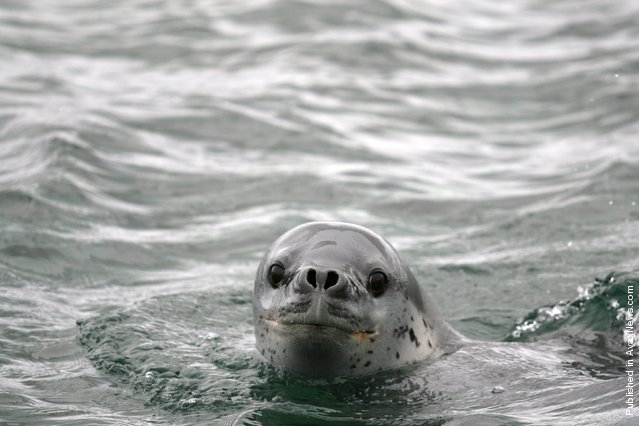
“The leopard seal (Hydrurga leptonyx), also referred to as the sea leopard, is the second largest species of seal in the Antarctic (after the southern elephant seal). It is most common in the southern hemisphere along the coast of Antarctica and on most sub-Antarctic islands, but can also be found on the coasts of southern Australia, Tasmania, South Africa, New Zealand, Lord Howe Island, Tierra del Fuego, the Cook Islands, and the Atlantic coast of South America. It can live twenty-six years, possibly more. Orcas and large sharks are the only natural predators of leopard seals”. – Wikipedia

Photo by: Gilad Rom; Source: Flickr
Details
13 Nov 2011 11:24:00
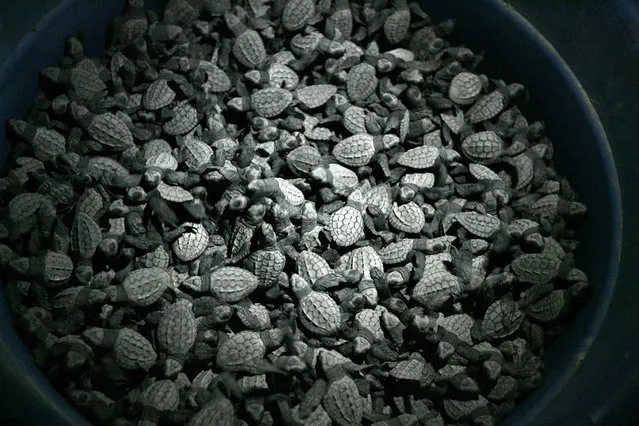
Olive Ridley turtle hatchlings (Lepidochelys olivacea) sit in baskets and trays at the turtle camp La Gloria, before their release into the ocean in Tomatlan November 15, 2013. (Photo by Alejandro Acosta/Reuters)

Olive Ridley turtle hatchlings (Lepidochelys olivacea) sit in baskets and trays at the turtle camp La Gloria, before their release into the ocean in Tomatlan November 15, 2013. Twenty years ago, Mexico's government implemented ecological plans to protect the sea turtles from being hunted for their leather and meat and established conservation areas and a pay system for local residents to protect turtle nests. Millions of baby turtles hatch on the shores in November and December, according to an environmental group. It is estimated that in 2012, there were 20 million newborns. Hatching season is still underway, but officials say they expect there will be even more turtles born this year. (Photo by Alejandro Acosta/Reuters)
Details
25 Nov 2013 08:54:00
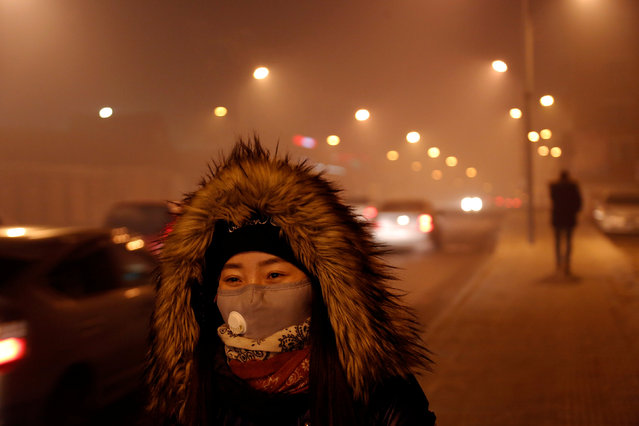
A woman wears a face mask in the part of the city near neighbourhoods known for burning coal for heating in Ulaanbaatar, Mongolia January 26, 2017. Not many people in Ulaanbaatar wear masks to protect themselves against pollution. (Photo by B. Rentsendorj/Reuters)

A woman wears a face mask in the part of the city near neighbourhoods known for burning coal for heating in Ulaanbaatar, Mongolia January 26, 2017. Not many people in Ulaanbaatar wear masks to protect themselves against pollution. (Photo by B. Rentsendorj/Reuters)
Details
09 Feb 2017 00:00:00