Loading...
Done
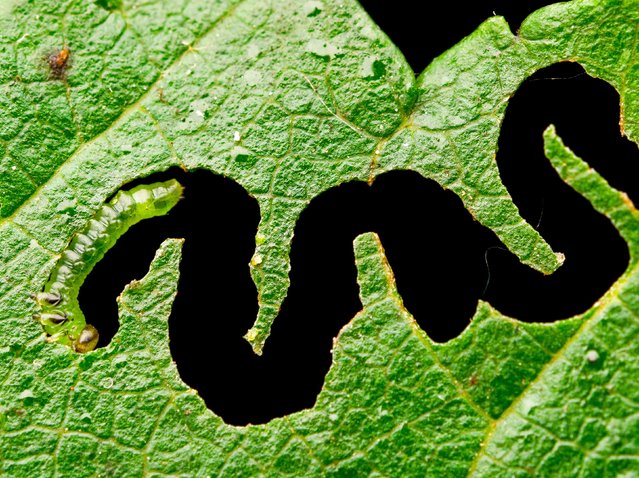
Miniscule larvae carve winding tunnels as they eat through small leaves in a small forest near the town of Velbert in western Germany in July 2022. The hungry green sawfly larvae measure just three millimetres in length and are difficult to spot on the leaves of the beech tree unless up close. (Photo by Christian Brockes/Solent News)

Miniscule larvae carve winding tunnels as they eat through small leaves in a small forest near the town of Velbert in western Germany in July 2022. The hungry green sawfly larvae measure just three millimetres in length and are difficult to spot on the leaves of the beech tree unless up close. (Photo by Christian Brockes/Solent News)
Details
24 Dec 2022 04:05:00
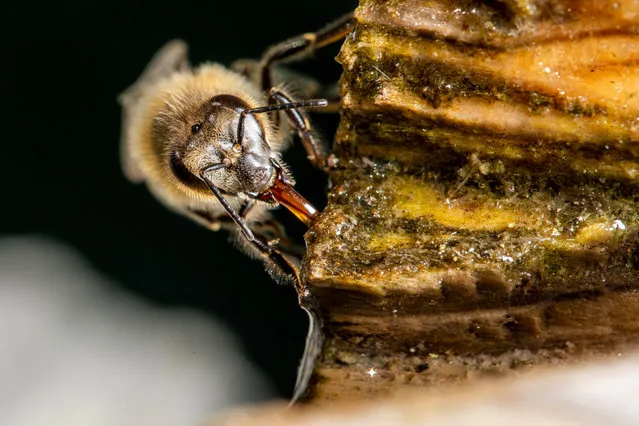
A Western honey bee feeds off acacia pollen at an apiary in Nagyszenas, eastern Hungary, 25 April 2020. The preparation of the bees for the acacia bloom began two weeks later than usual this year; due to the late frosts, this season's yield of Hungaricum acacia honey is expected to be lower. (Photo by Tibor Rosta/EPA/EFE)

A Western honey bee feeds off acacia pollen at an apiary in Nagyszenas, eastern Hungary, 25 April 2020. The preparation of the bees for the acacia bloom began two weeks later than usual this year; due to the late frosts, this season's yield of Hungaricum acacia honey is expected to be lower. (Photo by Tibor Rosta/EPA/EFE)
Details
08 Jan 2023 06:19:00
People wade through a road flooded by heavy rain in Kurume, Fukuoka prefecture, western Japan, Saturday, August 14, 2021. Torrential rain pounding southwestern Japan triggered a mudslide early Friday that swallowed some people and was threatening to cause flooding and more landslides in the region. (Photo by Kyodo News via AP Photo)

People wade through a road flooded by heavy rain in Kurume, Fukuoka prefecture, western Japan, Saturday, August 14, 2021. Torrential rain pounding southwestern Japan triggered a mudslide early Friday that swallowed some people and was threatening to cause flooding and more landslides in the region. (Photo by Kyodo News via AP Photo)
Details
14 Aug 2021 08:35:00
Participants celebrate the awakening of the Hoppeditz, a fictional character whose return to life marks the start of the carnival season in Düsseldorf, western Germany on November 11, 2021. The 11.11. is celebrated this year again under Corona conditions in presence. However, in the carnival strongholds of Cologne and Düsseldorf, this only applies to the vaccinated and the recovered. (Photo by Federico Gambarini/dpa/Alamy Live News)

Participants celebrate the awakening of the Hoppeditz, a fictional character whose return to life marks the start of the carnival season in Düsseldorf, western Germany on November 11, 2021. The 11.11. is celebrated this year again under Corona conditions in presence. However, in the carnival strongholds of Cologne and Düsseldorf, this only applies to the vaccinated and the recovered. (Photo by Federico Gambarini/dpa/Alamy Live News)
Details
12 Nov 2021 09:15:00
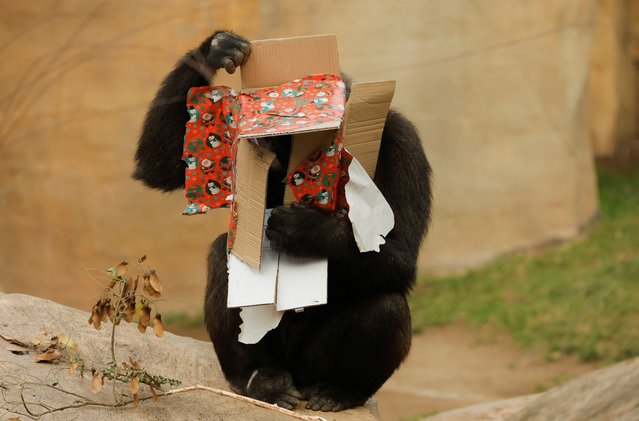
Wefa, 13, a female Western lowland gorilla, looks inside a Christmas box that contained food as a gift, after a caretaker dressed up as Santa Claus placed it in the enclosure of the family of gorillas, at Bioparc Fuengirola, in Fuengirola, Spain, on December 21, 2024. (Photo by Jon Nazca/Reuters)

Wefa, 13, a female Western lowland gorilla, looks inside a Christmas box that contained food as a gift, after a caretaker dressed up as Santa Claus placed it in the enclosure of the family of gorillas, at Bioparc Fuengirola, in Fuengirola, Spain, on December 21, 2024. (Photo by Jon Nazca/Reuters)
Details
05 Jan 2025 02:22:00
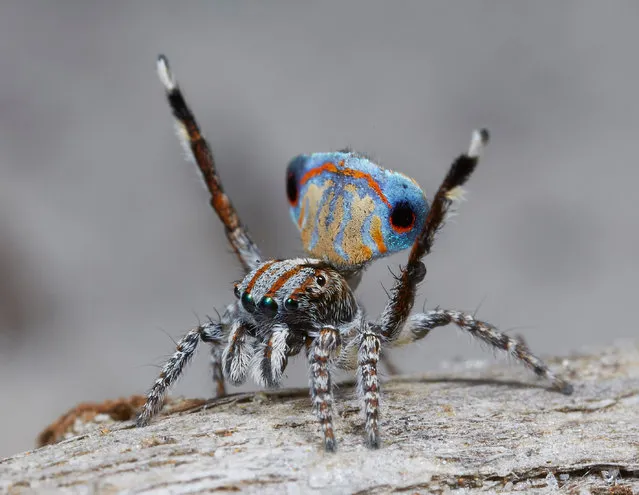
Several new species of peacock spider – just a few millimetres long and featuring extraordinary colours – have been discovered in Western Australia and South Australia. Jürgen Otto, a biologist from Sydney, has been researching the arachnids since 2005, and has gained a significant following online with his footage. He believes there are now 48 confirmed species of peacock spider within the Maratus genus, found across Australia but particularly in Western Australia – and many more awaiting confirmation. Here: Maratus Tasmanicus, one of seven new species of peacock spiders studied by the Sydney biologist Jürgen Otto. (Photo by Jürgen Otto)

Several new species of peacock spider – just a few millimetres long and featuring extraordinary colours – have been discovered in Western Australia and South Australia. Jürgen Otto, a biologist from Sydney, has been researching the arachnids since 2005, and has gained a significant following online with his footage. He believes there are now 48 confirmed species of peacock spider within the Maratus genus, found across Australia but particularly in Western Australia – and many more awaiting confirmation. Here: Maratus Tasmanicus, one of seven new species of peacock spiders studied by the Sydney biologist Jürgen Otto. (Photo by Jürgen Otto)
Details
30 May 2016 08:40:00


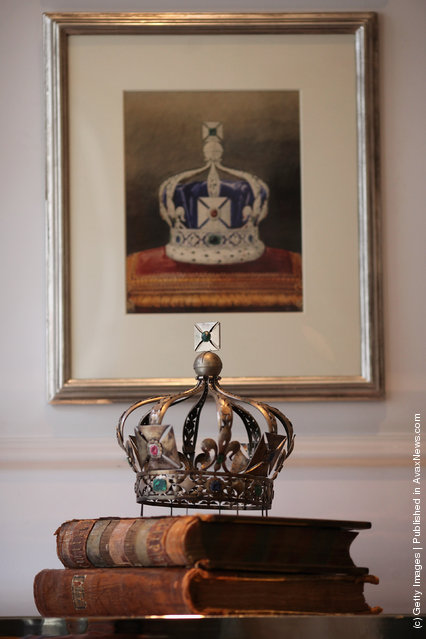
A preparatory model of the Imperial State Crown of India worn in 1911 by King George V stands next to original ledgers dating from 1735 in Garrard's flagship store in Mayfair on April 6, 2011 in London, England. Garrard is the world's oldest jewellers having been founded by George Wickes in 1735 and soon after appointed as goldsmith to the Prince of Wales. For over 160 years Garrard held the title of Crown Jeweller, bestowed by Queen Victoria in 1843, Garrard have served six successive monarchs. They have produced several royal crowns as well as the engagement ring presented to Kate Middleton by Prince William and formerly Princess Diana's engagement ring. (Photo by Oli Scarff/Getty Images)
Details
17 Apr 2011 10:22:00
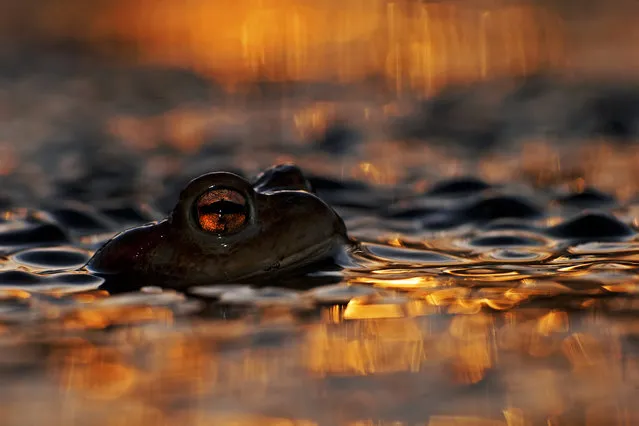
“Eye of a toad”. Animal Portraits, Łukasz Bożycki, Poland.  (Photo by Łukasz Bożycki)

“Eye of a toad”. Animal Portraits, Łukasz Bożycki, Poland. Early spring sees a pond near Łukasz’s home city of Warsaw, Poland, full of mating frogs and a few toads. On this March day, Łukasz shared the pond with them for an evening, sitting in the icy water in his chest-high waders, keeping as still as possible, despite the numbing cold, so that the amphibians could get used to him. “I wanted to find a fresh way of portraying the amphibians”, he says, “at water level”. Using a telephoto lens, he focused on one lone toad and waited for the sun to dip almost below the horizon before pressing the shutter, using flash to bring out the details in the shadow. His prize was “the glorious pool of sunset colour” and fiery glow of the toad’s eye. Nikon D80 + 70-300mm f4.5-5.6 lens + extension tube; 1/125 sec at f9 (-2.3 e/v); ISO 100; built-in flash. (Photo by Łukasz Bożycki)

Details
28 Aug 2013 11:45:00