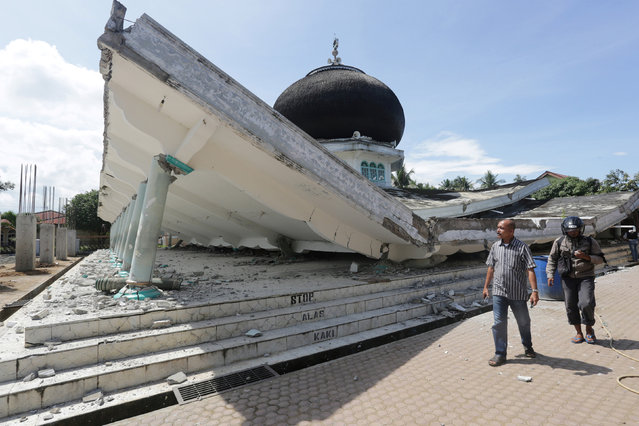
People walk near a collapsed mosque following an earthquake in Meuredu, Pidie Jaya in the northern province of Aceh, Indonesia December 7, 2016. (Photo by Irwansyah Putra/Reuters/Antara Foto)
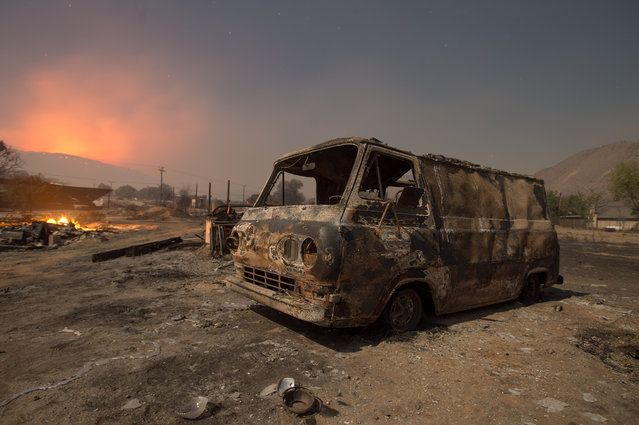
Seen in a long exposure nighttime photograph, a burned van rests in a lot while a wildfire glows on the horizon in Phelan, Calif., early Thursday, August 18, 2016 2016. (Photo by Noah Berger/AP Photo)
People and dogs take part in Anthony Rubio Designs Womens Wear Canine Couture show as part of New York Fashion Week in Manhattan, New York on February 12, 2021. (Photo by Adam Gray/Action Press/South West News Service)
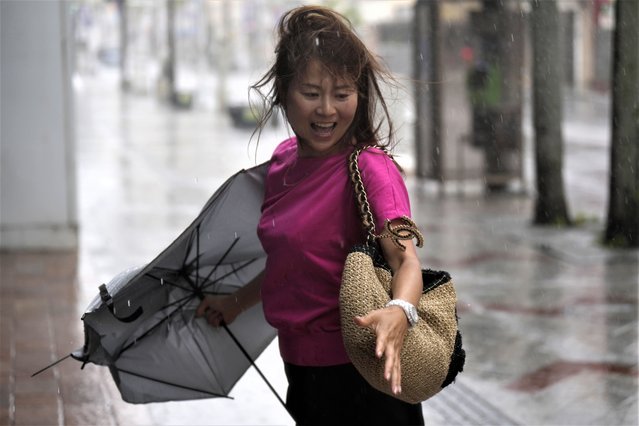
A pedestrian reacts as she caught a gust of wind while walking down the famed “Kokusai-dori” street, a tourist spot, in Naha in the main Okinawa island, southern Japan, Thursday, June 1, 2023, as a tropical storm was approaching. (Photo by Hiro Komae/AP Photo)
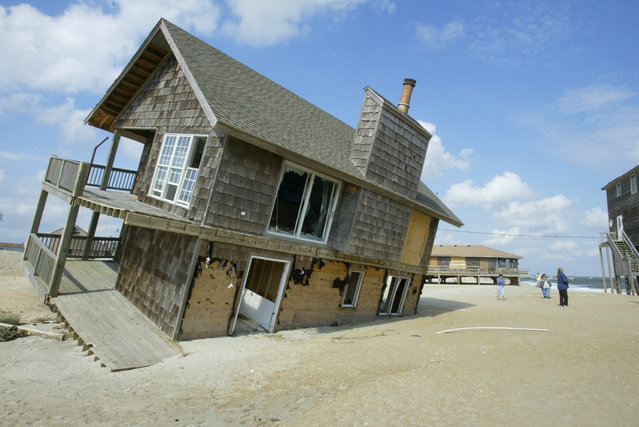
A house that was slammed off its foundation by Hurricane Isabel sits precariously on the beach one month after it hit Rodanthe, North Carolina October 18, 2003. (Photo by Rick Wilking/Reuters)
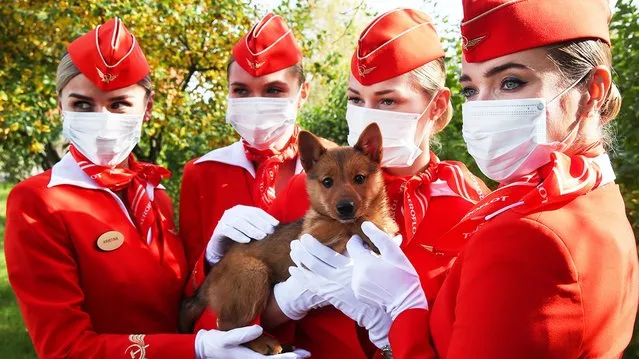
Aeroflot employees with a puppy at the canine service of Aeroflot at Sheremetyevo International Airport in Moscow Region, Russia on October 2, 2020, that has started to train service dogs to detect COVID-19 in people. (Photo by Vladimir Gerdo/TASS)
I know, this answer was a little too short, so let me explain in a little more detail.
Imagine tossing a coin. Normally, any normal coin toss has two possible outcomes - heads or tails - with each one having a 50% chance of happening. Ideally, that is, because factors like the force of your finger tossing the coin, gravity, the wind, the moon phase and a passing TARDIS can all influence the outcome of the toss - but I have deviated from the subject.