Loading...
Done


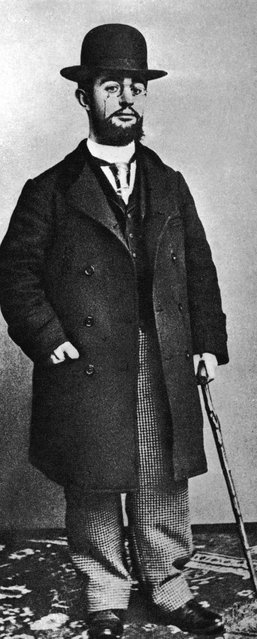
“Henri Marie Raymond de Toulouse-Lautrec-Monfa or simply Henri de Toulouse-Lautrec (24 November 1864 – 9 September 1901) was a French painter, printmaker, draughtsman, and illustrator, whose immersion in the colourful and theatrical life of fin de siècle Paris yielded an œuvre of exciting, elegant and provocative images of the modern and sometimes decadent life of those times. Toulouse-Lautrec is known along with Cézanne, Van Gogh, and Gauguin as one of the greatest painters of the Post-Impressionist period. In a 2005 auction at Christie's auction house a new record was set when “La blanchisseuse”, an early painting of a young laundress, sold for $22.4 million U.S” – Wikipedia.

Photo: Full-length portrait of French artist Henri Toulouse-Lautrec wearing an overcoat, a bowler hat, and pince-nez eyeglasses while holding a cane. (Photo by Hulton Archive/Getty Images). Circa 1895
Details
20 Mar 2011 09:28:00


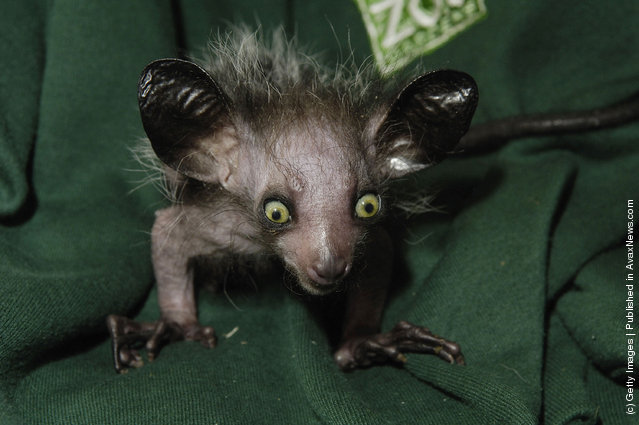
“The aye-aye (Daubentonia madagascariensis) is a lemur, a strepsirrhine primate native to Madagascar that combines rodent-like teeth and a special thin middle finger to fill the same ecological niche as a woodpecker. It is the world's largest nocturnal primate, and is characterized by its unusual method of finding food; it taps on trees to find grubs, then gnaws holes in the wood and inserts its narrow middle finger to pull the grubs out. The only other animal species known to find food in this way is the striped possum. From an ecological point of view the aye-aye fills the niche of a woodpecker as it is capable of penetrating wood to extract the invertebrates within”. – Wikipedia

Photo: In this handout image from Bristol Zoo is seen the first captive bred aye-aye in the UK named “Kintana” (meaning star in Malagasy) April 15, 2005 at Bristol Zoo Gardens, England. The zoo announced today only the second baby aye-aye to be hand-reared in the world (the first was in Jersey Zoo) and has now made his first public appearance since his birth on 11 February 2005. (Photo by Rob Cousins/Bristol Zoo via Getty Images)
Details
13 Apr 2011 13:33:00


“The Southern Tamandua, Collared Anteater or Lesser Anteater (Tamandua tetradactyla) is a species of anteater from South America. It is a solitary animal, found in many habitats from mature to highly disturbed secondary forests and arid savannas. It feeds on ants, termites and bees. It has very strong foreclaws that can be used to break insect nests or to defend itself”. – Wikipedia

Photo: A three-month-old baby Southern Tamandua “Konbu” lies on its mother Tae's back at Sunshine International Aquarium on July 7, 2009 in Tokyo, Japan. Baby Southern Tamandua feels safe and comfortable holding onto something and normally stays on the mother's back until around 3 months old. (Photo by Junko Kimura/Getty Images)
Details
19 May 2011 10:31:00


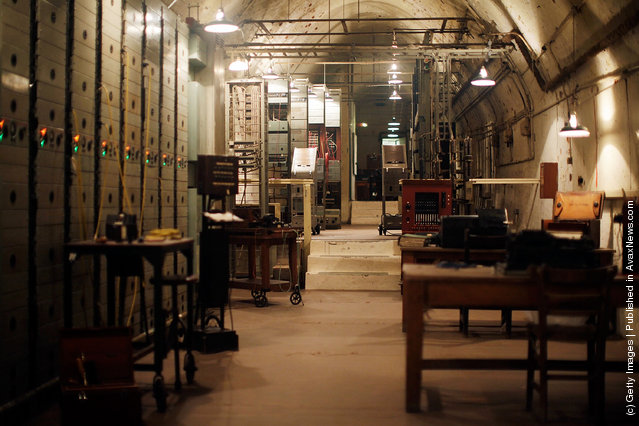
“Dover Castle is a medieval castle in the town of the same name in the English county of Kent. It was founded in the 12th century and has been described as the “Key to England” due to its defensive significance throughout history. It is the largest castle in England.

The outbreak of the Second World War in 1939 saw the tunnels converted first into an air-raid shelter and then later into a military command centre and underground hospital. In May 1940, Admiral Sir Bertram Ramsey directed the evacuation of French and British soldiers from Dunkirk, code-named Operation Dynamo, from his headquarters in the cliff tunnels”. – Wikipedia

Photo: The Repeater Station in the subterranean tunnels underneath Dover Castle, which has been restored by English Heritage for a public exhibition on June 3, 2011 in Dover, England. The evacuation of allied soldiers from Dunkirk was masterminded and co-ordinated from the secret command and control centre in the tunnels deep below the castle. (Photo by Matthew Lloyd/Getty Images)
Details
07 Jun 2011 09:26:00


“Peter Michael Falk (September 16, 1927 – June 23, 2011) was an American actor, best known for his role as Lieutenant Columbo in the television series Columbo. He appeared in numerous films and television guest roles and was nominated for an Academy Award twice (for 1960's Murder, Inc. and 1961's Pocketful of Miracles), and won the Emmy Award on five occasions (four for Columbo) and the Golden Globe award once. Director William Friedkin, when discussing Falk's role in his 1978 film The Brink's Job said that «Peter has a great range from comedy to drama. He could break your heart or he could make you laugh»”. – Wikipedia

Photo: American actor Peter Falk, best known for his role as TV detective Columbo. (Photo by Harry Benson/Express/Getty Images). 4th October 1965
Details
29 Jun 2011 11:13:00
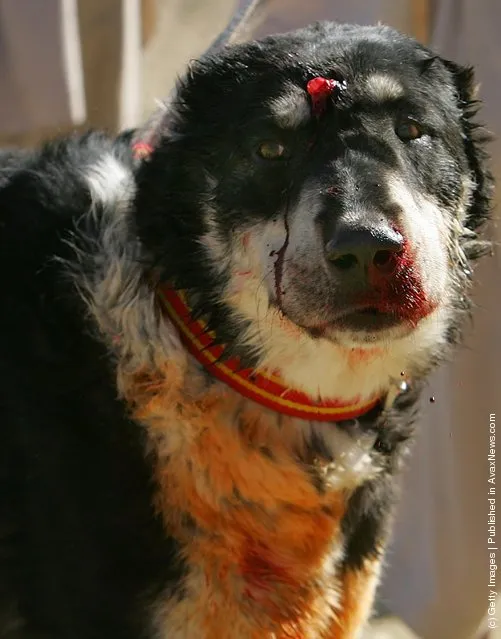
Afghan Dog Fighting

“Dog fighting is a form of blood sport in which game dogs are made to fight, sometimes to the death. It is illegal in most developed countries. Dog fighting is used for entertainment and may also generate revenue from stud fees, admission fees and gambling”. – Wikipedia

Photo: A bloody Afghan dog is bleeding with many wounds after he lost a dog fight November 24, 2006 in Kabul, Afghanistan. While the Afghan government is trying to ban the violent use of dogs for fighting, the unofficial sport remains a regular weekly event. Afghan dog fighting is popular among Afghan men who gamble on the dogs making upwards of 15,000 Afghanie (300 USD). (Photo by Paula Bronstein/Getty Images)
Details
07 Aug 2011 11:47:00
Dancing Cop Tony Lepore

“Tony Lepore (born October 17, 1947), aka the Dancing Cop, is a retired American police officer who has been entertaining on the streets of Providence, Rhode Island during the December holiday season by directing traffic using a dancing style since 1984”. – Wikipedia

Photo: Retired police officer Tony Lepore performs his dance routine while directing traffic December 14, 2004 in downtown Providence, Rhode Island. Lepore has been entertaining drivers and directing traffic at intersections around Providence for 20 years. He came upon the idea after seeing a “Candid Camera” clip of New York City police officers who flamboyantly directed traffic in the 1950's. (Photo by Darren McCollester/Getty Images)
Details
08 Aug 2011 11:06:00
Baby Fennec Fox

“The fennec fox is a small nocturnal fox found in the Sahara of North Africa. Its most distinctive feature is unusually large ears. The name “fennec” comes from the Arabic word for fox, and the species name zerda has a Greek origin that refers to its habitat. The fennec is the smallest species of canid in the world; coat, ears and kidney functions have adapted to a high-temperature, low-water, desert environment. In addition, its hearing is sensitive enough to hear prey moving underground”. – Wikipedia

Photo: A Baby Fennec is seen at Sunshine International Aquarium on June 24, 2009 in Tokyo, Japan. The small nocturnal fox babies were born on May 17 2009. (Photo by Junko Kimura/Getty Images)
Details
16 Sep 2011 12:02:00