A soldier of the French Foreign Legion holding his regiment's banner at Bar Hacheim in Libya, circa 1940. (Photo by Three Lions). P.S. All pictures are presented in high resolution.
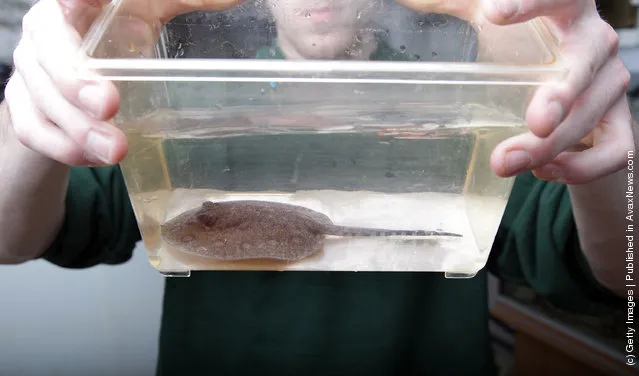
A freshwater stingray pup looks out from a holding tank at Bristol Zoo's aquarium on January 20, 2012 in Bristol, England. (Photo by Matt Cardy/Getty Images)
South Korean residents 89-year-old Jeong Nam-poong and 80-year-old Jang Yoon-hui , wearing protective masks, dance at park after their daytime discotheque “colatec” has been closed amid the coronavirus disease (COVID-19) outbreak in Seoul, South Korea, May 19, 2020. (Photo by Minwoo Park/Reuters)
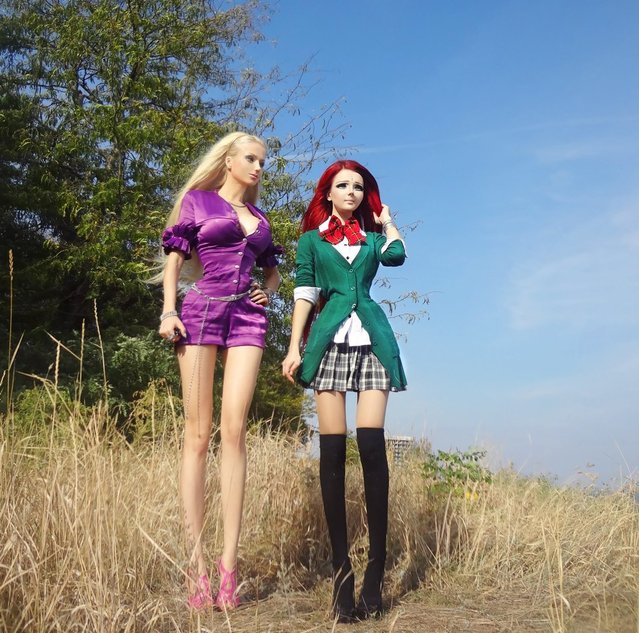
“Anastasiya Shpagina is one of the famous women who have transformed themselves into looking like human dolls. Hailing from Ukraine, 19-year-old Anastasiya Shpagina always loved Japanese cartoon characters, and has dreamed of becoming a living doll that appears in animes. She transformed her look into something that can be seen in the pages of a manga book”.
Photo: “Human Anime Doll” Anastasiya Shpagina (R) with “Human Barbie Doll” Valeria Lukyanova. (Photo by Anastasiya Shpagina & Valeria Lukyanova)
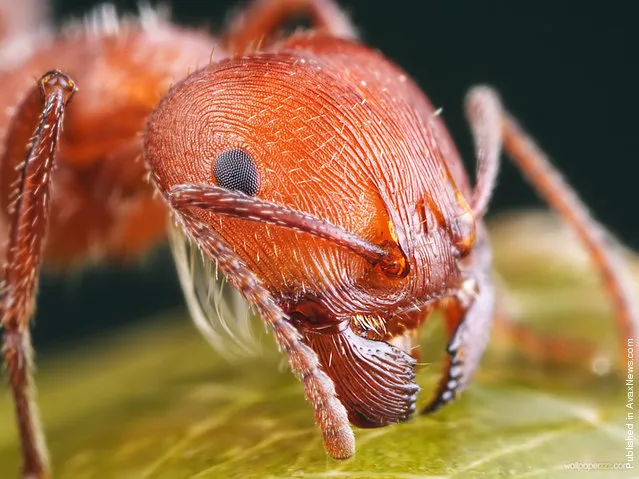
Once upon a time a myth was born that insects, unlike animals, are just a machines that not capable of learning and survive only based on their instincts. That myth has become the widespread opinion. Of course, this opinion is indeed erroneous, like many other widespread opinions. Let us try to find out which part is a myth and which part is true.
In this Thursday, April 11, 2013 photo, North Korean female soldiers stand watch on the river bank of the North Korean town of Sinuiju, opposite to the Chinese border city of Dandong. (Photo by AP Photo)
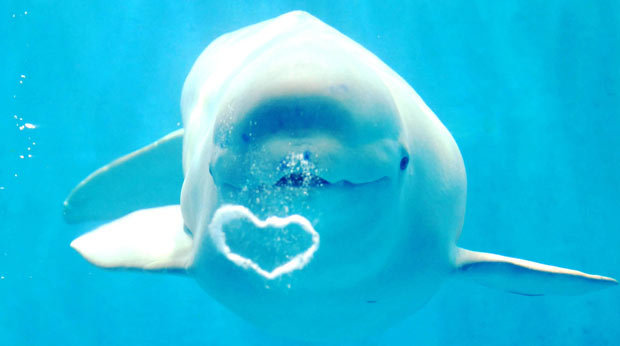
The talent in bubbles unfurled the white Beluga whales living in Shimane Aquarium in Japan.As shown in the picture, have learned to make bubble rings, indicative of high intelligence.Whales blowing air from the mouth to create a stream and immediately after xanafysoun powerfully in the same place so that the bubbles to form a ring.Beluga whales are organized in groups and are social animals. They live in Arctic and sub-Arctic and known as "sea canaries" and mimic a wide range of sounds.