Loading...
Done


“The Southern Tamandua, Collared Anteater or Lesser Anteater (Tamandua tetradactyla) is a species of anteater from South America. It is a solitary animal, found in many habitats from mature to highly disturbed secondary forests and arid savannas. It feeds on ants, termites and bees. It has very strong foreclaws that can be used to break insect nests or to defend itself”. – Wikipedia

Photo: A three-month-old baby Southern Tamandua “Konbu” lies on its mother Tae's back at Sunshine International Aquarium on July 7, 2009 in Tokyo, Japan. Baby Southern Tamandua feels safe and comfortable holding onto something and normally stays on the mother's back until around 3 months old. (Photo by Junko Kimura/Getty Images)
Details
19 May 2011 10:31:00


“US Airways Flight 1549 was US Airways' scheduled domestic commercial passenger flight from LaGuardia Airport in New York City to Charlotte/Douglas International Airport, Charlotte, North Carolina. On January 15, 2009, the aircraft flying this route, an Airbus A320-214, was successfully ditched in the Hudson River adjacent to midtown Manhattan six minutes after takeoff from LaGuardia Airport after being disabled by striking a flock of Canada Geese during its initial climb out. The incident became known as the «Miracle On The Hudson»”. – Wikipedia

Photo: The Airbus jet that pilot Chesley “Sully” Sullenberger landed on the Hudson River is pulled along Yorkmont Road as it makes its way to the Carolinas Aviation Museum June 10, 2011 in Charlotte, North Carolina. An official unveiling of the plane, which will be on display at the Carolinas Avaiation Museum, will take place on Saturday, June 11. (Photo by Davis Turner/Getty Images)
Details
11 Jun 2011 12:38:00


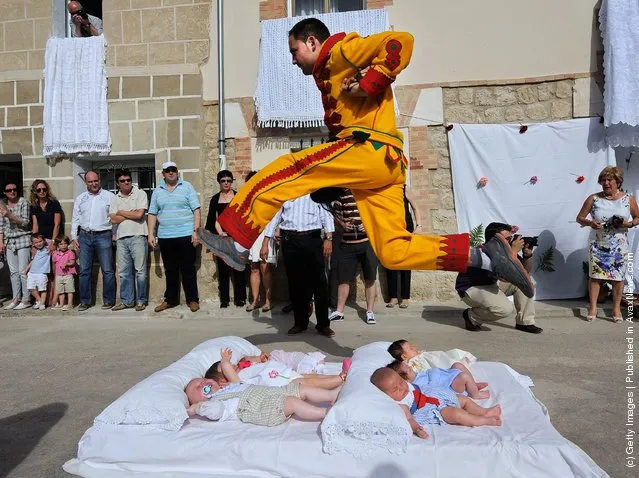
“Baby jumping (El Colacho) is a traditional Spanish practice dating back to 1620 that takes place annually to celebrate the Catholic feast of Corpus Christi in the village of Castrillo de Murcia near Burgos. During the act – known as El Salto del Colacho (the devil's jump) or simply El Colacho – men dressed as the Devil (known as the Colacho) jump over babies born during the previous twelve months of the year who lie on mattresses in the street. ... The festival has been rated as one of the most dangerous in the world”. – Wikipedia

Photo: A man representing the devil leaps over babies during the festival of El Colacho on June 26, 2011 in Castrillo de Murcia near Burgos, Spain. The festival, held on the first Sunday after Corpus Cristi, represents the devil taking away original sin from the newly born babies by leaping over them. (Photo by Denis Doyle/Getty Images)
Details
27 Jun 2011 09:20:00
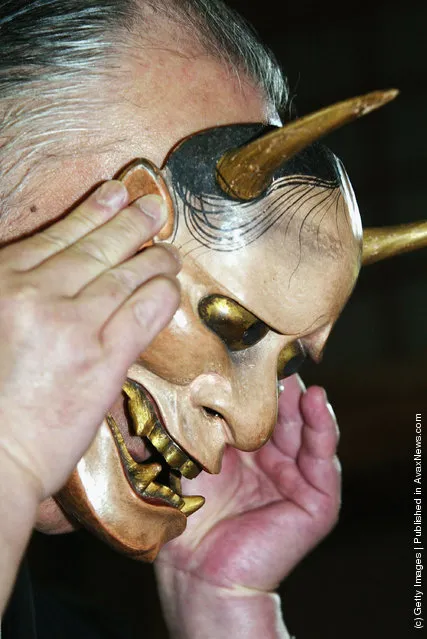
A renowned Noh actor, Otoshige Sakai, demostrates how to put on a Noh mask

“Noh, or Nogaku – derived from the Japanese word for “skill” or “talent” – is a major form of classical Japanese musical drama that has been performed since the 14th century. Many characters are masked, with men playing male and female roles. Traditionally, a Noh “performance day” lasts all day and consists of five Noh plays interspersed with shorter, humorous kyōgen pieces. However, present-day Noh performances often consist of two Noh plays with one Kyōgen play in between”. – Wikipedia

Photo: A renowned Noh actor, Otoshige Sakai, demostrates how to put on a Noh mask, on May 17, 2004 in Tokyo, Japan. (Photo by Koichi Kamoshida/Getty Images)
Details
02 Aug 2011 14:09:00
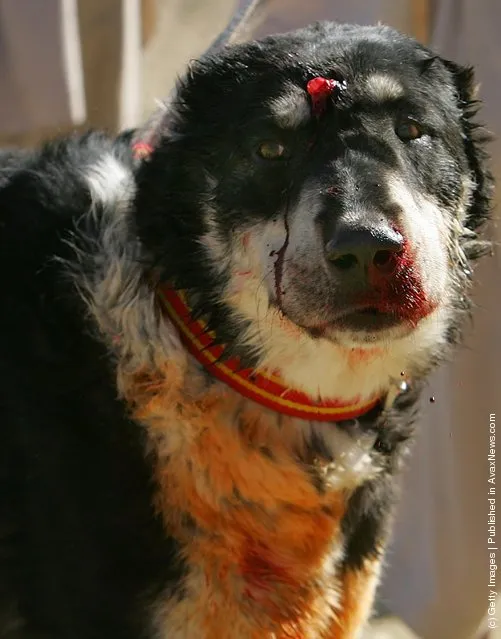
Afghan Dog Fighting

“Dog fighting is a form of blood sport in which game dogs are made to fight, sometimes to the death. It is illegal in most developed countries. Dog fighting is used for entertainment and may also generate revenue from stud fees, admission fees and gambling”. – Wikipedia

Photo: A bloody Afghan dog is bleeding with many wounds after he lost a dog fight November 24, 2006 in Kabul, Afghanistan. While the Afghan government is trying to ban the violent use of dogs for fighting, the unofficial sport remains a regular weekly event. Afghan dog fighting is popular among Afghan men who gamble on the dogs making upwards of 15,000 Afghanie (300 USD). (Photo by Paula Bronstein/Getty Images)
Details
07 Aug 2011 11:47:00
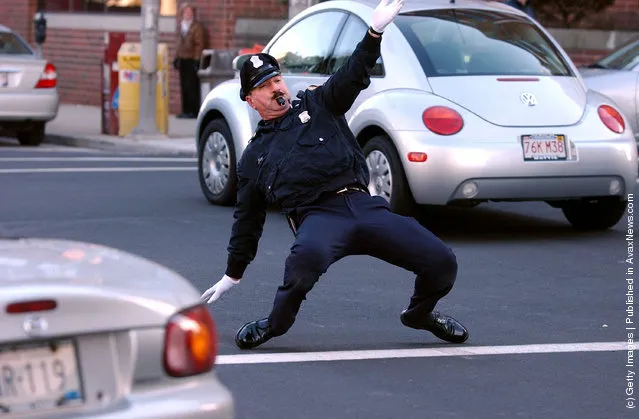
Dancing Cop Tony Lepore

“Tony Lepore (born October 17, 1947), aka the Dancing Cop, is a retired American police officer who has been entertaining on the streets of Providence, Rhode Island during the December holiday season by directing traffic using a dancing style since 1984”. – Wikipedia

Photo: Retired police officer Tony Lepore performs his dance routine while directing traffic December 14, 2004 in downtown Providence, Rhode Island. Lepore has been entertaining drivers and directing traffic at intersections around Providence for 20 years. He came upon the idea after seeing a “Candid Camera” clip of New York City police officers who flamboyantly directed traffic in the 1950's. (Photo by Darren McCollester/Getty Images)
Details
08 Aug 2011 11:06:00
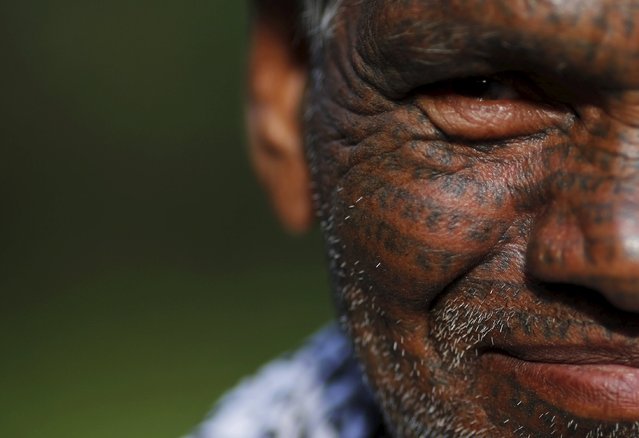
Tiharu Ram, 70, a follower of Ramnami Samaj, who has tattooed the name of the Hindu god Ram on his face, poses for a picture outside his house in the village of Chandlidi, in the eastern state of Chhattisgarh, India, November 16, 2015. (Photo by Adnan Abidi/Reuters)

Tiharu Ram, 70, a follower of Ramnami Samaj, who has tattooed the name of the Hindu god Ram on his face, poses for a picture outside his house in the village of Chandlidi, in the eastern state of Chhattisgarh, India, November 16, 2015. Denied entry to temples and forced to use separate wells, low-caste Hindus in the eastern state of Chhattisgarh first tattooed their bodies and faces more than 100 years ago as an act of defiance and devotion. (Photo by Adnan Abidi/Reuters)
Details
14 Jan 2016 08:05:00
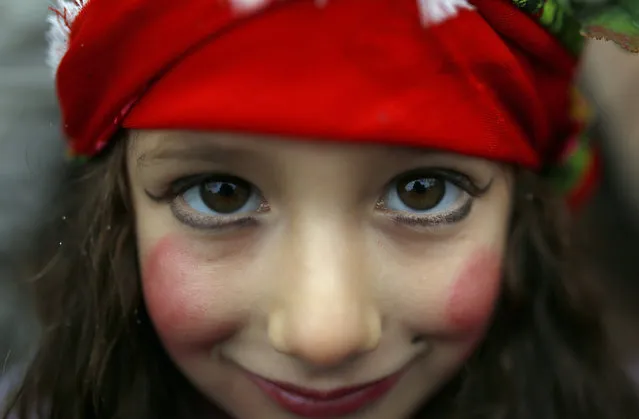
Revellers participate in a parade on the street during a carnival in the village of Vevcani, south of Skopje, Macedonia January 13, 2016. Vevcani village marks the annual Orthodox St. Vasilij Day with a carnival that features a 1,400-year-old celebration with pagan roots. The highlights of the carnival include a political satire where masked villagers act out current events. (Photo by Ognen Teofilovski/Reuters)

Revellers participate in a parade on the street during a carnival in the village of Vevcani, south of Skopje, Macedonia January 13, 2016. Vevcani village marks the annual Orthodox St. Vasilij Day with a carnival that features a 1,400-year-old celebration with pagan roots. The highlights of the carnival include a political satire where masked villagers act out current events. (Photo by Ognen Teofilovski/Reuters)
Details
15 Jan 2016 08:05:00