Loading...
Done
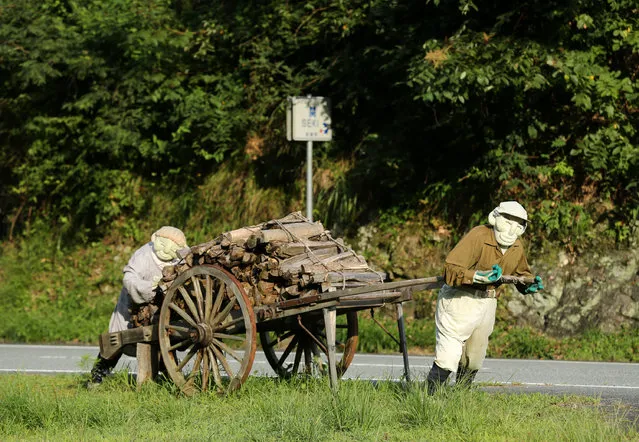
An illustration showing scarecrows pulling a firewood cart beside a road is on display at Kakashi no Sato, or the Scarecrow's Hometown on September 10, 2014 in Himeji, Japan. (Photo by Buddhika Weerasinghe/Getty Images)

An illustration showing scarecrows pulling a firewood cart beside a road is on display at Kakashi no Sato, or the Scarecrow's Hometown on September 10, 2014 in Himeji, Japan. In this district of Yasutomi in Himeji city, over 100 of scarecrows stand in farmlands and abandoned houses to illustrate the good old Japanese countryside and attract visitors. (Photo by Buddhika Weerasinghe/Getty Images)
Details
15 Sep 2014 10:37:00
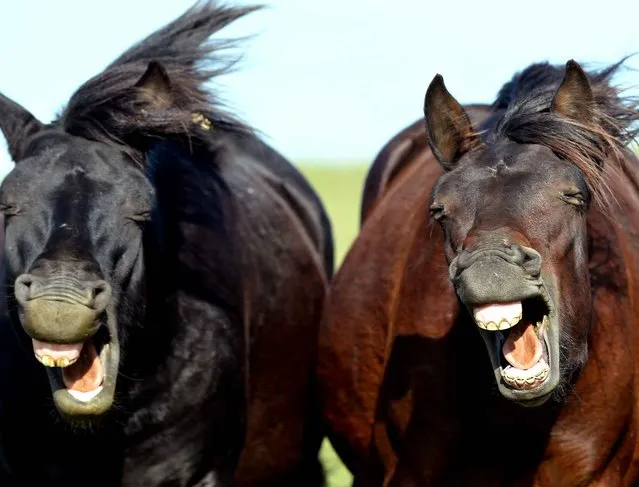
Hucul horses play in the wild meadows and forests near Odrzychowa in southeastern Poland on October 18, 2014. Huculs, a primitive breed of horse, escaped total extinction due to the efforts of scientists and Polish farmers. (Photo by Janek Skarzynski/AFP Photo)

Hucul horses play in the wild meadows and forests near Odrzychowa in southeastern Poland on October 18, 2014. Huculs, a primitive breed of horse, escaped total extinction due to the efforts of scientists and Polish farmers. (Photo by Janek Skarzynski/AFP Photo)
Details
25 Oct 2014 14:08:00
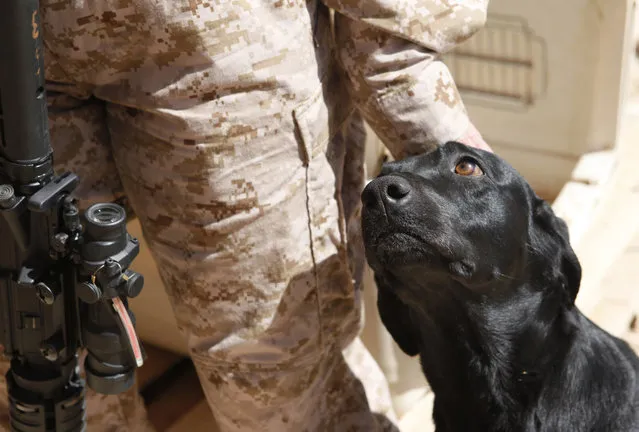
Afghanistan: Dogs of War Part 2

Throughout the course of the long war in Afghanistan, Coalition troops have relied on thousands of military working dogs to help keep them safe, and make their jobs easier. The dogs are trained to detect explosives, to find illegal drugs, to search for missing comrades, or target enemy combatants. Not only are they active on the front lines, but behind the lines they serve as therapy dogs, service dogs, and loyal companions. They also share the same risks as the ground troops, suffering injuries and sometimes death on the battlefields. Gathered here are images of these dogs and their handlers in Afghanistan and back home, from over the past several years, part of the ongoing series here on Afghanistan.
Details
05 Jun 2014 21:10:00
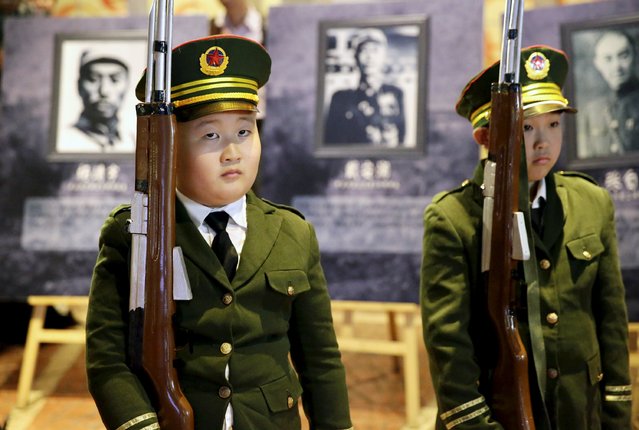
Children wearing uniforms hold toy guns during a military parade game on China's National Day, at Beyou World, a centre children where can experience different kinds of professions, in Beijing, October 1, 2015. (Photo by Reuters/Stringer)

Children wearing uniforms hold toy guns during a military parade game on China's National Day, at Beyou World, a centre children where can experience different kinds of professions, in Beijing, October 1, 2015. (Photo by Reuters/Stringer)
Details
05 Oct 2015 08:06:00
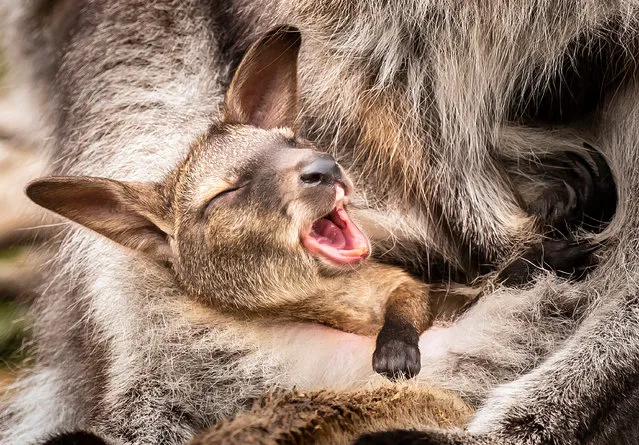
The head of a Bennett's Wallaby Joey emerges from its mothers' pouch at Yorkshire Wildlife Park in Doncaster, England on March 19, 2020, where the park still remains open to the public as coronavirus continues to hit the UK. (Photo by Danny Lawson/PA Images via Getty Images)

The head of a Bennett's Wallaby Joey emerges from its mothers' pouch at Yorkshire Wildlife Park in Doncaster, England on March 19, 2020, where the park still remains open to the public as coronavirus continues to hit the UK. (Photo by Danny Lawson/PA Images via Getty Images)
Details
22 Mar 2020 00:03:00
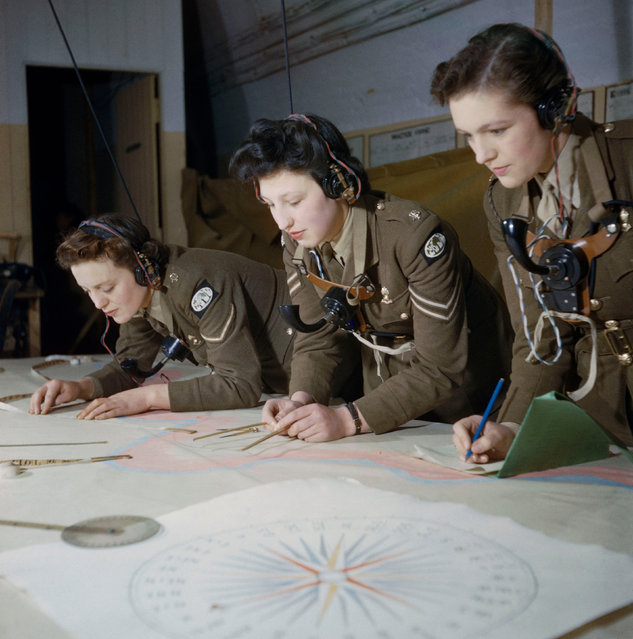
Auxiliary Territorial Service (ATS) plotters at work at Coastal Artillery Headquarters in Dover, December 1942. (Photo by Ted Dearberg/IWM/PA Wire)

Auxiliary Territorial Service (ATS) plotters at work at Coastal Artillery Headquarters in Dover, December 1942. The Auxiliary Territorial Service was the women's branch of the British Army during the Second World War. It was formed on 9 September 1938, initially as a women's voluntary service, and existed until 1 February 1949, when it was merged into the Women's Royal Army Corps. The ATS had its roots in the Women's Auxiliary Army Corps (WAAC), which was formed in 1917 as a voluntary service. During the First World War its members served in a number of jobs including clerks, cooks, telephonists and waitresses. The WAAC was disbanded after four years in 1921. (Photo by Ted Dearberg/IWM/PA Wire)
Details
13 Jul 2017 07:52:00
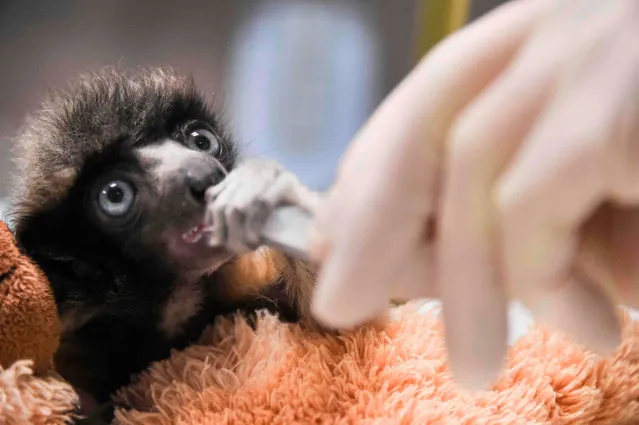
A veterinarian from the zoo of Besancon feeds “Soa”, a female crowned sifaka, in Besancon, eastern France, on February 18, 2019. The crowned sifaka is a critically endangered species from Madagascar. There were only 6 females over 20 individuals living in 7 zoos worldwide end of 2018. (Photo by Sébastien Bozon/AFP Photo)

A veterinarian from the zoo of Besancon feeds “Soa”, a female crowned sifaka, in Besancon, eastern France, on February 18, 2019. The crowned sifaka is a critically endangered species from Madagascar. There were only 6 females over 20 individuals living in 7 zoos worldwide end of 2018. (Photo by Sébastien Bozon/AFP Photo)
Details
24 Feb 2019 00:03:00
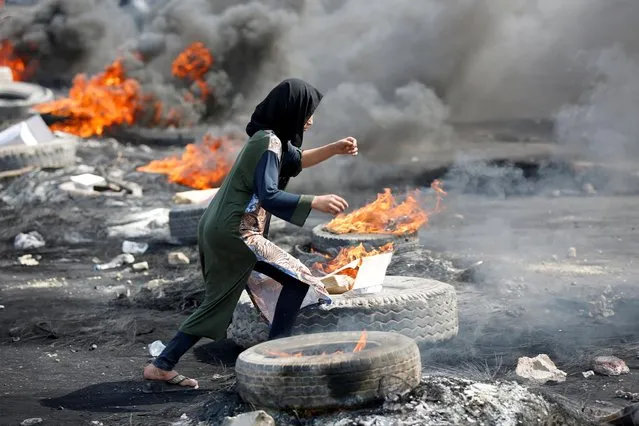
A demonstrator runs between burning tires during a curfew, two days after the nationwide anti-government protests turned violent, in Baghdad, Iraq on October 3, 2019. (Photo by Wissm al-Okili/Reuters)

A demonstrator runs between burning tires during a curfew, two days after the nationwide anti-government protests turned violent, in Baghdad, Iraq on October 3, 2019. (Photo by Wissm al-Okili/Reuters)
Details
05 Oct 2019 00:01:00