Loading...
Done
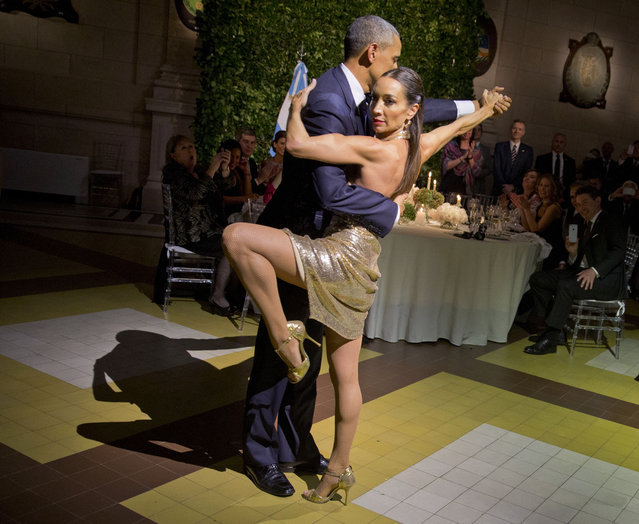
President Barack Obama with does the tango with a dancer during the State Dinner at the Centro Cultural Kirchner, Wednesday, March 23, 2016, in Buenos Aires, Argentina. (Photo by Pablo Martinez Monsivais/AP Photo)

President Barack Obama with does the tango with a dancer during the State Dinner at the Centro Cultural Kirchner, Wednesday, March 23, 2016, in Buenos Aires, Argentina. (Photo by Pablo Martinez Monsivais/AP Photo)
Details
24 Dec 2016 09:26:00
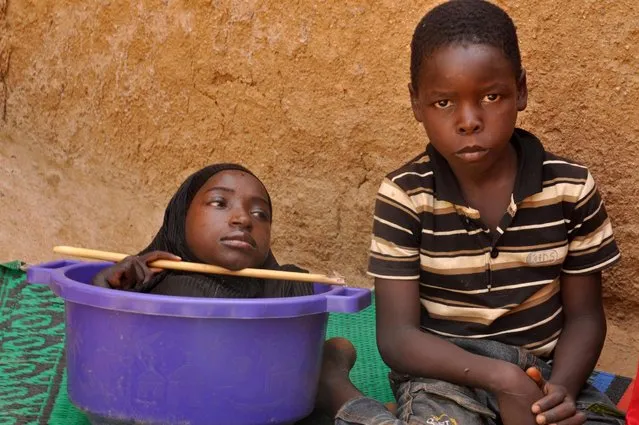
Rahma, 19, pictured with her 10-year old brother Fahad on June 21, 2016 in Kano, Nigeria. A teenage girl born without limbs lives her life in a plastic bowl. Rahma Haruna is a bright, happy girl, despite suffering from a mystery condition that stopped her arms and legs developing properly – leaving her practically limbless and in constant pain. The 19-year- old, from Kano, Nigeria, was born a healthy baby but when she turned six months old her growth came to a sudden halt and she stopped hitting key development milestones. Rahma’s family do their best to provide her with a fulfilling life and transport her around the village in a plastic bowl. Rahma said: “They help me a lot. How do they? They give me anything I need”. Rahma died on 25 December 2016. (Photo by Sani Maikatanga/Barcroft Images)

Rahma, 19 (L), pictured with her 10-year old brother Fahad on June 21, 2016 in Kano, Nigeria. A teenage girl born without limbs lives her life in a plastic bowl. Rahma Haruna is a bright, happy girl, despite suffering from a mystery condition that stopped her arms and legs developing properly – leaving her practically limbless and in constant pain. The 19-year- old, from Kano, Nigeria, was born a healthy baby but when she turned six months old her growth came to a sudden halt and she stopped hitting key development milestones. Rahma’s family do their best to provide her with a fulfilling life and transport her around the village in a plastic bowl. Rahma said: “They help me a lot. How do they? They give me anything I need”. Rahma died on 25 December 2016. (Photo by Sani Maikatanga/Barcroft Images)
Details
30 Dec 2016 10:52:00
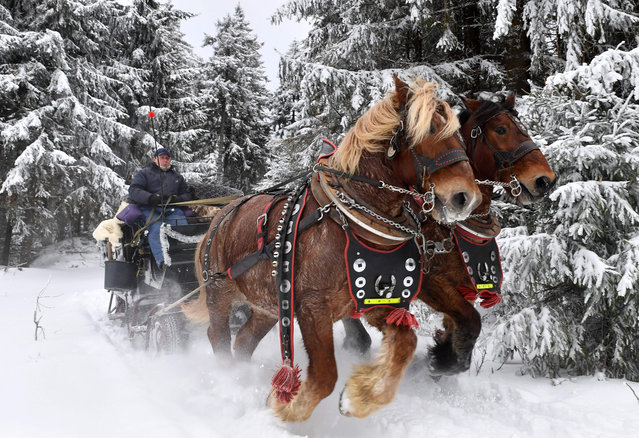
A horse- drawn carriage rides along the race course through the Thuringian Forest in Oberhof, Germany, 05 January 2017. Winter found its way to Saxony, Saxony- Anhalt, and Thuringia. In some regions it can get as low as negative 20 degrees overnight. (Photo by Martin Schutt/Zentralbild/DPA)

A horse- drawn carriage rides along the race course through the Thuringian Forest in Oberhof, Germany, 05 January 2017. Winter found its way to Saxony, Saxony- Anhalt, and Thuringia. In some regions it can get as low as negative 20 degrees overnight. (Photo by Martin Schutt/Zentralbild/DPA)
Details
06 Jan 2017 14:17:00
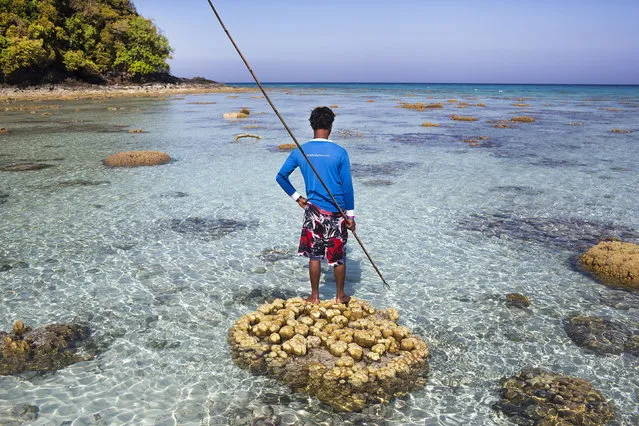
Hook, an indigenous Moken man, holds a three-pronged throwing spear and searches for fish in the waters of Ko Surin National Park. March 1, 2013 – Ko Surin, Thailand. (Photo by Taylor Weidman/zReportage via ZUMA Press)

“For centuries, the Moken sea nomads have traveled the islands between Thailand and Myanmar fishing and foraging for food on the sea floor. Throughout the Mergui Archipelago, Moken migrate in flotillas of Kabangs (traditional boat of the Moken people), stopping at different islands and beaches. Expert freedivers, the Moken have adapted physically to an aquatic life, developing unique characteristics that let them see better and hold their breath longer while underwater”. – Taylor Weidman. Photo: Hook, an indigenous Moken man, holds a three-pronged throwing spear and searches for fish in the waters of Ko Surin National Park. March 1, 2013 – Ko Surin, Thailand. (Photo by Taylor Weidman/zReportage via ZUMA Press)
Details
24 Mar 2014 06:45:00


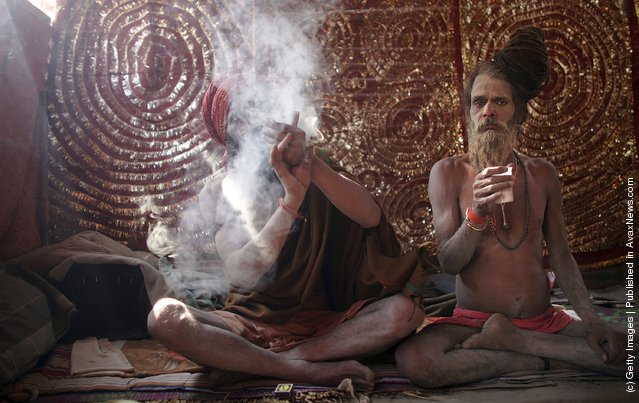
“Kumbh Mela is a mass Hindu pilgrimage in which Hindus gather at the Ganges river. The normal Kumbh Mela is celebrated every 3 years, the Ardh (half) Kumbh Mela is celebrated every six years at Haridwar and Prayag, the Purna (complete) Kumbh takes place every twelve years, at four places (Prayag (Allahabad), Haridwar, Ujjain, and Nashik). The Maha (great) Kumbh Mela which comes after 12 “Purna Kumbh Melas”, or 144 years, is held at Allahabad.

The last Ardh Kumbh Mela was held over a period of 45 days beginning in January 2007, more than 70 million Hindu pilgrims took part in the Ardh Kumbh Mela at Prayag, and on January 15, the most auspicious day of the festival of Makar Sankranti, more than 5 million participated. The previous Maha Kumbh Mela, held in 2001, was attended by around 60 million people, making it at the time the largest gathering anywhere in the world in recorded history”. – Wikipedia

Photo: Sadhus (holy men) smoke at their camp near the ritual site at Sangam, the confluence of the Ganges, Yamuna and mythical Saraswati rivers during the Ardh Kumbh Mela festival (Half Pitcher festival) January 18, 2007 in Allahabad, India. Millions of Hindu pilgrims have flocked to the largest religious gathering in the world which lasts for 45 days in northern India. The festival commemorates the mythical conflict between gods and demons over a pitcher filled with the “nectar of immortality”. Devotees believe that taking a holy dip in the Ganges at this time washes away their sins and paves the path to salvation. (Photo by Mario Tama/Getty Images)

Details
30 Jun 2011 10:27:00
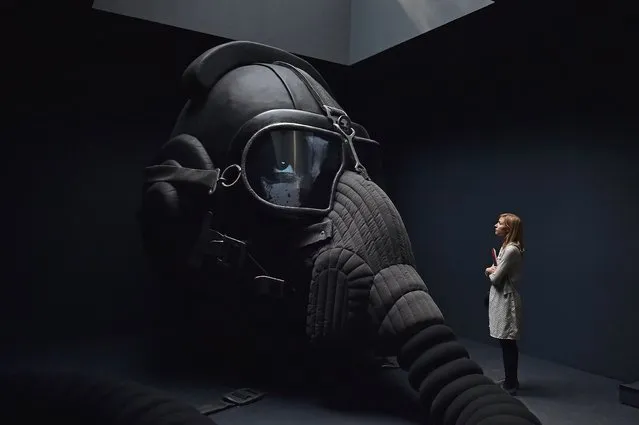
A visitor looks at a creation by Russian artist Irina Nakhova presented at the Russia's pavilion during the 56th International Art Exhibition (Biennale d'Arte) titled “All the Worlds Futures” on May 5, 2015 in Venice. (Photo by Gabriel Bouys/AFP Photo)

A visitor looks at a creation by Russian artist Irina Nakhova presented at the Russia's pavilion during the 56th International Art Exhibition (Biennale d'Arte) titled “All the Worlds Futures” on May 5, 2015 in Venice. (Photo by Gabriel Bouys/AFP Photo)
Details
09 May 2015 11:25:00
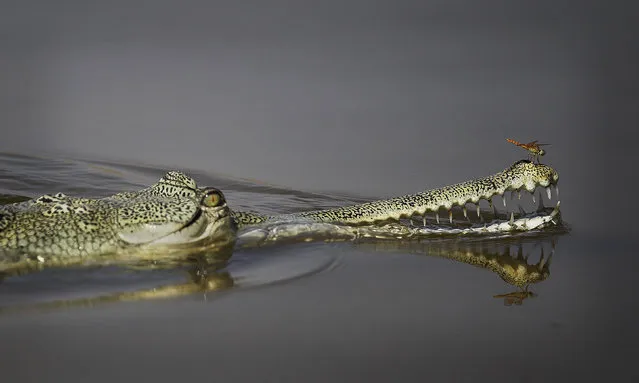
In this photo taken Wednesday, April 30, 2014, a dragonfly sits on the nose of a Gharial, rare crocodile-like creatures, in the River Chambal near Bhopepura village in the northern Indian state of Uttar Pradesh. The narrow 250-mile stretch of the Chambal is a place of crocodiles and jackals, of river dolphins and the occasional wolf. Hundreds of species of birds, storks, geese, babblers, larks, falcons and so many more, nest along the river. (Photo by Altaf Qadri/AP Photo)

In this photo taken Wednesday, April 30, 2014, a dragonfly sits on the nose of a Gharial, rare crocodile-like creatures, in the River Chambal near Bhopepura village in the northern Indian state of Uttar Pradesh. The narrow 250-mile stretch of the Chambal is a place of crocodiles and jackals, of river dolphins and the occasional wolf. Hundreds of species of birds, storks, geese, babblers, larks, falcons and so many more, nest along the river. Endangered birds lay small speckled eggs in tiny pits they dig in the sandbars. Gharials, rare crocodile-like creatures that look like they swaggered out of the Mesozoic Era, are commonplace here and nowhere else. (Photo by Altaf Qadri/AP Photo)
Details
23 Feb 2015 12:55:00
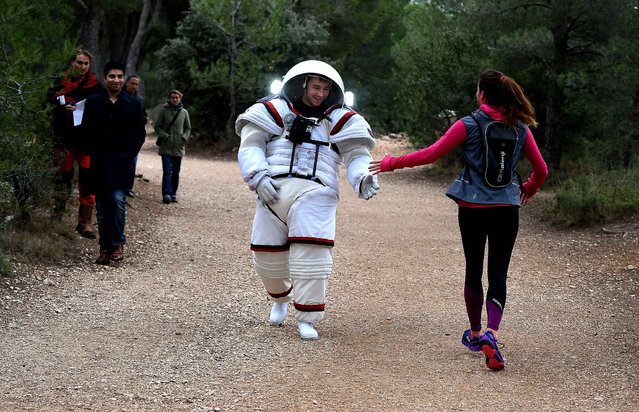
Aeronautics and Space engineer at France's Compagnie Maritime d'Expertises, or Comex, Arnaud Prost (C) meets with a jogger as he tests on the ground the “Gandolfi 2” underwater training suit for spacewalk, on January 20, 2016 in the calanques region (rocky inlets) of Marseille. The underwater training suit “Gandolfi 2”, developed with the European Space Agency (ESA), is designed for training astronauts underwater to simulate space gravity for the astronaut's extravehicular activities (EVAs). (Photo by Boris Horvat/AFP Photo)

Aeronautics and Space engineer at France's Compagnie Maritime d'Expertises, or Comex, Arnaud Prost (C) meets with a jogger as he tests on the ground the “Gandolfi 2” underwater training suit for spacewalk, on January 20, 2016 in the calanques region (rocky inlets) of Marseille. The underwater training suit “Gandolfi 2”, developed with the European Space Agency (ESA), is designed for training astronauts underwater to simulate space gravity for the astronaut's extravehicular activities (EVAs). (Photo by Boris Horvat/AFP Photo)
Details
23 Jan 2016 13:41:00