Loading...
Done
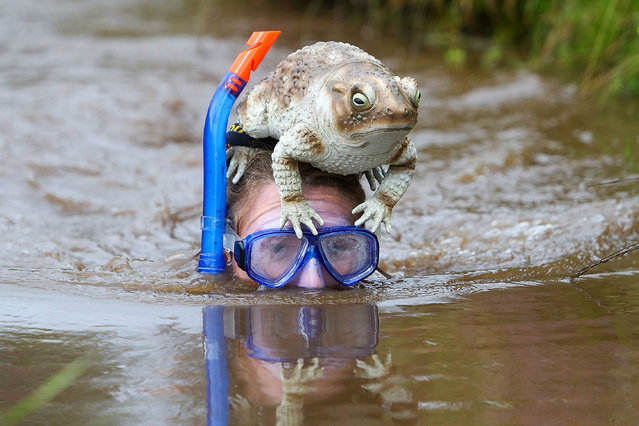
A competitor takes part in the World Bog Snorkelling Championships held at the Waen Rhydd peat bog, Llanwrtyd Wells, Mid Wales, on August 27, 2023. The race is held along a 55-metre bog trench, in which the contestants must complete two lengths. Conventional swimming strokes are not allowed, though snorkels and flippers are mandatory. (Photo by Geoff Caddick/AFP Photo)

A competitor takes part in the World Bog Snorkelling Championships held at the Waen Rhydd peat bog, Llanwrtyd Wells, Mid Wales, on August 27, 2023. The race is held along a 55-metre bog trench, in which the contestants must complete two lengths. Conventional swimming strokes are not allowed, though snorkels and flippers are mandatory. (Photo by Geoff Caddick/AFP Photo)
Details
04 Nov 2024 03:48:00
People enjoying the second day of the Greenman Festival in South Wales, Crickhowell, United Kingdom on August 20, 2021. (Photo by Chris Fairweather/Huw Evans/Rex Features/Shutterstock)

People enjoying the second day of the Greenman Festival in South Wales, Crickhowell, United Kingdom on August 20, 2021. (Photo by Chris Fairweather/Huw Evans/Rex Features/Shutterstock)
Details
21 Aug 2021 09:34:00
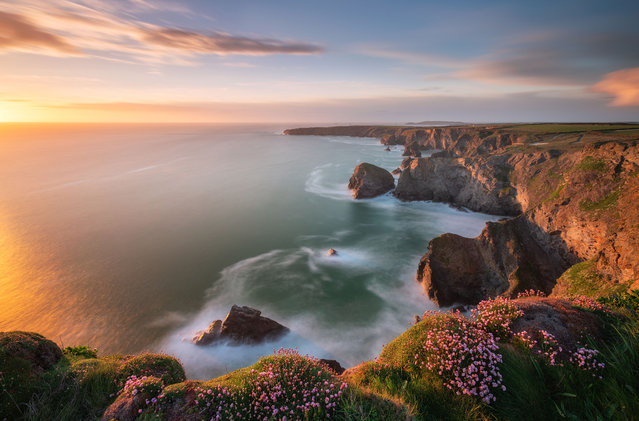
Bedruthan Steps, Cornwall. (Photo by Alessio Putzu/Caters News Agency)

The impressive gallery shows beautiful landscapes that might appear to be from more exotic climes, but they were all taken on British soil. Alessio Putzu, 31, a professional landscape photographer from London, snapped the amazing shots during his trips to Devon and Cornwall, England; Pembrokeshire, Wales; and the Isle of Skye, Scotland. Here: Bedruthan Steps, Cornwall. (Photo by Alessio Putzu/Caters News Agency)
Details
01 Aug 2019 00:03:00
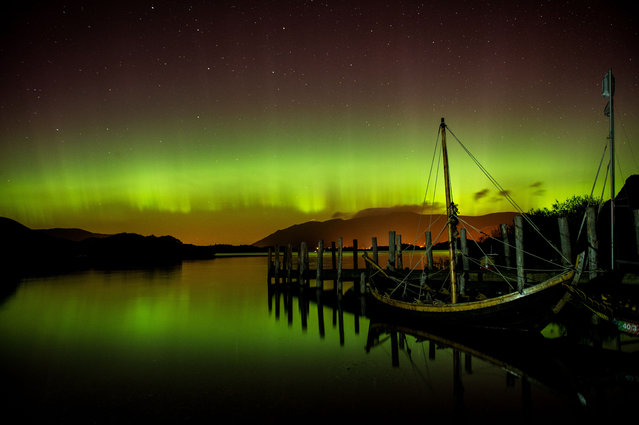
The aurora borealis, or the northern lights occur over Derwentwater, near Keswick, England, Thursday October 8, 2015. The northern lights are the result of collisions between gaseous particles in the Earth's atmosphere with charged particles released from the sun. (Photo by Owen Humphreys/PA via AP Photo)

The aurora borealis, or the northern lights occur over Derwentwater, near Keswick, England, Thursday October 8, 2015. The northern lights are the result of collisions between gaseous particles in the Earth's atmosphere with charged particles released from the sun. (Photo by Owen Humphreys/PA Wire via AP Photo)
Details
15 Oct 2015 08:06:00
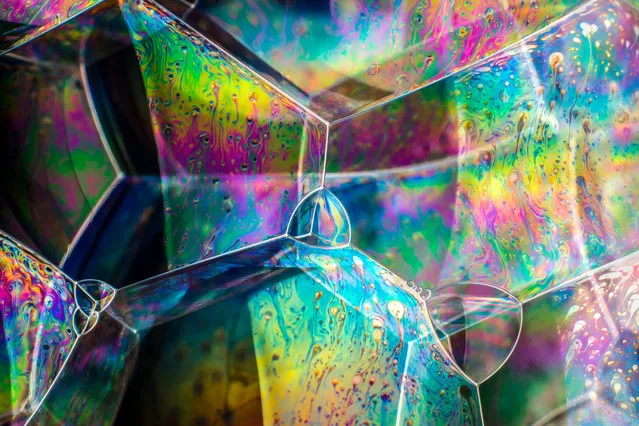
Soap Bubble Structures by Kym Cox. Bubbles optimise space and minimise their surface area for a given volume of air. This phenomenon makes them a useful tool in many areas of research, in particular, materials science and ‘packing’ – how things fit together. Bubble walls drain under gravity, thin at the top, thick at the bottom, which interferes with travelling lightwaves to create bands of colour. Black spots show the wall is too thin for interference colours, indicating the bubble is about to burst. (Photo by Kym Cox/2019 Science Photographer of the Year/RPS)

Soap Bubble Structures by Kym Cox. Bubbles optimise space and minimise their surface area for a given volume of air. This phenomenon makes them a useful tool in many areas of research, in particular, materials science and “packing” – how things fit together. Bubble walls drain under gravity, thin at the top, thick at the bottom, which interferes with travelling lightwaves to create bands of colour. Black spots show the wall is too thin for interference colours, indicating the bubble is about to burst. (Photo by Kym Cox/2019 Science Photographer of the Year/RPS)
Details
15 Aug 2019 00:03:00
Norway's Karsten Warholm celebrates winning the men's 400m hurdles at the Diamond League in London, July 21, 2018. (Photo by Andrew Boyers/Action Images via Reuters)

Norway's Karsten Warholm celebrates winning the men's 400m hurdles at the Diamond League in London, July 21, 2018. (Photo by Andrew Boyers/Action Images via Reuters)
Details
04 Jan 2019 00:03:00
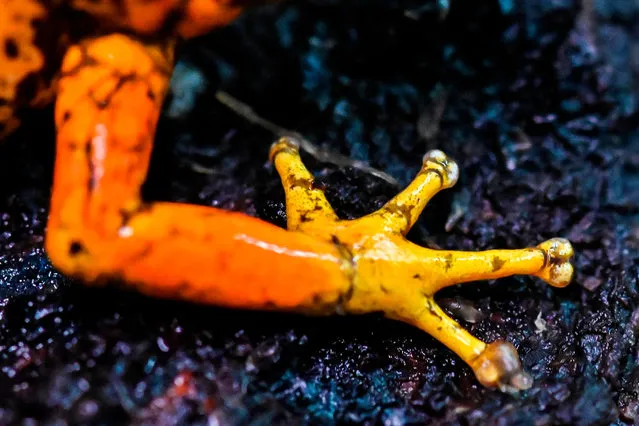
A leg of a “diablito” frog (Oophaga sylvatica) is photographed in a laboratory at a laboratory in the zoo of Cali, Colombia, on July 19, 2019. Colombia is the second country with the largest number of amphibians in the world after Brazil. More than 40% of amphibian species worldwide are in danger of extinction. (Photo by Luis Robayo/AFP Photo)

A leg of a “diablito” frog (Oophaga sylvatica) is photographed in a laboratory at a laboratory in the zoo of Cali, Colombia, on July 19, 2019. Colombia is the second country with the largest number of amphibians in the world after Brazil. More than 40% of amphibian species worldwide are in danger of extinction. (Photo by Luis Robayo/AFP Photo)
Details
28 Nov 2020 00:03:00
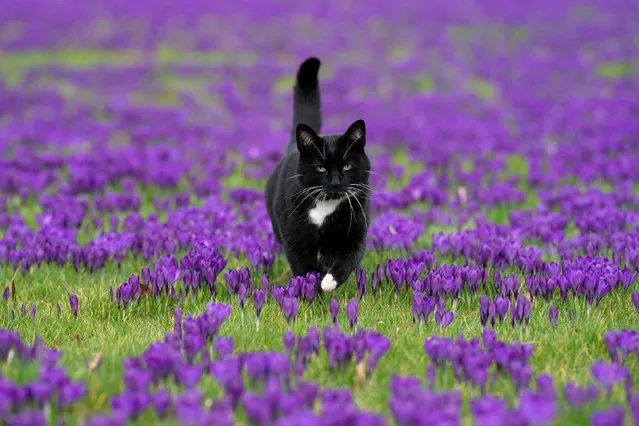
Lord Roscoe the cat runs through the crocuses on the lawns at the National Trust's 17th-century Ham House and Garden in Richmond, London on Monday, March 6, 2023. In recent years more than 500,000 bulbs have been planted to create a spectacle for visitors and to attract bees, butterflies and other pollinating insects. (Photo by Kirsty O'Connor/PA Images via Getty Images)

Lord Roscoe the cat runs through the crocuses on the lawns at the National Trust's 17th-century Ham House and Garden in Richmond, London on Monday, March 6, 2023. In recent years more than 500,000 bulbs have been planted to create a spectacle for visitors and to attract bees, butterflies and other pollinating insects. (Photo by Kirsty O'Connor/PA Images via Getty Images)
Details
26 Apr 2023 02:59:00