Loading...
Done
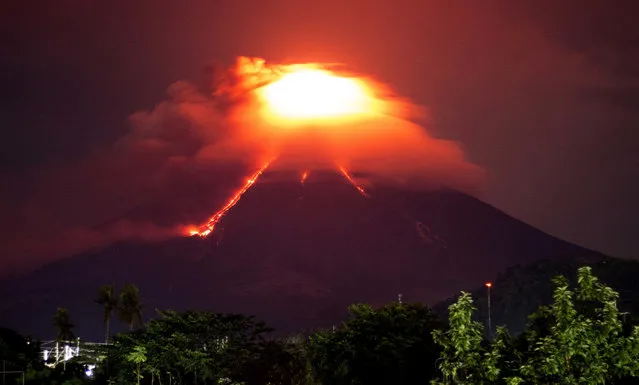
Lava cascades down the slopes of Mayon volcano as seen from Legazpi city, Albay province, around 340 kilometers (210 miles) southeast of Manila, Philippines, Monday, January 15, 2018. More than 9,000 people have evacuated the area around the Philippines' most active volcano as lava flowed down its crater Monday in a gentle eruption that scientists warned could turn explosive. (Photo by Earl Recamunda/AP Photo)

Lava cascades down the slopes of Mayon volcano as seen from Legazpi city, Albay province, around 340 kilometers (210 miles) southeast of Manila, Philippines, Monday, January 15, 2018. More than 9,000 people have evacuated the area around the Philippines' most active volcano as lava flowed down its crater Monday in a gentle eruption that scientists warned could turn explosive. (Photo by Earl Recamunda/AP Photo)
Details
16 Jan 2018 06:36:00
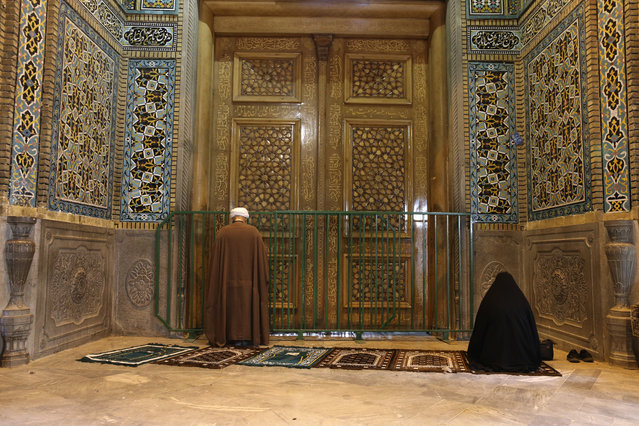
A cleric and a woman pray behind a closed door of Masoume shrine in the city of Qom, some 80 miles (125 kilometers) south of the capital Tehran, Iran, Monday, March 16, 2020. On Monday, Iran closed the Masoume shrine, a major pilgrimage site in the city of Qom, the epicenter of the country's new coronavirus outbreak. Authorities were already restricting access and barring pilgrims from kissing or touching the shrine, but it had remained open. (Photo by AP Photo)

A cleric and a woman pray behind a closed door of Masoume shrine in the city of Qom, some 80 miles (125 kilometers) south of the capital Tehran, Iran, Monday, March 16, 2020. On Monday, Iran closed the Masoume shrine, a major pilgrimage site in the city of Qom, the epicenter of the country's new coronavirus outbreak. Authorities were already restricting access and barring pilgrims from kissing or touching the shrine, but it had remained open. (Photo by AP Photo)
Details
23 Mar 2020 00:01:00
In this photo taken on Saturday, March 9, 2019, a visitor dances in front of a sculpture burning at the Maslenitsa (Shrovetide) festival at the Nikola-Lenivets art park in Nikola-Lenivets village, about 200 kilometers (125 miles) south-west of Moscow, Russia. As part of the celebrations of Maslenitsa (Shrovetide) Holiday in Russian, a folk holiday which heralds the beginning of spring, contemporary artist and park founder Nikolay Polissky built a giant sculpture made of wood and hay which was burnt to ashes during a traditional bonfire. (Photo by Alexander Zemlianichenko Jr./AP Photo)

In this photo taken on Saturday, March 9, 2019, a visitor dances in front of a sculpture burning at the Maslenitsa (Shrovetide) festival at the Nikola-Lenivets art park in Nikola-Lenivets village, about 200 kilometers (125 miles) south-west of Moscow, Russia. As part of the celebrations of Maslenitsa (Shrovetide) Holiday in Russian, a folk holiday which heralds the beginning of spring, contemporary artist and park founder Nikolay Polissky built a giant sculpture made of wood and hay which was burnt to ashes during a traditional bonfire. (Photo by Alexander Zemlianichenko Jr./AP Photo)
Details
27 Jul 2019 00:01:00
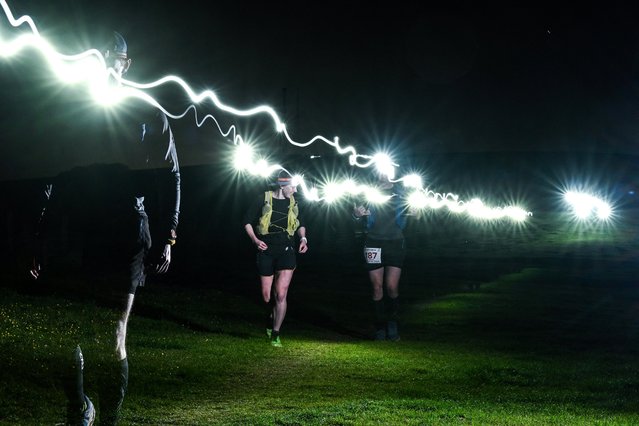
Runners use headtorches as they compete in Centurion South Downs Way 100 ultramarathon, at Firle Bostal near Lewes, south of London on June 9, 2024. The Centurion South Downs Way 100, is an ultramarathon, predominantly off road course, covering a distance of 100 miles (160,9 kilometres) and that takes the competitors along the South Downs Way from Winchester in Hampshire to Eastbourne in East Sussex. (Photo by Ben Stansall/AFP Photo)

Runners use headtorches as they compete in Centurion South Downs Way 100 ultramarathon, at Firle Bostal near Lewes, south of London on June 9, 2024. The Centurion South Downs Way 100, is an ultramarathon, predominantly off road course, covering a distance of 100 miles (160,9 kilometres) and that takes the competitors along the South Downs Way from Winchester in Hampshire to Eastbourne in East Sussex. (Photo by Ben Stansall/AFP Photo)
Details
28 Jun 2024 04:46:00
On August 31, 2012, a long filament of solar material that had been hovering in the sun's atmosphere, the corona, erupted out into space at 4:36 p.m. EDT. The coronal mass ejection, or CME, traveled at over 900 miles per second. The CME did not travel directly toward Earth, but did connect with Earth's magnetic environment, or magnetosphere, causing aurora to appear on the night of Monday, September 3. (Photo by NASA/GSFC/SDO)

On August 31, 2012, a long filament of solar material that had been hovering in the sun's atmosphere, the corona, erupted out into space at 4:36 p.m. EDT. The coronal mass ejection, or CME, traveled at over 900 miles per second. The CME did not travel directly toward Earth, but did connect with Earth's magnetic environment, or magnetosphere, causing aurora to appear on the night of Monday, September 3. (Photo by NASA/GSFC/SDO via The Atlantic)
Details
14 Sep 2012 09:01:00
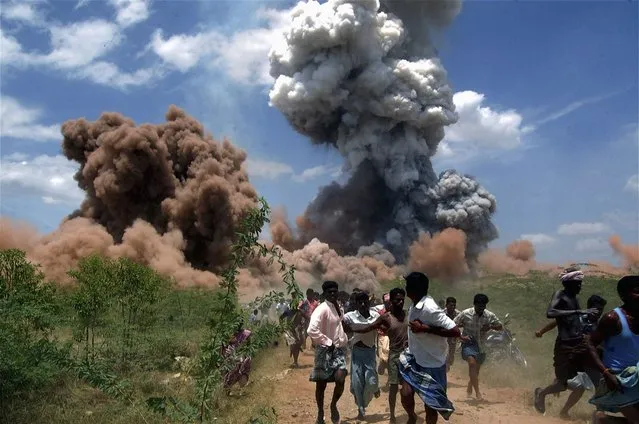
In this September 5, 2012 file photo, people run for cover as smoke rises from the site of a fire at a fireworks factory on the outskirts of Sivakasi, about 500 kilometers (310 miles) southwest of Chennai, India. Police in southern India arrested six employees of the fireworks factory for a massive blaze that killed 40 workers and injured 60 others. (Photo by AP Photo/File)

In this September 5, 2012 file photo, people run for cover as smoke rises from the site of a fire at a fireworks factory on the outskirts of Sivakasi, about 500 kilometers (310 miles) southwest of Chennai, India. Police in southern India arrested six employees of the fireworks factory for a massive blaze that killed 40 workers and injured 60 others. (Photo by AP Photo/File). P.S. I didn't publish the photos which you already saw here (Avax).
Details
04 Jan 2013 15:25:00
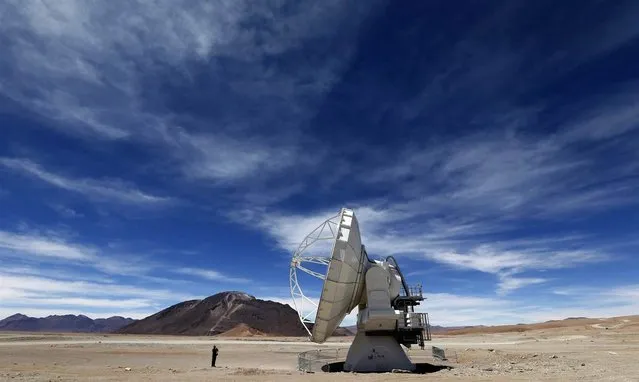
A man takes a photo of a radio antenna that's part of the Atacama Large Milimeter Array Observatory on March 12, 2013 at Llano de Chajnantor, about 43 miles (70 kilometers) from San Pedro de Atacama, Chile. The $1.5 billion ALMA facility, which had its official inauguration on March 13, is considered the world's most expensive ground-based observatory. (Photo by Felipe Trueba/EPA)

A man takes a photo of a radio antenna that's part of the Atacama Large Milimeter Array Observatory on March 12, 2013 at Llano de Chajnantor, about 43 miles (70 kilometers) from San Pedro de Atacama, Chile. The $1.5 billion ALMA facility, which had its official inauguration on March 13, is considered the world's most expensive ground-based observatory. (Photo by Felipe Trueba/EPA)
Details
03 Apr 2013 09:25:00
Tourists look at other festival-goers playing in the mud during the Boryeong Mud Festival at Daecheon beach in Boryeong, about 190 km (118 miles) southwest of Seoul, July 19, 2013. About 2 to 3 million domestic and international tourists visit the beach during the annual mud festival, according to the festival organisers. (Photo by Lee Jae-Won/Reuters)

Tourists look at other festival-goers playing in the mud during the Boryeong Mud Festival at Daecheon beach in Boryeong, about 190 km (118 miles) southwest of Seoul, July 19, 2013. About 2 to 3 million domestic and international tourists visit the beach during the annual mud festival, according to the festival organisers. (Photo by Lee Jae-Won/Reuters)
Details
21 Jul 2013 10:57:00