Loading...
Done
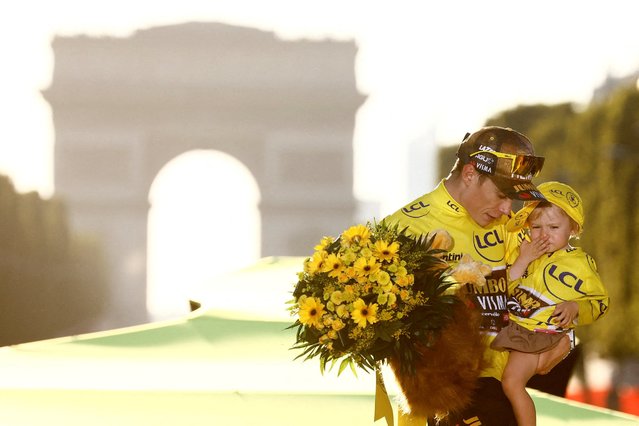
Jumbo-Visma team's Danish rider Jonas Vingegaard holds his daughter Frida as he celebrates on the podium with the overall leader's yellow jersey after winning the 109th edition of the Tour de France cycling race, after the 21st and final 115,6 km stage between La Defense Arena in Nanterre, outside Paris, and the Champs-Elysees in Paris, France, on July 24, 2022. (Photo by Christian Hartmann/Reuters)

Jumbo-Visma team's Danish rider Jonas Vingegaard holds his daughter Frida as he celebrates on the podium with the overall leader's yellow jersey after winning the 109th edition of the Tour de France cycling race, after the 21st and final 115,6 km stage between La Defense Arena in Nanterre, outside Paris, and the Champs-Elysees in Paris, France, on July 24, 2022. (Photo by Christian Hartmann/Reuters)
Details
01 Aug 2022 05:15:00
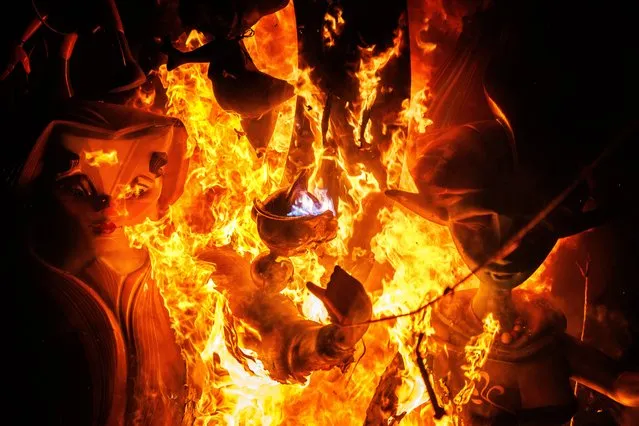
Papier-mache sculptures, also known as “ninots”, burn during the “Nit de la Crema” (Fire Night) of the Fallas Festival in Valencia, eastern Spain, 19 March 2024. Fallas is a fortnight-long fiesta in which installations of parodic papier-mache, cardboard, and wooden sculptures are traditionally burnt every year on the last day of the event in the so-called “Crema” to end the festivities. (Photo by Biel Alino/EPA/EFE)

Papier-mache sculptures, also known as “ninots”, burn during the “Nit de la Crema” (Fire Night) of the Fallas Festival in Valencia, eastern Spain, 19 March 2024. Fallas is a fortnight-long fiesta in which installations of parodic papier-mache, cardboard, and wooden sculptures are traditionally burnt every year on the last day of the event in the so-called “Crema” to end the festivities. (Photo by Biel Alino/EPA/EFE)
Details
29 Apr 2024 05:27:00
People take part in the “The Burial of the Sardine” funeral procession, which marks the end of carnival festivities, in Madrid, Spain, February 10, 2016. (Photo by Juan Medina/Reuters)

People take part in the “The Burial of the Sardine” funeral procession, which marks the end of carnival festivities, in Madrid, Spain, February 10, 2016. “Mourners” carry a coffin with a mock sardine through the streets to celebrate the countdown to Lent. Spanish painter Francisco de Goya's painting “El entierro de la sardina” (The Burial of the Sardine) was inspired by this tradition, which started in Madrid in the 18th century, around the time of Spanish King Carlos III. (Photo by Juan Medina/Reuters)
Details
11 Feb 2016 12:29:00
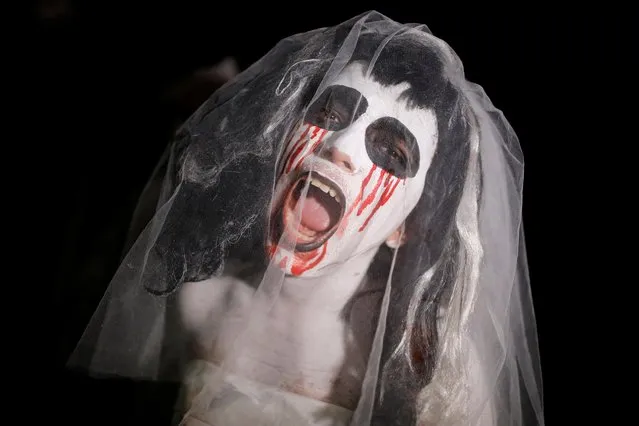
A young man dressed as “La Llorona”, participates in a parade called “La Calabiuza” on the eve of the Day of the Dead in Tonacatepeque, El Salvador, November 1, 2019. (Photo by Jose Cabezas/Reuters)

A young man dressed as “La Llorona”, participates in a parade called “La Calabiuza” on the eve of the Day of the Dead in Tonacatepeque, El Salvador, November 1, 2019. (Photo by Jose Cabezas/Reuters)
Details
06 Nov 2019 00:01:00
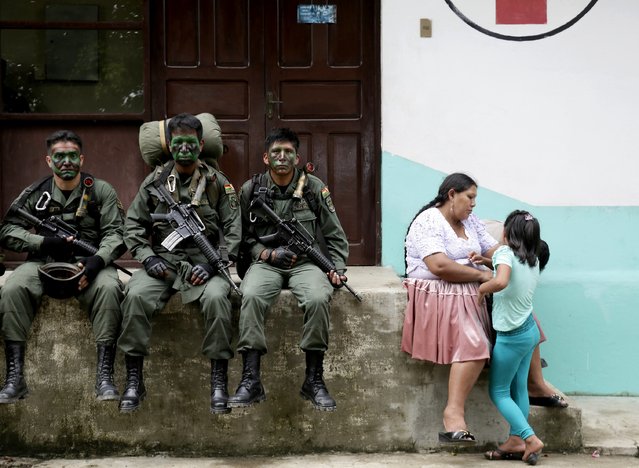
Members of the Bolivian combined forces of army and police rest at their headquarters at the end of their ceremony for the task of fighting against drugs and the eradication of coca leaves in Chimore, east of La Paz, December 10, 2014. The government of Bolivia's President Evo Morales eradicated some 11,000 hectares of illegal coca plants and confiscated nearly 192 tons of drugs in 2014, according to the local media. (Photo by David Mercado/Reuters)

Members of the Bolivian combined forces of army and police rest at their headquarters at the end of their ceremony for the task of fighting against drugs and the eradication of coca leaves in Chimore, east of La Paz, December 10, 2014. The government of Bolivia's President Evo Morales eradicated some 11,000 hectares of illegal coca plants and confiscated nearly 192 tons of drugs in 2014, according to the local media. (Photo by David Mercado/Reuters)
Details
12 Dec 2014 13:10:00
A sculpture of Don Quixote shows him wearing the basin he mistook for the enchanted helmet of the fictional Moorish king Mambrino in Alcazar de San Juan, Spain, April 5, 2016. (Photo by Susana Vera/Reuters)

A sculpture of Don Quixote shows him wearing the basin he mistook for the enchanted helmet of the fictional Moorish king Mambrino in Alcazar de San Juan, Spain, April 5, 2016. The arid central Spanish region of La Mancha is the setting for “Don Quixote”, the seventeenth-century novel by Miguel de Cervantes. Four hundred years after his death, references to the characters of Don Quixote, his loyal squire Sancho Panza and his beautiful lady Dulcinea abound in the surrounding villages from sweet treats to theatre productions involving livestock. Cervantes did not give away the name of the birthplace of Don Quixote, a middle-aged gentleman who becomes obsessed with chivalrous ideals. But many identify the village of Argamasilla de Alba as his hometown. The anniversary of Cervantes’ death is marked on the 23 April. (Photo by Susana Vera/Reuters)
Details
21 Apr 2016 12:32:00


“La Tomatina is a festival that is held in the Valencian town of Buñol, in which participants throw tomatoes at each other”. – Wikipedia

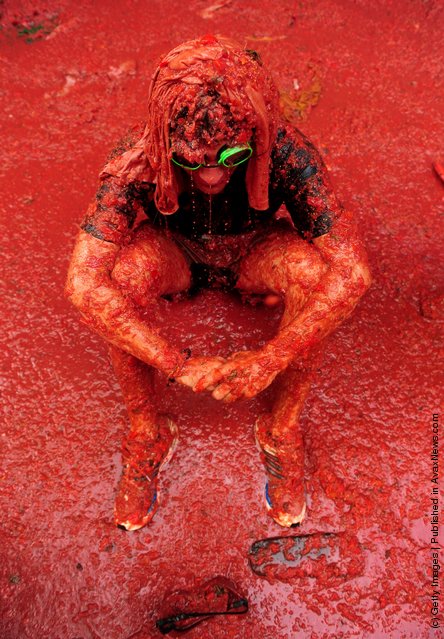
Photo: A man sits in tomato pulp at the end of the world's biggest tomato fight at La Tomatina festival on August 26, 2009 in Bunol, Spain. More than 45000 people from all over the world descended on the small Valencian town to participate La Tomatina festival, with the local town hall estimating that over 100 tons of rotten and over-ripe tomatoes were thrown. (Photo by Jasper Juinen/Getty Images)
Details
24 May 2011 09:27:00
Burlesque dancer INGA performs during the Viva Las Vegas Rockabilly Weekend's Burlesque Showcase hosted by John Waters at the Orleans Arena on April 19, 2019 in Las Vegas, Nevada. (Photo by Ethan Miller/Getty Images)

Burlesque dancer INGA performs during the Viva Las Vegas Rockabilly Weekend's Burlesque Showcase hosted by John Waters at the Orleans Arena on April 19, 2019 in Las Vegas, Nevada. (Photo by Ethan Miller/Getty Images)
Details
22 Apr 2019 00:07:00