Nothing says Halloween like a jack-o'-lantern, but these professional carvings will blow your neighborhood pumpkin out of the water. (Photo by Frank C. Grace/Courtesy Jack-O-Lantern Spectacular)
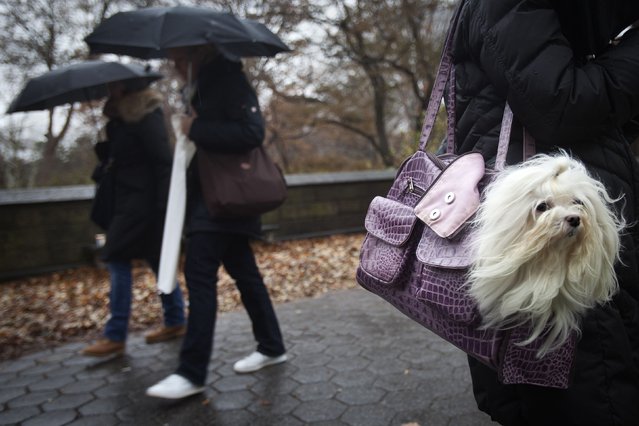
Emma the Maltese's fur blows in the wind as she rides in her owner's purse on 5th Avenue at Central Park in New York December 2, 2014. (Photo by Carlo Allegri/Reuters)
Magira, the cat, stands in a new pet cleaning machine known as the PetSpa June 21, 2002 in Miami, Florida. The side-loading washing machine features 37 spray nozzles and is capable of washing, rinsing and blow drying a dog or cat in 30 minutes. (Photo by Joe Raedle/Getty Images)
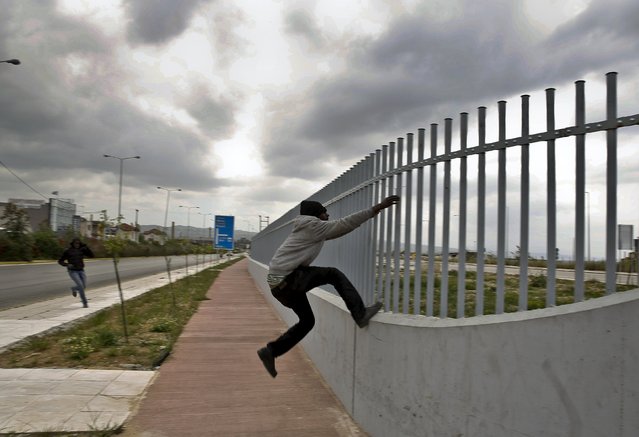
An African immigrant tries to jump a fence into a ferry terminal in the western Greek town of Patras April 28, 2015. Afghan, Iranian and Sudanese immigrants, living precariously in abandoned factories in Patras, southwest Greece, try to stow away on nearby ferries to Italy as they seek a better life in Europe beyond crisis-hit Greece. (Photo by Yannis Behrakis/Reuters)
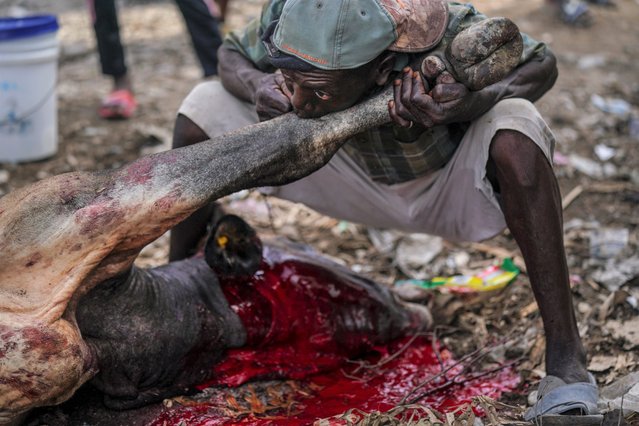
A butcher blows into the skin of a cow's leg in order to peel it off, on the first market day since the earthquake in Camp Perrin, Haiti, Friday, August 20, 2021, six days after a 7.2 magnitude quake. (Photo by Fernando Llano/AP Photo)
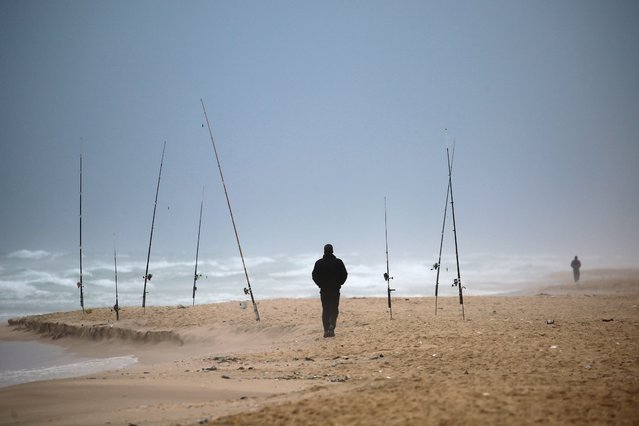
A Palestinian man walks on the beach, as storm winds blow, near a camp for internally displaced on the beach near the Nuseirat refugee in the central Gaza Strip on December 20, 2024, amid the continuing war between Israel and Hamas. (Photo by Eyad Baba/AFP Photo)
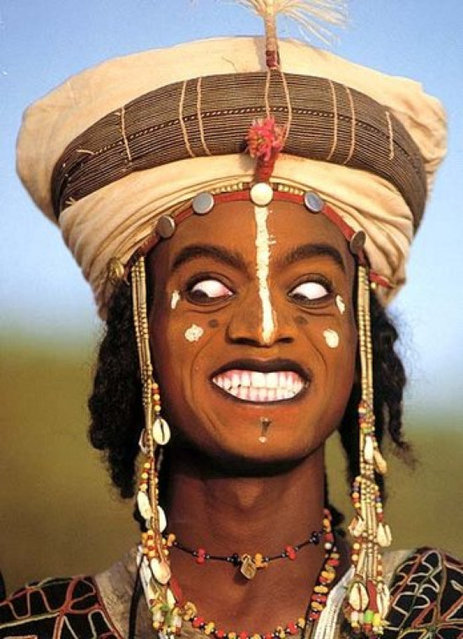
Fula people or Fulani or Fulbe are an ethnic group spread over many countries, predominantly in West Africa, but found also in Central Africa and Sudanese North Africa. African countries where they are present include Mauritania, Ghana, Senegal, Guinea, The Gambia, Mali, Nigeria, Sierra Leone, Benin, Burkina Faso, Guinea Bissau, Cameroon, Côte d'Ivoire, Niger, Chad, Togo, the Central African Republic, Liberia, and as far as Sudan and Egypt in the East. Fula people form a minority in every country they inhabit, but in Guinea they represent a plurality of the population (40%).