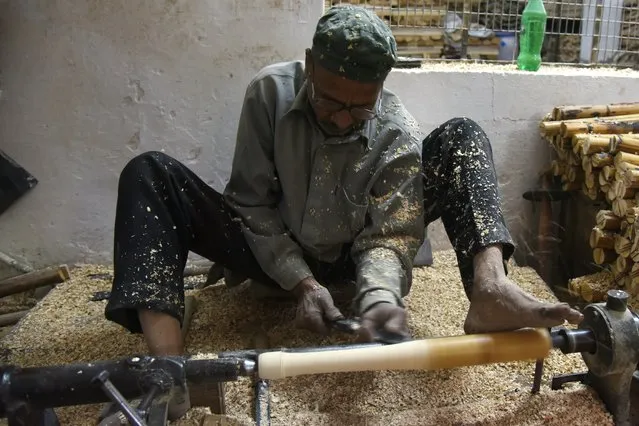
In this photograph taken on December 14, 2016, an Indian craftsman works on unfinished cricket bats in a factory in Meerut, some 70 kms north- east of New Delhi. (Photo by Dominique Faget/AFP Photo)
“Microscope images forge an extraordinary bond between science and art, said Hidenao Tsuchiya, Olympus America's Vice President and General Manager for the Scientific Equipment Group. We founded this competition to focus on the fascinating stories coming out of today's life science research laboratories. The thousands of images that people have shared with the competition over the years reflect some of the most exciting work going on in research today – work that can help shed light on the living universe and ultimately save lives. We look at BioScapes and these beautiful images as sources of education and inspiration to us and the world”. – OlympusBioScapes
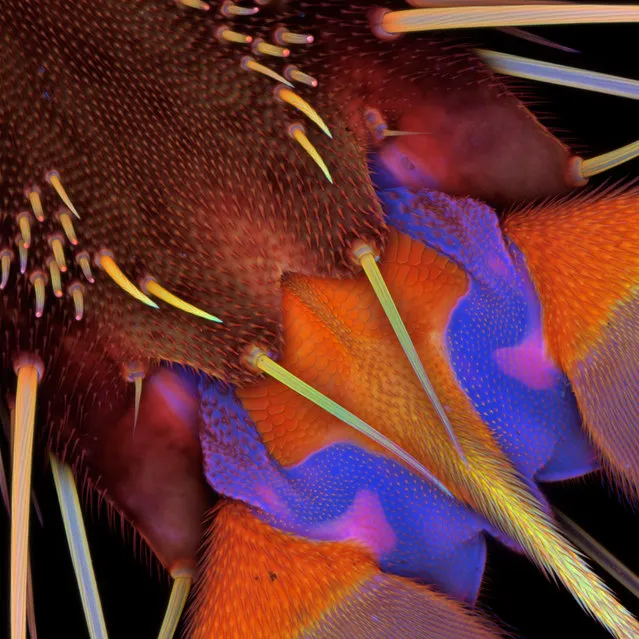
Photo: Pretarsus of the third leg of a female drone fly (Eristalis tenax), ventral view, by Dr. Jan Michels, Institute of Zoology, Christian-Albrechts-University of Kiel, Germany. (Photo by Olympus BioScapes)
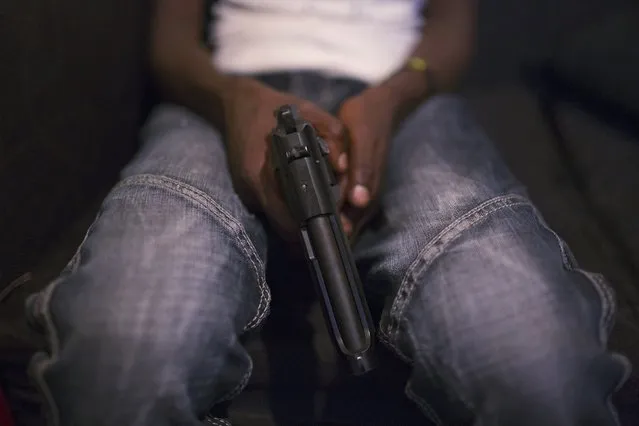
A young man, who says he is part of a local criminal gang, poses for a picture holding a gun in the neighbourhood of Korogcho in Nairobi, Kenya, March 19, 2015. Around 2 million people live in the shantytowns packed in around Kenya's capital. Crime is high amid chronic unemployment levels, while basic services and sanitation are scarce. Residents try to make the best of things, eking out a living and picking up work where they can. (Photo by Siegfried Modola/Reuters)
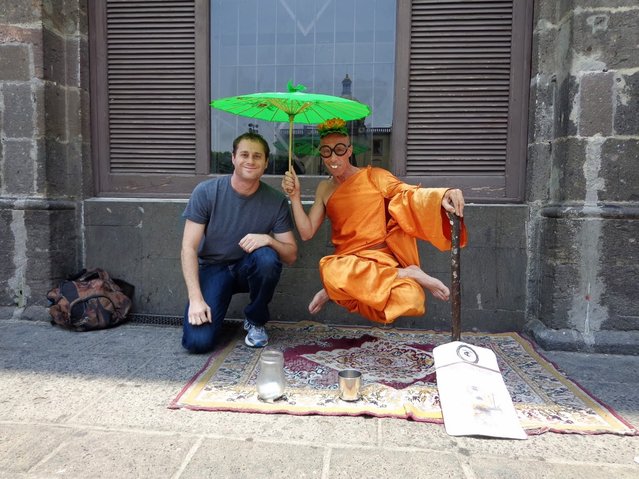
Yogis and street performers have been simulating levitation with nifty contraptions forever. They appear to be held aloft via nothing but their preternatural mental prowess. But are really enjoying the benefits of basic physics just like the rest of us when we use a chair. However, just because it’s perfectly explainable doesn’t mean it isn’t nifty. I’m especially impressed by this 2-person version and am still trying to work out how exactly the chair they’re using is shaped at the base.
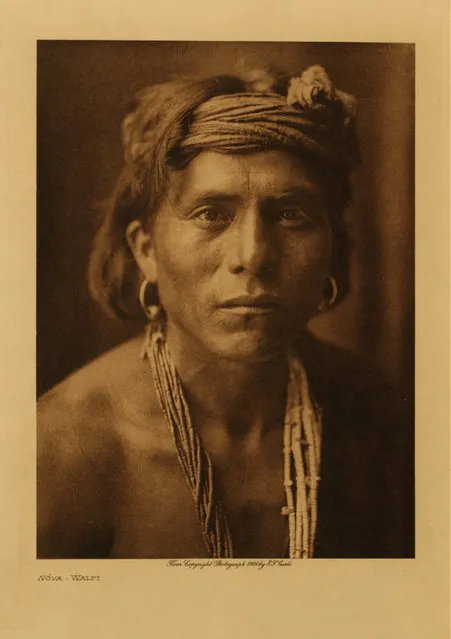
At the beginning of the 20th century, Edward S. Curtis set out to document what he saw as a disappearing race: the Native American. From 1907 to 1930, Curtis took more than 2,000 photos of 80 tribes stretching from the Great Plains to the Pacific Northwest and Alaska. He then published and sold these photos, along with narrative text, in 20 volumes of work known as “The North American Indian”. It is one of the most significant collections of its kind, “probably the most important photographic document of its age and its topic,” said Jeffrey Garrett, associate university librarian for Special Libraries at Northwestern University. (Photo by Edward S. Curtis)
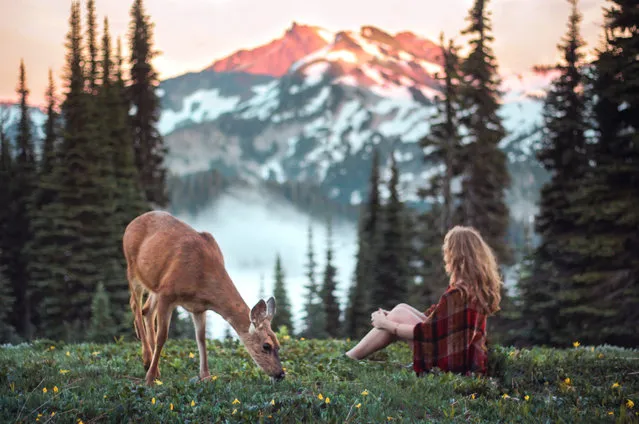
The pictures made by Elizabeth Gadd are so beautiful, tranquil, and mesmerizing, that they wash over your soul in a wave of sadness. The same sadness that you feel when hearing a wonderful piece of music. The same sadness that enters your soul when you worry to death about your loved one, but everything turns out to be just fine. These aren’t just pictures… The pieces of art that Elizabeth, a 21-year-old self-taught photographer makes, are windows into fairytales; portals into other dimensions. Works so surreal, that it makes you wonder if the scenes that you are seeing were actually shot on this planet; that they are not figments of Beth’s imagination. (Photo by Elizabeth Gadd)
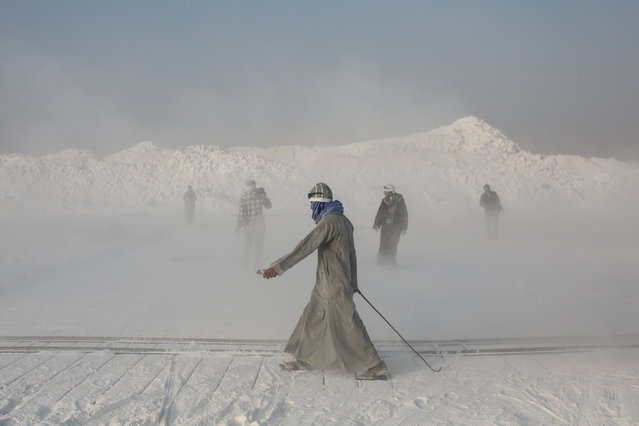
In this Wednesday, March 18, 2015 photo, limestone quarry workers walk through a cloud of dust spewed into the air by rotor blades of the stone-cutting machinery in the desert of Minya, southern Egypt. Around 45,000 people, including children, work in an estimated 1,500 quarries, digging out stones that later will be used in construction or powdered to be used by pharmaceutical and ceramic companies. (Photo by Mosa'ab Elshamy/AP Photo)
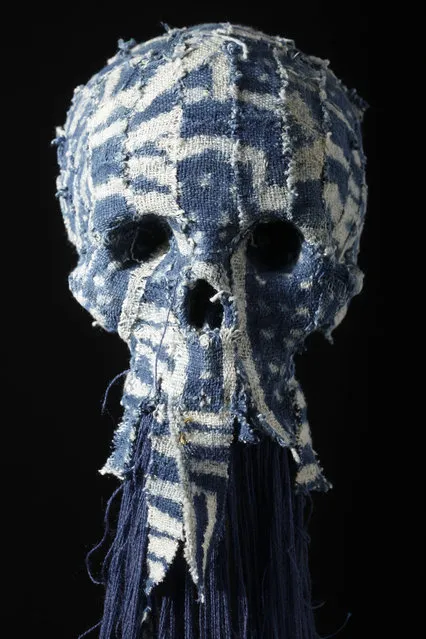
Inspired by personal experiences, a mix of cultures, rituals, and travelling the world, artist Jim Skull creates elaborate woven skull sculptures. He likes to be referred to as Jim Skull as a reflection of his interest in skulls; a symbol that he has been working with since the 1980s. He is currently living in France where he creates beautifully crafted sculptures out of rope, Papier-mâché, and other natural materials. He was born in New Caledonia and there’s no doubt that the influences of the tribal arts from Oceania, Africa, and North America are evident within his technique.