Loading...
Done
Revellers enjoy a night out in central Liverpool, northwest England, on December 30, 2020 before hightened Tier 3 restrictions closing hospitality venues, and bars indoor and outdoor socialising between households are imposed in the city amid surging cases of the novel coronavirus. Tighter coronavirus restrictions will be extended across England from on December 30 the British government announced, with a new Covid-19 variant blamed for a rapid surge in cases. Liverpool enters Tier 3, which closes hospitality venues, and bars indoor and outdoor socialising between households with the highest Tier 4 rules, which require all non-essential shops, hairdressers as well as leisure and entertainment venues to close, will now apply to more than 44 million people. (Photo by Oli Scarff/AFP Photo)

Revellers enjoy a night out in central Liverpool, northwest England, on December 30, 2020 before hightened Tier 3 restrictions closing hospitality venues, and bars indoor and outdoor socialising between households are imposed in the city amid surging cases of the novel coronavirus. (Photo by Oli Scarff/AFP Photo)
Details
01 Mar 2021 08:47:00


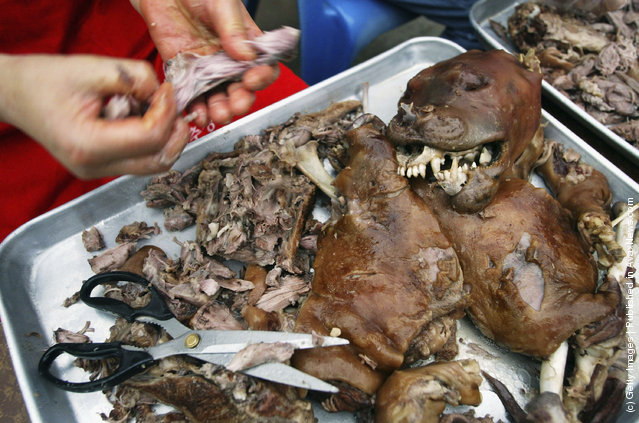
“Dog meat refers to edible parts and the flesh derived from (predominantly domestic) dogs. Human consumption of dog meat has been recorded in many parts of the world, including ancient China, ancient Mexico, and ancient Rome. According to contemporary reports, dog meat is consumed in a variety of countries such as Switzerland, China, Vietnam, the Philippines, and Korea. In addition, dog meat has also been used as survival food in times of war and/or other hardships”. – Wikipedia

Photo: A chef prepares dog meat at a restaurant on July 4, 2005 in Gwacheon, South Korea. Dog meat is a traditional dish in Korea dating back to the Samkuk period (period of the three kingdoms BC 57 – AD 668). Although many recipes existed historically for dog meat, now chefs only make soups, or dishes using boiled or roasted meat. Koreans traditionally eat dog meat on the hottest day of the summer, for it's reputed benefits of virility, invigoration and health. (Photo by Chung Sung-Jun/Getty Images)

Details
24 Jul 2011 13:21:00


“Echus Chasma is a chasma in the Lunae Planum high plateau north of the Valles Marineris canyon system of Mars. Clay has been found in Echus Chasma that means that water once sat there for a time. Echus Chasma is approximately 100 km long and 10 km wide, with valleys ranging in depth from around 1 km to 4 km”. – Wikipedia

Photo: In this handout image supplied by the European Space Agency (ESA) on July 16, 2008, The Echus Chasma, one of the largest water source regions on Mars, is pictured from ESA's Mars Express. The data was acquired on September 25, 2005. The dark material shows a network of light-coloured, incised valleys that look similar to drainage networks known on Earth. It is still debated whether the valleys originate from precipitation, groundwater springs or liquid or magma flows on the surface. (Photo by ESA via Getty Images)
Details
18 Jul 2011 11:47:00
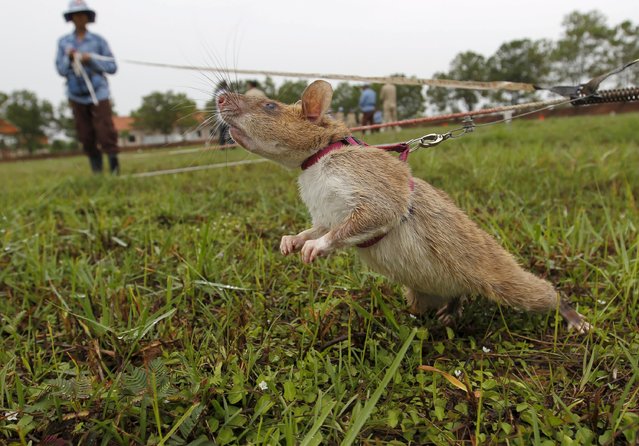
A rat being trained by the Cambodian Mine Action Centre (CMAC) is pictured on an inactive landmine field in Siem Reap province July 9, 2015. Gambian pouched rats were deployed to Cambodia from Tanzania in April by a Belgian non-profit organization, APOPO, to help clear mines. (Photo by Samrang Pring/Reuters)

A rat being trained by the Cambodian Mine Action Centre (CMAC) is pictured on an inactive landmine field in Siem Reap province July 9, 2015. Gambian pouched rats were deployed to Cambodia from Tanzania in April by a Belgian non-profit organization, APOPO, to help clear mines. They've been trained since they were 4 weeks old. Cambodia is still littered with landmines after emerging from decades of civil war, including the 1970s Khmer Rough “Killing Fields” genocide, leaving it with one of the world's highest disability rates. APOPO has used the rodents for mine-clearing projects in several countries, including Angola, Mozambique, Thailand, Laos, and Vietnam. (Photo by Samrang Pring/Reuters)
Details
14 Jul 2015 13:35:00
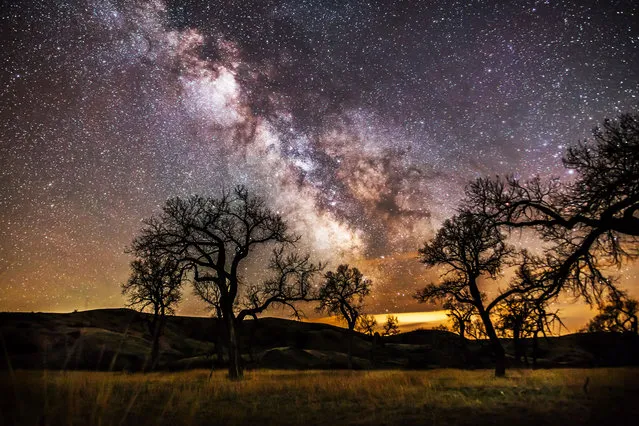
The stunning Milkyway in Midwestern U.S.A.  captured by photographer Randy Halverson in 2013. The stunning skies in Midwestern U.S.A. captured by photographer Randy Halverson. The videographer captured rare footage of the Milky Way, the elusive Northern Lights and raging night storms in some of the most isolated regions of the U.S.A. (Photo by Randy Halverson/Barcroft Media)

The stunning Milkyway in Midwestern U.S.A. captured by photographer Randy Halverson in 2013. The stunning skies in Midwestern U.S.A. captured by photographer Randy Halverson. The videographer captured rare footage of the Milky Way, the elusive Northern Lights and raging night storms in some of the most isolated regions of the U.S.A. The footage, which spans the skies of South Dakota, Wyoming and Utah, was taken between spring and autumn 2013. The 47-year-old spent 40 nights scattered across the eight-month period sat near his camera to capture the clear footage. Randy from Kennebec, South Dakota has been shooting timelapse for over 4 years. (Photo by Randy Halverson/Barcroft Media)
Details
20 Aug 2014 10:32:00
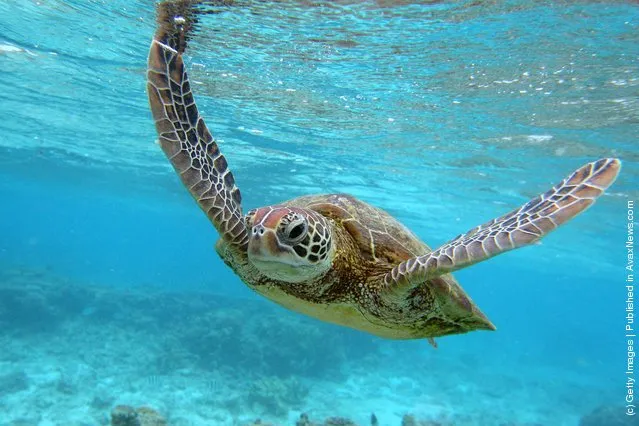
A Hawksbill sea turtle is seen swimming in Lady Elliot Island, Australia

“The Great Barrier Reef is one of the most important sea turtle habitats in the world, with Lady Elliot Island being a key part of that habitat. Every year between November and March the green and loggerhead turtles lumber up the same beach on which they were born more than 50 years ago. These turtles nest on Lady Elliot Island up to nine times in a season, laying between 80 and 120 eggs per clutch. About eight weeks later, young hatchlings leave their nests and head towards the ocean (January to April)”. – Wikipedia

Photo: A Hawksbill sea turtle is seen swimming on January 15, 2012 in Lady Elliot Island, Australia. (Photo by Mark Kolbe/Getty Images)
Details
02 Feb 2012 11:28:00
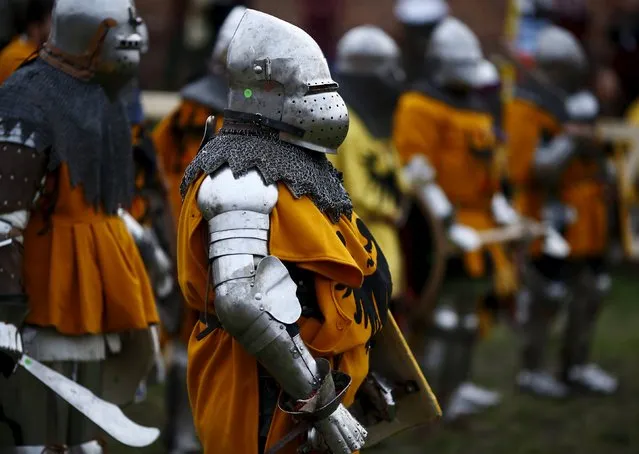
Fighters from Germany take up position before competing in the Medieval Combat World Championship at Malbork Castle, northern Poland, April 30, 2015. (Photo by Kacper Pempel/Reuters)

Fighters from Germany take up position before competing in the Medieval Combat World Championship at Malbork Castle, northern Poland, April 30, 2015. Medieval combat is a full contact sport that revives the foot based tournament fighting of medieval Europe. Countries fight in refereed matches where the objective is to get the opposing team to the floor. There are also duels with polearms, swords and shields where the number of hits landed are scored. The fighters, both male and female, wear heavy armours and weapons, mostly replicas of authentic pieces, and fight following the knights code of conduct. According to organizers, 25 nations from 6 continents are taking part in the Championships, which started on April 30 and will go on until May 3. (Photo by Kacper Pempel/Reuters)
Details
03 May 2015 12:02:00
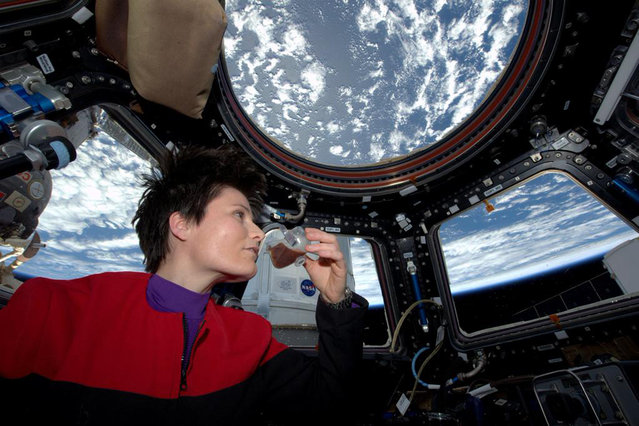
In this photo posted on Twitter, Sunday, May 3, 2015, and provided by NASA, Italian astronaut Samantha Cristoforetti sips espresso from a cup designed for use in zero-gravity, on the International Space Station. Cristoforetti, the first Italian woman in space, fired up the first espresso machine in space, which uses small capsules, or pods, of espresso coffee. (Photo by AP Photo/NASA)

In this photo posted on Twitter, Sunday, May 3, 2015, and provided by NASA, Italian astronaut Samantha Cristoforetti sips espresso from a cup designed for use in zero-gravity, on the International Space Station. Cristoforetti, the first Italian woman in space, fired up the first espresso machine in space, which uses small capsules, or pods, of espresso coffee. (Photo by AP Photo/NASA)
Details
09 May 2015 12:26:00