Loading...
Done
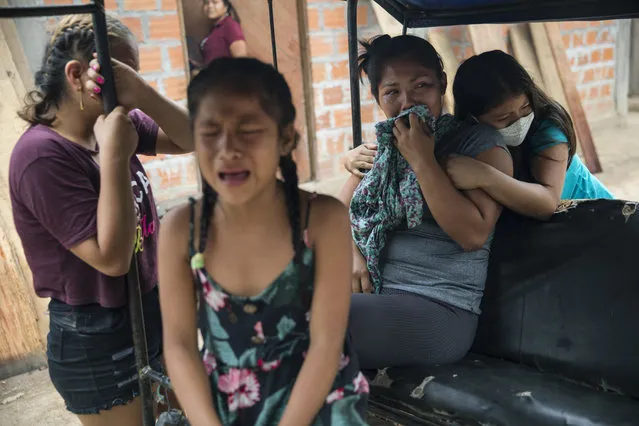
Family members mourn the passing of Manuela Chavez, who died from symptoms related to the new coronavirus at the age of 88, as a government team prepares to remove her body from inside her home, in the Shipibo Indigenous community of Pucallpa, in Peru's Ucayali region, Monday, August 31, 2020. While the lucky are cured with ancestral ailments, the less fortunate often die at home. A government team travels from one spartan, thatch-roofed home to the next, removing the dead from their homes where they took their last breaths. (Photo by Rodrigo Abd/AP Photo)

Family members mourn the passing of Manuela Chavez, who died from symptoms related to the new coronavirus at the age of 88, as a government team prepares to remove her body from inside her home, in the Shipibo Indigenous community of Pucallpa, in Peru's Ucayali region, Monday, August 31, 2020. While the lucky are cured with ancestral ailments, the less fortunate often die at home. A government team travels from one spartan, thatch-roofed home to the next, removing the dead from their homes where they took their last breaths. (Photo by Rodrigo Abd/AP Photo)
Details
18 Sep 2020 00:03:00
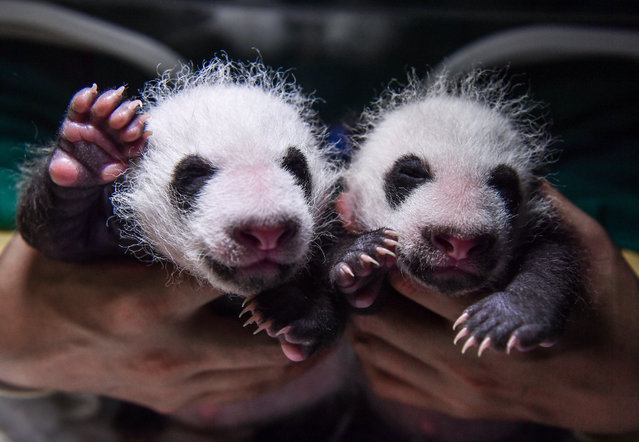
One-month-old cubs given birth by giant panda “Su Shan” are seen at Shenshuping giant panda base on August 17, 2021 in Aba Tibetan and Qiang Autonomous Prefecture, Sichuan Province of China. Giant panda named “Zhen Zhen” gave birth to one cub at 6:44 p.m. and the second at 7:15 p.m. on July 17 at Shenshuping giant panda base in Wolong National Nature Reserve. Giant panda named “Su Shan” gave birth to one cub at 6:52 p.m. and the second at 7:34 p.m. on the same day at the same place. (Photo by He Haiyang/VCG via Getty Images)

One-month-old cubs given birth by giant panda “Su Shan” are seen at Shenshuping giant panda base on August 17, 2021 in Aba Tibetan and Qiang Autonomous Prefecture, Sichuan Province of China. (Photo by He Haiyang/VCG via Getty Images)
Details
23 Aug 2021 03:33:00
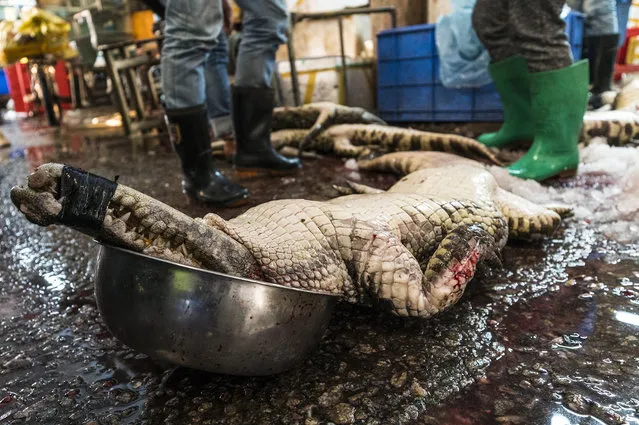
A dead crocodile is seen on Huangsha Seafood Market in Guangzhou, Guandong Province, China, 22 January 2018. Tsukiji Market of China or Huangsha Seafood Market is biggest one in Southern China and one of the biggest in China, as there are literally hundreds of different varieties of fish and seafood scattered throughout the market. Since the proximity of the fish market is so close to the Zhujiang River, it's quite easy for the large fishing vessels and fishermen to unload their fresh catch right at the market, which ensures that the fish and seafood remain fresh. Fish and other seafood are coming there from all around the globe. Seafood Market is full of different kinds of live fish, live shellfish, and live seafood on display in crystal clear tanks and it's common to see 5-star chefs, retailers and expats to source for fresh and high-quality seafood supplies for reasonable prices. While it is a wholesale fish market, since many Guangzhou restaurants and businesses come to purchase their seafood here, the public is welcome to come and even purchase. Many local Chinese have the vendors slice up fresh salmon fillets to take home or carry seafood into one of the nearby specialty restaurants, where they will cook if for them and serve it with vegetables and other side dishes of their choice. One of the biggest attractions for both, tourists and buyers, on market are crocodiles, which are brought there alive in wooden cases with taped jaws so they can?t accidentally bite. They are from crocodile farms from Guangdong, China and from Vietnam. Crocodile meat is popular in most Asian countries and it is consider as delicate one. Crocodiles weight from 10 to 25 kg and bigger ones are about 2 years old. They cost about 70 RMB (8.90 EURO) when bout as whole, or if you buy as parts most expensive and appreciated parts are paws 120 RMB (15.26 EURO) per kg, and tail 100 RMB (12.72 EURO) per kg. (Photo by Aleksandar Plavevski/EPA/EFE)

A dead crocodile is seen on Huangsha Seafood Market in Guangzhou, Guandong Province, China, 22 January 2018. Tsukiji Market of China or Huangsha Seafood Market is biggest one in Southern China and one of the biggest in China, as there are literally hundreds of different varieties of fish and seafood scattered throughout the market. (Photo by Aleksandar Plavevski/EPA/EFE)
Details
17 Apr 2020 00:05:00
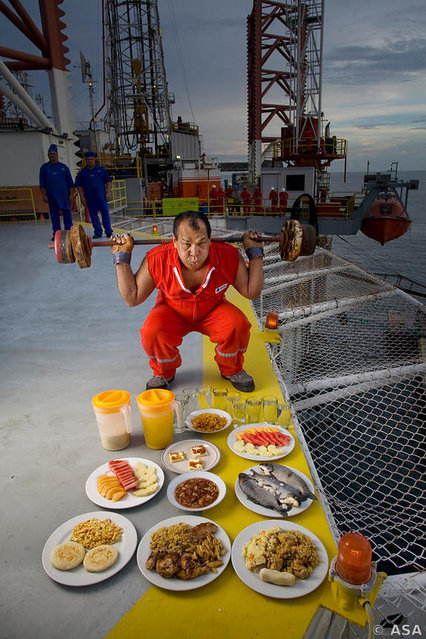
What the World Eats By Peter Menzel And Faith D'Aluisio Part 1

A stunning photographic collection featuring portraits of people from 30 countries and the food they eat in one day. In this fascinating study of people and their diets, 80 profiles are organized by the total number of calories each person puts away in a day. Featuring a Japanese sumo wrestler, a Massai herdswoman, world-renowned Spanish chef Ferran Adria, an American competitive eater, and more, these compulsively readable personal stories also include demographic particulars, including age, activity level, height, and weight. Essays from Harvard primatologist Richard Wrangham, journalist Michael Pollan, and others discuss the implications of our modern diets for our health and for the planet. This compelling blend of photography and investigative reportage expands our understanding of the complex relationships among individuals, culture, and food.
Details
23 Apr 2014 14:34:00
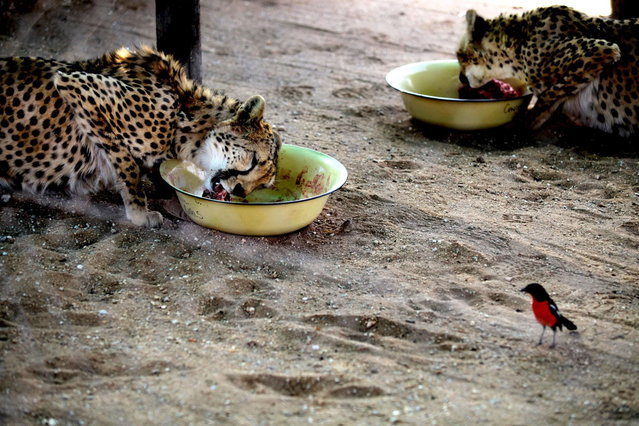
Young cheetahs eat meat at The Cheetah Conservation Fund (CCF) center in Otjiwarongo, Namibia, on August 13, 2013. The CCF started breeding Anatolian livestock dogs to promote cheetah-friendly farming after some 10,000 big cats – the current total worldwide population – were killed or moved off farms in the 1980s.  Up to 1,000 cheetahs were being killed a year, mostly by farmers who saw them as livestock killers. But the use of dogs has slashed losses for sheep and goat farmers and led to less retaliation against the vulnerable cheetah. (Photo by Jennifer Bruce/AFP Photo)

Young cheetahs eat meat at The Cheetah Conservation Fund (CCF) center in Otjiwarongo, Namibia, on August 13, 2013. The CCF started breeding Anatolian livestock dogs to promote cheetah-friendly farming after some 10,000 big cats – the current total worldwide population – were killed or moved off farms in the 1980s. Up to 1,000 cheetahs were being killed a year, mostly by farmers who saw them as livestock killers. But the use of dogs has slashed losses for sheep and goat farmers and led to less retaliation against the vulnerable cheetah. (Photo by Jennifer Bruce/AFP Photo)
Details
29 Aug 2013 10:56:00
Beautiful World By Artem Rhads Cheboha (video)

Russian illustrator from South West of Siberia Artem Chebokha creates surreal digital paintings that have a peaceful yet grandiose feel to them.
Details
07 Nov 2016 02:58:00
Fuzzbucket. “Not only did we keep our jobs, but because of the pictures, all the kittens were adopted within hours!”. (Photo by  Seth Casteel/Hachette Australia)

California-based photographer Seth Casteel made his name taking photographs of dogs underwater, but before that, he was snapping cats on land.

Please Subscribe To: Our Youtube Channel
Details
05 Dec 2016 11:01:00
Remarkable Cossack Songs

“Cossacks are a group of predominantly East Slavic people who originally were members of democratic, semi-military communities in Ukraine and Southern Russia. They inhabited sparsely populated areas and islands in the lower Dnieper and Don basins, and played an important role in the historical development of both Ukraine and Russia”. – Wikipedia

Photo: Кубанский казачий хор (Kuban Cossack chorus) - Розпрягайте, хлопцi, коней (Unharness The Horses, Guys!) – Ukrainian
Details
23 Oct 2012 14:20:00