Loading...
Done
Harmless Weapons By Sonia Rentsch

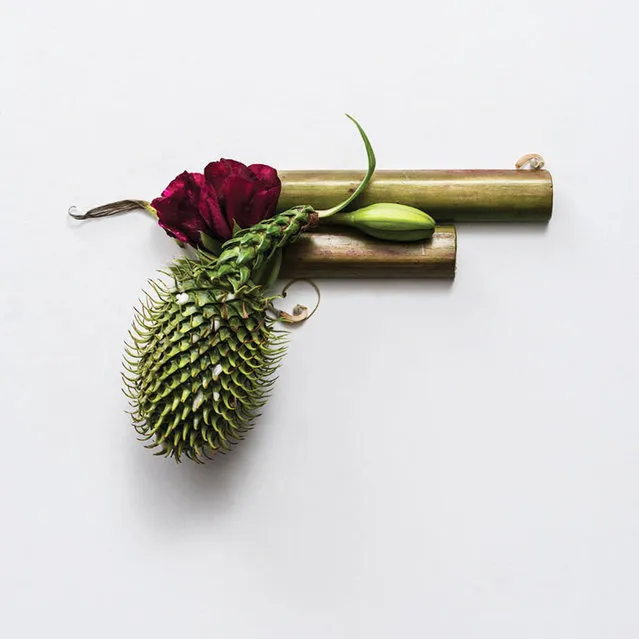
Wouldn’t it be wonderful if all weapons were created by Sonia Rentsch rather than by gunsmiths? In the series Harm Less, Sonia had constructed a number of firearms using various plants. Of course people might say that it’s not the guns that kill people; it’s the people that kill people. However, this statement is completely false. Can you imagine some equivalent of school shooting if the guns were not available? Yes, some crazy kid would still be able to bring a weapon to class, but most likely it would be a club or a penknife, making him easily tamable. (Photo by Sonia Rentsch)
Details
26 Dec 2014 14:45:00
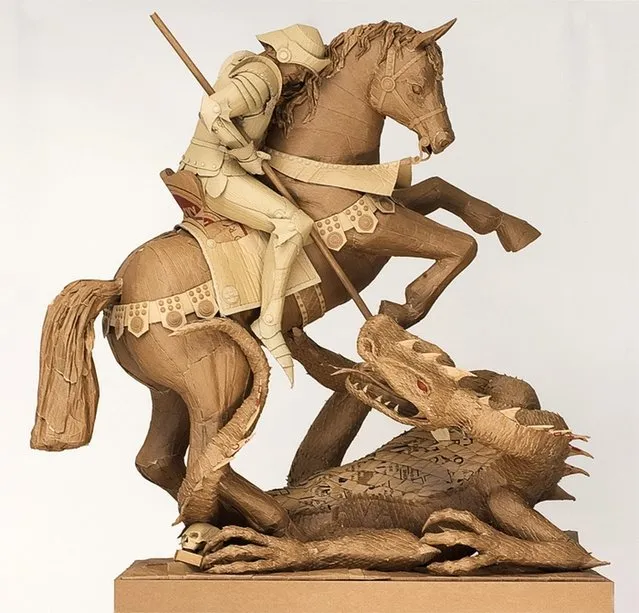
Cardboard Sculptures By Chris Gilmour

Chris Gilmour is one of those people that can turn unexpected things, which most of us would simply discard as trash, into astounding works of art. By taking simple cardboard packaging and other recycled items, he was able to create intricate replicates of various large items, paying close attention to even the smallest details. His cardboard sculptures include everything from vehicles (motorbikes, cars, bicycles) to religious symbols. Some people may find it sacrilege to create religious icons out of trash, which includes toothpaste, condoms, etc.; however, art should not be bound by prejudice and bigotry of close-minded individuals. (Photo by Chris Gilmour)
Details
27 Jan 2015 11:59:00
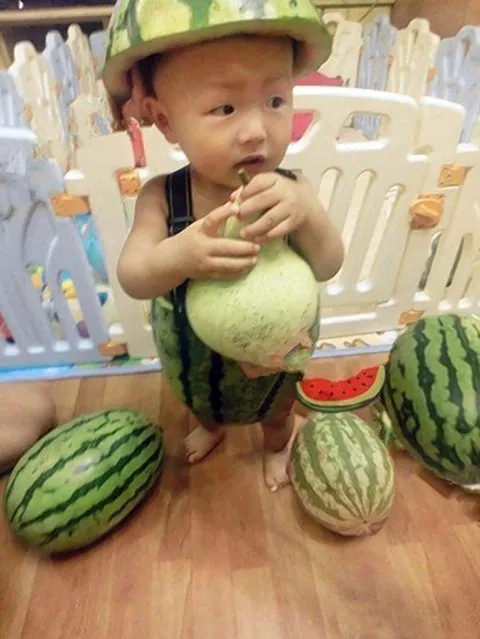
New China Trend: Babies Wearing Watermelons

This is the cutest thing that has ever happened: Someone put a baby in watermelon shorts. We stumbled across these photos of this adorable tot inside a watermelon on Weibo, and we're pretty sure whoever snapped these puppies is a total genius (though we're not exactly sure where they're from). How this new trend got started is still a little unclear, but we have to say, it looks incredibly refreshing (and we bet it's moisturizing, too).
Details
09 Jun 2015 11:00:00
A model presents a creation by designers Humberto Leon and Carol Lim as part of their Autumn/Winter 2015/2016 women's ready-to-wear collection for Japanese fashion house Kenzo during Paris Fashion Week March 8, 2015.      REUTERS/Gonzalo Fuentes (FRANCE  - Tags: FASHION)

A model presents a creation by designers Humberto Leon and Carol Lim as part of their Autumn/Winter 2015/2016 women's ready-to-wear collection for Japanese fashion house Kenzo during Paris Fashion Week March 8, 2015. (Photo by Gonzalo Fuentes/Reuters)
Details
17 Mar 2015 13:48:00
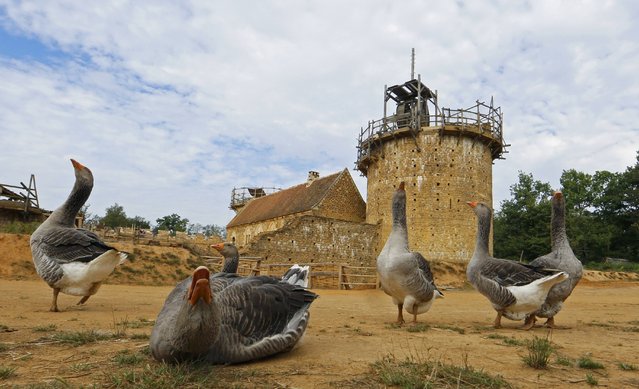
A view of the construction site of the Chateau de Guedelon near Treigny in the Burgundy region of France, September 13, 2016. Blacksmiths, stonemasons and quarry men are hard at work in a Burgundy forest building a 13th-century-style castle using the most basic tools and materials, replicating the methods used hundreds of years ago to better understand them. Forgoing all modern technology, workers use hammers to break stones and forge iron, operate wooden wheels to hoist their materials up to where they are needed, and rely on a quarry for stone, clay and sand as they build up a castle from scratch. Construction on Guedelon Castle in central France began in 1997 after an archaeological survey revealed a medieval fortress hidden inside the walls of nearby Chateau de Saint-Fargeau. Those behind the project hope to answer questions about medieval construction and provide lessons on sustainable building. (Photo by Jacky Naegelen/Reuters)

A view of the construction site of the Chateau de Guedelon near Treigny in the Burgundy region of France, September 13, 2016. Blacksmiths, stonemasons and quarry men are hard at work in a Burgundy forest building a 13th-century-style castle using the most basic tools and materials, replicating the methods used hundreds of years ago to better understand them. (Photo by Jacky Naegelen/Reuters)
Details
15 Sep 2016 09:43:00
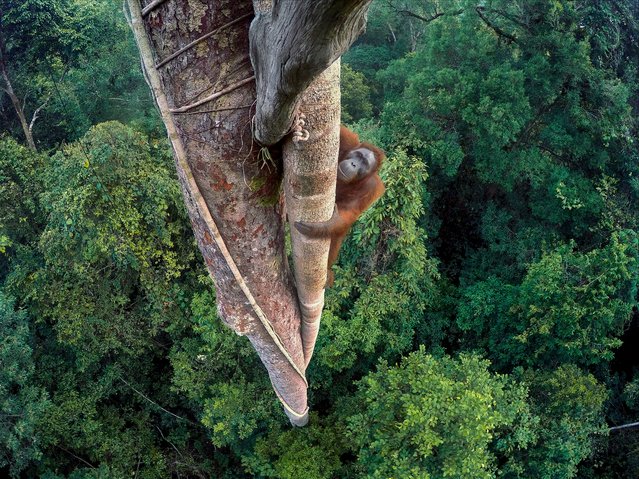
“Entwined Lives”. Tim Laman, US Winner, Wildlife photographer of the year. A young male orangutan makes the 30-metre climb up the thickest root of the strangler fig high above the canopy in Gunung Palung national park, one of the few protected orangutan strongholds in Indonesian Borneo. Laman had to do three days of climbing to position several GoPro cameras that he could trigger remotely. This shot was the one he had long visualised, looking down on the orangutan within its forest home. (Photo by Tim Laman/2016 Wildlife Photographer of the Year)

“Entwined Lives”. Tim Laman, US Winner, Wildlife photographer of the year. A young male orangutan makes the 30-metre climb up the thickest root of the strangler fig high above the canopy in Gunung Palung national park, one of the few protected orangutan strongholds in Indonesian Borneo. Laman had to do three days of climbing to position several GoPro cameras that he could trigger remotely. This shot was the one he had long visualised, looking down on the orangutan within its forest home. (Photo by Tim Laman/2016 Wildlife Photographer of the Year)
Details
19 Oct 2016 12:08:00
Bo (pictured) is president and co-founder of Grown Men On Bikes (GMOB), one of the oldest groups at Slow Roll. Bo spent $1,300 getting a one-off low-rider custom bike build – but that’s just the start. “Once I go back in it’s going to get big”, he says. “I’m going to get a custom seat, wheels, paint” … The finished bike could cost around $3,000 – but would still be far cheaper than pimping a car. “This is much better. It’s a community. We party”. (Photo by Nick Van Mead)

“We take rusty old junk and we put love into it”. The old Motor City has a unique style in bicycles these days: from fat wheels and fake fuel tanks to stretched cycles with powerful sound systems – and even a family-sized BBQ. “Detroit’s custom bike scene developed alongside Slow Roll, a weekly cycle ride started in 2010 by Jason Hall and Mike MacKool. Now upwards of 2,000 people turn up each Monday to cruise a different part of the city. The week I go the crowd seems evenly split between black and white, male and female, city and suburbs. It’s the most inclusive cycle event I’ve ever witnessed”. (Photo by Jason Walker/Slow Roll Monday Nights)
Details
03 Nov 2016 12:33:00
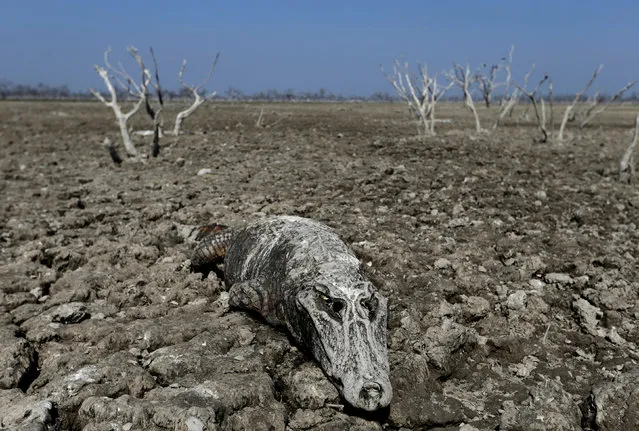
The carcass of a yacare caiman lies in the dried-up river bed of the Pilcomayo river in Boqueron, Paraguay, August 14, 2016. In Paraguay, alongside the Pilcomayo River, black vultures flew over a shrinking pond where a group of crocodilian reptiles known as yacare caimans sought refuge. Water from the river, which divides Paraguay and Argentina in the area of the Gran Chaco, was scarce. This is not an uncommon sight in the region of General Diaz, about 700 kilometres (435 miles) northwest of the country's capital Asuncion, where the Pilcomayo's waters form lakes and streams that give life to capybaras, birds and caimans. “The river's situation is critical. No water is forecast to enter the basin until December, as happens every year”, said Alcides Gonzalez, a resident of the area. (Photo by Jorge Adorno/Reuters)

The carcass of a yacare caiman lies in the dried-up river bed of the Pilcomayo river in Boqueron, Paraguay, August 14, 2016. In Paraguay, alongside the Pilcomayo River, black vultures flew over a shrinking pond where a group of crocodilian reptiles known as yacare caimans sought refuge. Water from the river, which divides Paraguay and Argentina in the area of the Gran Chaco, was scarce. This is not an uncommon sight in the region of General Diaz, about 700 kilometres (435 miles) northwest of the country's capital Asuncion, where the Pilcomayo's waters form lakes and streams that give life to capybaras, birds and caimans. (Photo by Jorge Adorno/Reuters)
Details
03 Nov 2016 12:40:00