Loading...
Done
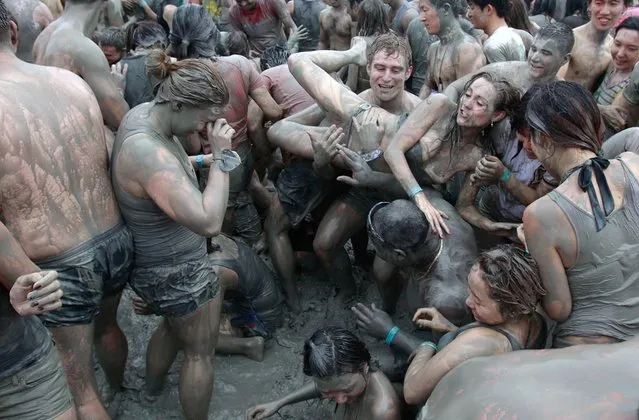
Festival goers plays in mud during the 15th Annual Boryeong Mud Festival at Daecheon beach in Boryeong, southwest of Seoul

Festival goers plays in mud during the 15th Annual Boryeong Mud Festival at Daecheon beach in Boryeong, about 190 km (118 miles) southwest of Seoul, July 15, 2012. About 2 to 3 million domestic and international tourists visit the beach during the annual mud festival, according to the festival organisation. (Photo by Chung Sung-Jun)
Details
16 Jul 2012 08:45:00
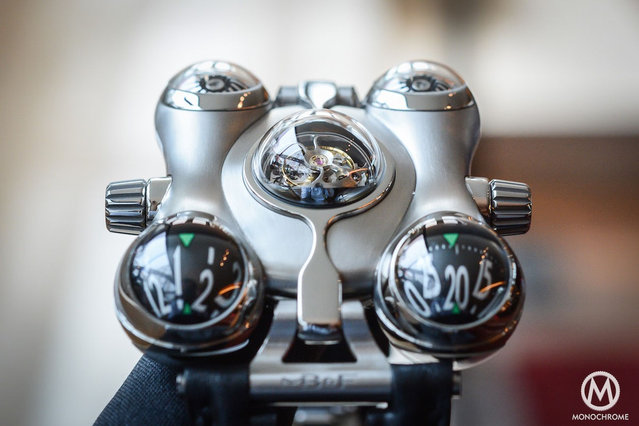
MB&F Horological Machine No. 6 Space Pirate

All throughout history of mankind people were fascinated by time, its flow, and how to measure it. Thus, the science of horology can into being, as people invented more and more sophisticated ways of measuring the passage of time. Truly, it’s one of the most profound characteristics of being a human, to feel and to ponder the meaning of time, its properties, and will we ever be able to move through it, not with it. Now, however, horology is mainly referred to the art of mechanical watchmaking. (Photo by MB&F)
Details
14 Nov 2014 13:51:00
Photography By Elizabeth Gadd

The pictures made by Elizabeth Gadd are so beautiful, tranquil, and mesmerizing, that they wash over your soul in a wave of sadness. The same sadness that you feel when hearing a wonderful piece of music. The same sadness that enters your soul when you worry to death about your loved one, but everything turns out to be just fine. These aren’t just pictures… The pieces of art that Elizabeth, a 21-year-old self-taught photographer makes, are windows into fairytales; portals into other dimensions. Works so surreal, that it makes you wonder if the scenes that you are seeing were actually shot on this planet; that they are not figments of Beth’s imagination. (Photo by Elizabeth Gadd)
Details
25 Nov 2014 10:56:00
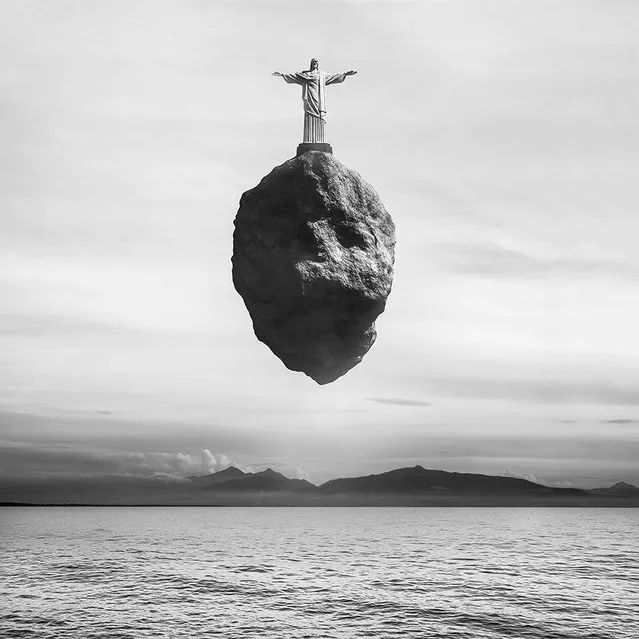
Levitation By Giuseppe Lo Schiavo

The essence of the “masterpieces” created by Giuseppe Lo Schiavo is in taking a famous architectural landmark placing it on a rock, and making it float over some body of water. Well… that’s pretty much it. Of course there will be some people who will look deep within these works of art, and catch the true meaning and intentions of the mastermind who created them, and maybe even purchase them for unreasonable amounts of money. But the rest of us, the common folk, will stare at it for a while, cringe, and move on without a second thought. (Photo by Giuseppe Lo Schiavo)
Details
04 Dec 2014 11:25:00
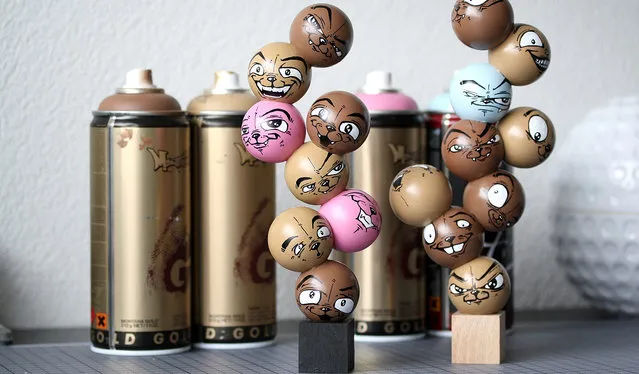
Awesome Ping Pong Ball By 2much

Some people use paper as their canvas for creating works of art, Patrik Bundeli, on the other hand, uses Ping-Pong balls. His steady hand turns simple white balls into elaborate cartoonish faces. Some of his works feature black and white gothic visages, while others have adorable little snouts. The latter ones would make a wonderful addition to any working place, putting smiles on everyone’s faces. (Photo by Patrik Bundeli)
Details
09 Dec 2014 09:21:00


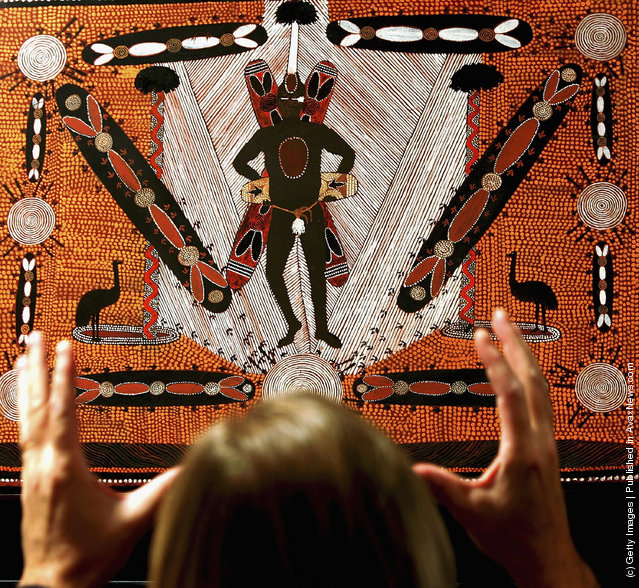
Tim Klingender, Director of Aboriginal Art at Sotheby's hangs the painting “Emu Corroboree Man” by Clifford Possum Tjapaltjarri before a record auction of Aboriginal Art July 14, 2005 in Sydney, Australia. The painting is expected to fetch AUD 150,000 – 250,000 (USD 120,000 – 200,000). Sotheby's unveiled a selection of Aboriginal art and artifacts after a tour of New York and London, which will go to auction in Melbourne July 25 2005. The total pre-sales estimate of the collection is AUD 6 million – 8.5 million (USD 5 million – 7 million). (Photo by Ian Waldie/Getty Images)
Details
01 Apr 2011 09:09:00


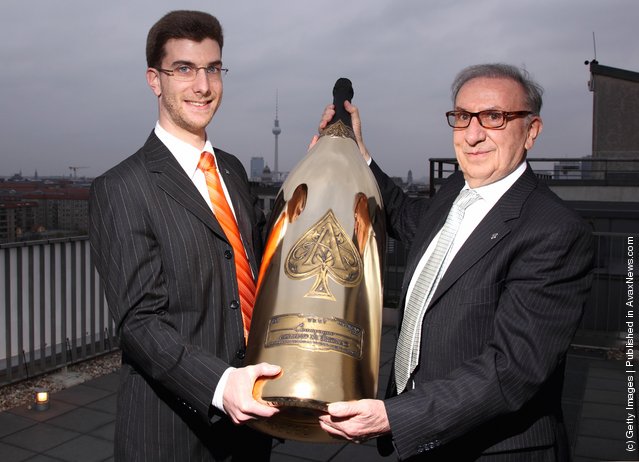
(R-L) Jean-Jacques Cattier and his son Alexandre Cattier pose with the world largest bottle of Champagne “The Midas” by Armand de Brignac on April 6, 2011 in Berlin, Germany. The Midas is a massive 30-liter vessel and weights exactly 100 pounds. It's like having 40 pieces of the 750ml in one. Number one champagne brand in the world, Armand de Brignac is the luxury Champagne from the award-winning Champagne Cattier chateau of Chigny-les-Roses, France. (Photo by Andreas Rentz/Getty Images)
Details
09 Apr 2011 06:50:00


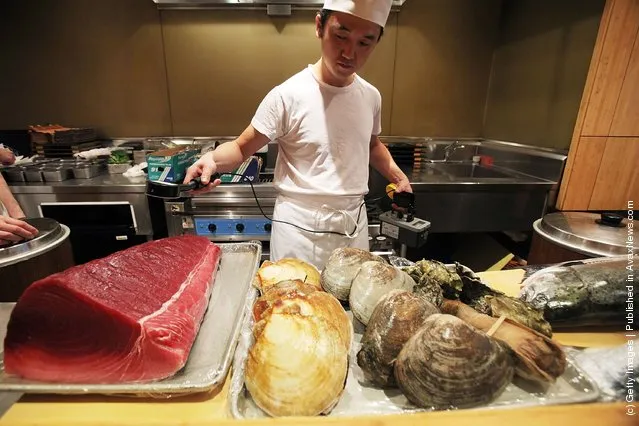
Sushi chef Mitsuru Tamura uses a radiation detector on seafood before it is prepared in Manhattan's Sushi Yasuda restaurant April 8, 2011 in New York City. The restaurant has begun using the detector as a precautionary measure due to consumer concerns over possible radiation contamination in seafood from the nuclear emergency in Japan. Health officials believe contamination is unlikely to threaten the food supply chain and none has been found in this restaurant. (Photo by Mario Tama/Getty Images)
Details
09 Apr 2011 08:52:00