Loading...
Done
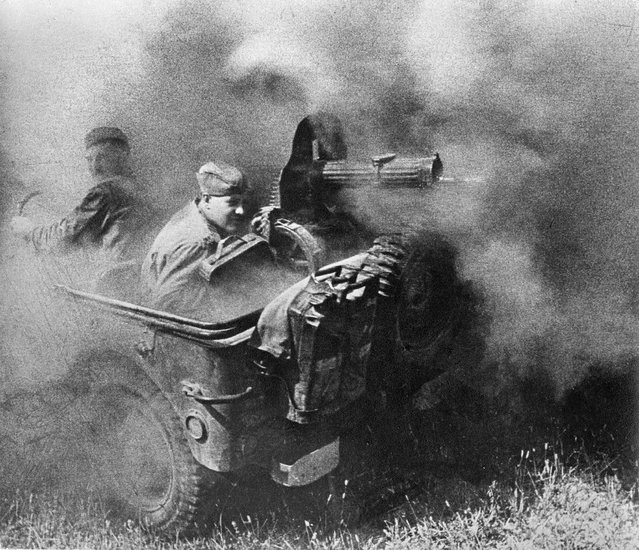
The Enemy, 1944. With the outbreak of world war two, photojournalism was enlisted in defence of Mother Russia. In this photo by Anatoli Egorov, who was wounded in action, corporal Stepan Vasiljevich Ovcharenko shoots at enemy troops with a machine gun. (Photo by Anatoli Egorov/Lumiere Brothers Center for Photography)

The Enemy, 1944. With the outbreak of world war two, photojournalism was enlisted in defence of Mother Russia. In this photo by Anatoli Egorov, who was wounded in action, corporal Stepan Vasiljevich Ovcharenko shoots at enemy troops with a machine gun. (Photo by Anatoli Egorov/Lumiere Brothers Center for Photography)
Details
18 Nov 2015 08:02:00
Students in Aone’s elementary school during break in between the class on April 9, 2015. The school has only six students, two of whom are from the same family. Similarly small schools can be found throughout Japan. (Photo by Ko Sasaki/The Washington Post)

Students in Aone’s elementary school during break in between the class on April 9, 2015. The school has only six students, two of whom are from the same family. Similarly small schools can be found throughout Japan. (Photo by Ko Sasaki/The Washington Post)
Details
21 Apr 2015 11:28:00
A view of St Thomas Becket church during the morning frost, in Fairfield, Kent, England, Thursday, January 6, 2022, following freezing overnight temperatures. (Photo by Gareth Fuller/PA Wire via AP Photo)

A view of St Thomas Becket church during the morning frost, in Fairfield, Kent, England, Thursday, January 6, 2022, following freezing overnight temperatures. (Photo by Gareth Fuller/PA Wire via AP Photo)
Details
30 Mar 2022 05:47:00
A mock-up of a missile with the inscription reading as “Towards Washington. Threatening U.S. territory is the path to victory” is seen on the roof of a car parked in front of Saint Isaac's Cathedral in Saint Petersburg on January 12, 2025. (Photo by Olga Maltseva/AFP Photo)

A mock-up of a missile with the inscription reading as “Towards Washington. Threatening U.S. territory is the path to victory” is seen on the roof of a car parked in front of Saint Isaac's Cathedral in Saint Petersburg on January 12, 2025. (Photo by Olga Maltseva/AFP Photo)
Details
19 Feb 2025 03:43:00
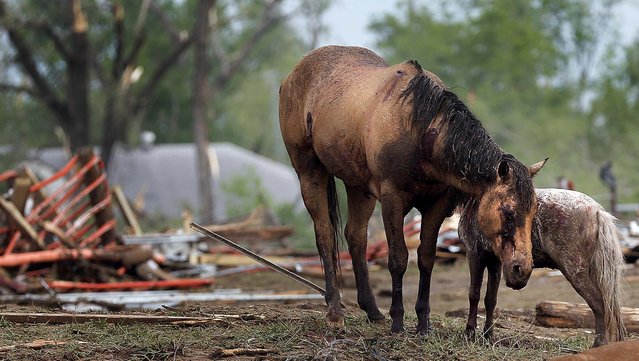
Injured horses huddle together in Oklahoma City on Monday. (Photo by Chris Landsberger/The Oklahoman)

Injured horses huddle together in Oklahoma City on Monday. (Photo by Chris Landsberger/The Oklahoman)
Details
23 May 2013 11:35:00
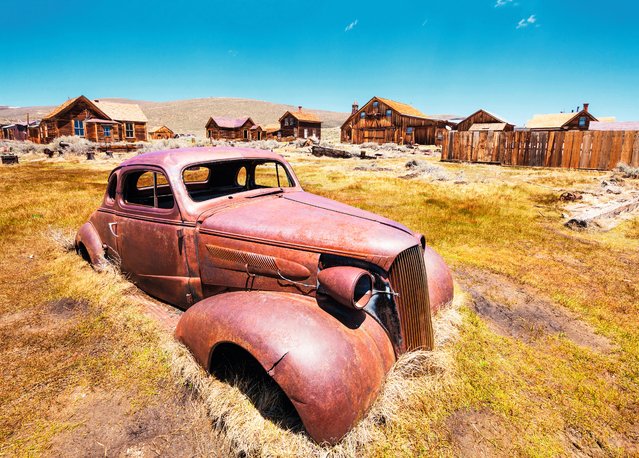
Bodie, Mono County, California. Gold was discovered at Bodie in 1859 (just after the initial California gold rush) and it went from mining camp to boomtown. Its decline began in 1880, when word spread of new boomtowns elsewhere. The Standard Consolidated Mine closed in 1913, and four years later the Bodie Railway was abandoned. By 1940 the population was down to 40. Today, Bodie is maintained in a state of arrested decay as a visitor attraction. (Photo by Alamy Stock Photo)

Kieron Connolly’s new book of photographs of more than 100 once-busy and often elegant buildings gives an idea of how the world might look if humankind disappeared. Here: Bodie, Mono County, California. Gold was discovered at Bodie in 1859 (just after the initial California gold rush) and it went from mining camp to boomtown. Its decline began in 1880, when word spread of new boomtowns elsewhere. The Standard Consolidated Mine closed in 1913, and four years later the Bodie Railway was abandoned. By 1940 the population was down to 40. Today, Bodie is maintained in a state of arrested decay as a visitor attraction. (Photo by Alamy Stock Photo)
Details
07 Sep 2016 09:50:00
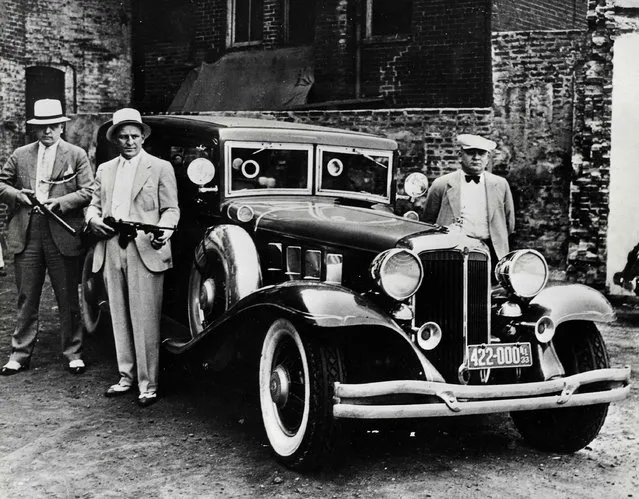
An armoured vehicle surrounded by Chicago cops at the time of the American depression, 1933. (Photo by Rolls Press/Popperfoto/Getty Images)

An armoured vehicle surrounded by Chicago cops at the time of the American depression, 1933. (Photo by Rolls Press/Popperfoto/Getty Images)
Details
10 Feb 2017 00:02:00
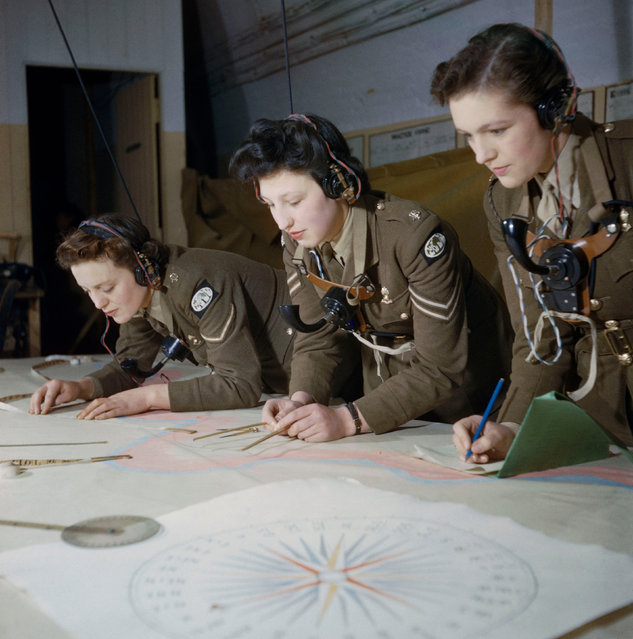
Auxiliary Territorial Service (ATS) plotters at work at Coastal Artillery Headquarters in Dover, December 1942. (Photo by Ted Dearberg/IWM/PA Wire)

Auxiliary Territorial Service (ATS) plotters at work at Coastal Artillery Headquarters in Dover, December 1942. The Auxiliary Territorial Service was the women's branch of the British Army during the Second World War. It was formed on 9 September 1938, initially as a women's voluntary service, and existed until 1 February 1949, when it was merged into the Women's Royal Army Corps. The ATS had its roots in the Women's Auxiliary Army Corps (WAAC), which was formed in 1917 as a voluntary service. During the First World War its members served in a number of jobs including clerks, cooks, telephonists and waitresses. The WAAC was disbanded after four years in 1921. (Photo by Ted Dearberg/IWM/PA Wire)
Details
13 Jul 2017 07:52:00