Loading...
Done
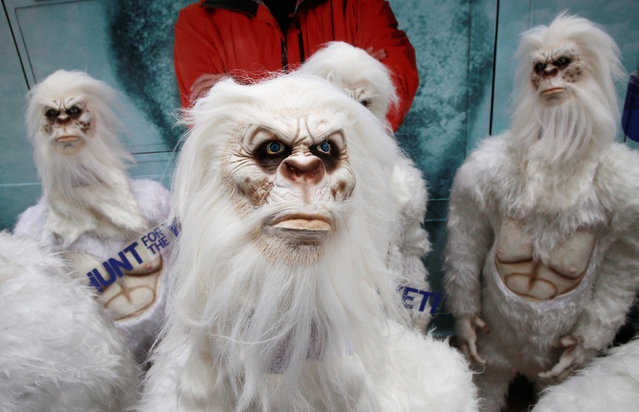
Actors dressed as a “Yeti” attend a promotional event for Travel Channel's “Expedition Unknown: Hunt for the Yeti” in Manhattan, New York City, U.S., October 4, 2016. (Photo by Brendan McDermid/Reuters)

Actors dressed as a “Yeti” attend a promotional event for Travel Channel's “Expedition Unknown: Hunt for the Yeti” in Manhattan, New York City, U.S., October 4, 2016. (Photo by Brendan McDermid/Reuters)
Details
05 Oct 2016 10:07:00
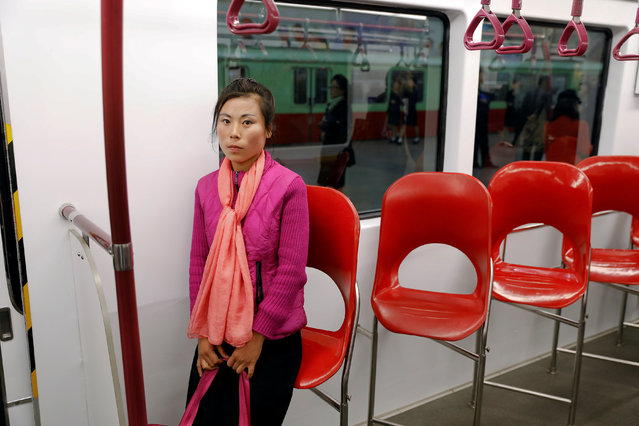
A woman travels on a train stopping at a subway station visited by foreign reporters in central Pyongyang, North Korea on April 14, 2017. (Photo by Damir Sagolj/Reuters)

A woman travels on a train stopping at a subway station visited by foreign reporters in central Pyongyang, North Korea on April 14, 2017. (Photo by Damir Sagolj/Reuters)
Details
20 Apr 2017 08:59:00
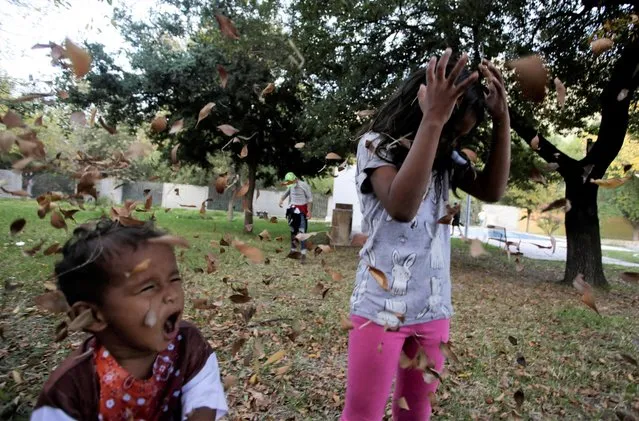
Migrant children play with leaves during Christmas Eve at a shelter, as they travel with their parents as part of a caravan with humanitarian visas to transit throughout the country, in Monterrey, Mexico on December 24, 2021. (Photo by Daniel Becerril/Reuters)

Migrant children play with leaves during Christmas Eve at a shelter, as they travel with their parents as part of a caravan with humanitarian visas to transit throughout the country, in Monterrey, Mexico on December 24, 2021. (Photo by Daniel Becerril/Reuters)
Details
13 Jan 2022 07:47:00
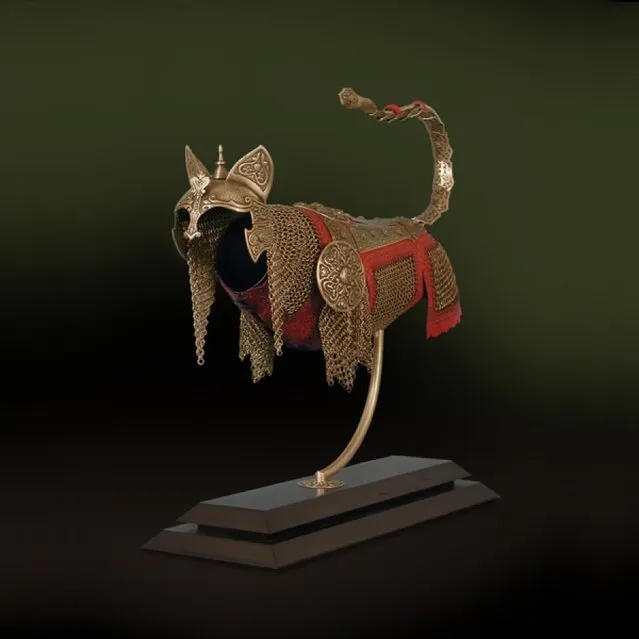
Animal Armour: Cats And Mice By Jeff de Boer

Jeff de Boer is a Calgary-based multi-media artist with an international reputation for producing some of the world's most original and well-crafted works of art. With an emphasis on metal, he is best known for such bodies of work as suits of armour for cats and mice, armour ties and sword-handled briefcases, rocket lamps and pop culture ray guns, and exquisite high art, abstract works called exoforms.
Details
10 Apr 2013 11:50:00
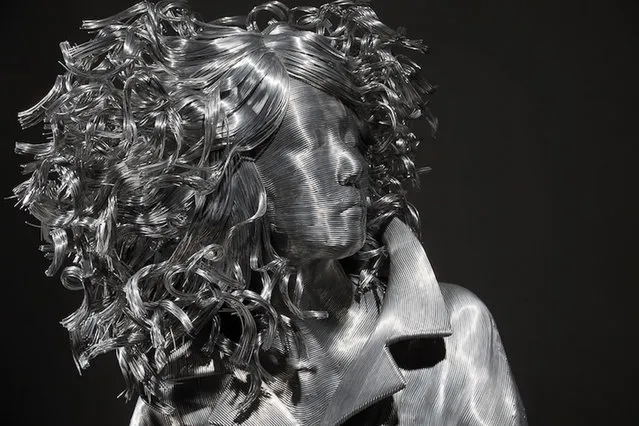
Aluminum Wire Sculptures By Seung Mo Park

Korean artist Seung Mo Park continues to amaze with his astonishingly crafted figurative sculptures made with tightly wrapped layers of aluminum wire based on fiberglass forms. The works shown here are part of the Brooklyn-based artist’s Human series where he recreates the delicate wrinkles and folds of clothing as well as the sinuous musculature of the human body in metallic layers remeniscent of tree rings. He’s also sculpted bicycles, musical insturments and other forms as part of his Object series.
Details
17 Jan 2014 12:02:00
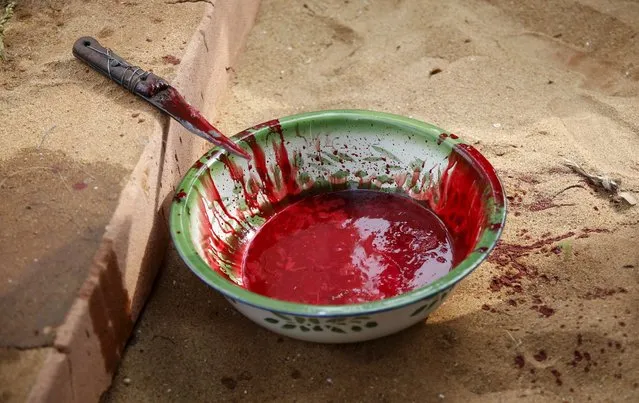
A knife is seen beside a bowl containing blood after a ram was killed as a sacrifice in front of a shrine at the annual voodoo festival in Ouidah, Benin, January 10, 2016. (Photo by Akintunde Akinleye/Reuters)

A knife is seen beside a bowl containing blood after a ram was killed as a sacrifice in front of a shrine at the annual voodoo festival in Ouidah, Benin, January 10, 2016. In Ouidah, a small town and former slave port in the West African country of Benin, the annual voodoo festival gathers visitors from far and wide. It's a week that brings together priests and dignitaries, rich and poor, locals and visitors from as far afield as the Caribbean and France. The festival commemorates the estimated 60 million people who lost their homelands and their freedom during the African slave trade. (Photo by Akintunde Akinleye/Reuters)
Details
23 Jan 2016 12:55:00
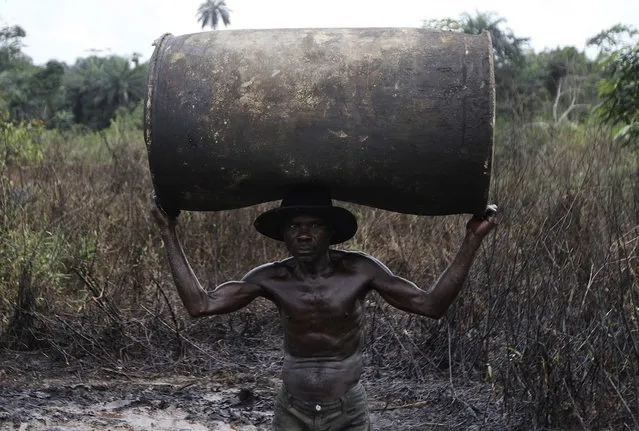
Ebiowei, 48, carries an empty oil container on his head to a place where it would be filled with refined fuel at an illegal refinery site near river Nun in Nigeria's oil state of Bayelsa November 27, 2012. (Photo by Akintunde Akinleye/Reuters)

Ebiowei, 48, carries an empty oil container on his head to a place where it would be filled with refined fuel at an illegal refinery site near river Nun in Nigeria's oil state of Bayelsa November 27, 2012. Locals in the industry say workers can earn $50 to $60 a day. Thousands of people in Nigeria engage in a practice known locally as “oil bunkering” – hacking into pipelines to steal crude then refining it or selling it abroad. The practice, which leaves oil spewing from pipelines for miles around, managed to lift around a fifth of Nigeria's two million barrel a day production last year according to the finance ministry. (Photo by Akintunde Akinleye/Reuters)
Details
18 Jan 2013 14:29:00
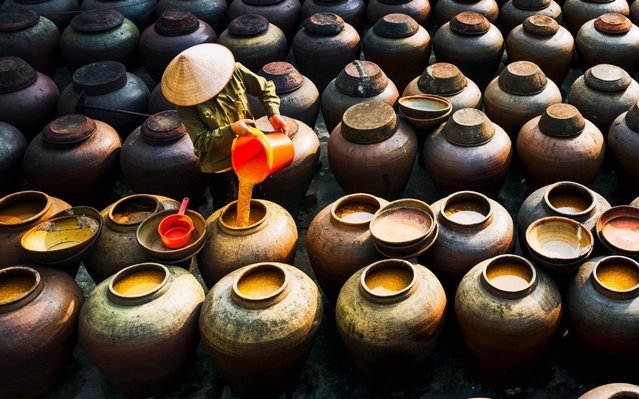
Workers stir hundreds of large ceramic pots as they spend months making a traditional soy sauce on October 14, 2020. Arranged in rows, the containers can hold up to 50 litres of Ban Soy sauce. During the drawn out process the sauce is stirred every two days for two to six months. Ban Yen Nhan village in the Hung Yen Province of Vietnam is famous for its traditional and distinctive method of making the sauce. (Photo by Nguyen Quy/Solent News)

Workers stir hundreds of large ceramic pots as they spend months making a traditional soy sauce on October 14, 2020. Arranged in rows, the containers can hold up to 50 litres of Ban Soy sauce. During the drawn out process the sauce is stirred every two days for two to six months. Ban Yen Nhan village in the Hung Yen Province of Vietnam is famous for its traditional and distinctive method of making the sauce. (Photo by Nguyen Quy/Solent News)
Details
30 Oct 2020 00:05:00