Loading...
Done
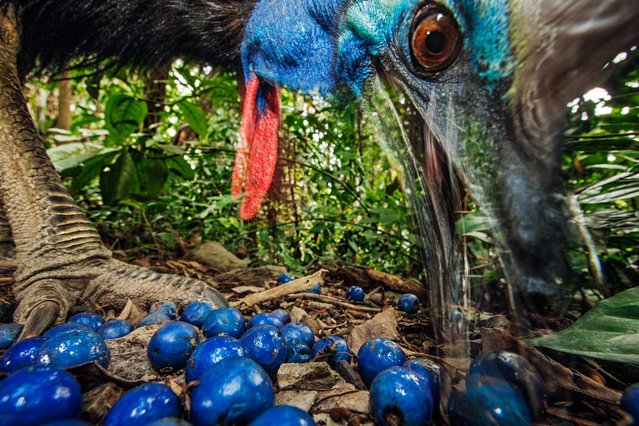
“Cassowaries are large, flightless birds related to emus and (more distantly) to ostriches, rheas, and kiwis”, writes Olivia Judson in the September issue of National Geographic magazine. (Photo by Christian Ziegler/National Geographic)

“Cassowaries are large, flightless birds related to emus and (more distantly) to ostriches, rheas, and kiwis”, writes Olivia Judson in the September issue of National Geographic magazine. How large? People-size: Adult males stand well over five foot five and top 110 pounds. Females are even taller, and can weigh more than 160 pounds. Dangerous when roused, they’re shy and peaceable when left alone. But even birds this big and tough are prey to habitat loss. The dense New Guinea and Australia rain forests where they live have dwindled. Today cassowaries might number 1,500 to 2,000. And because they help shape those same forests – by moving seeds from one place to another – “if they vanish”, Judson writes, “the structure of the forest would gradually change” too. (Photo by Christian Ziegler/National Geographic)
Details
06 Jan 2014 12:21:00
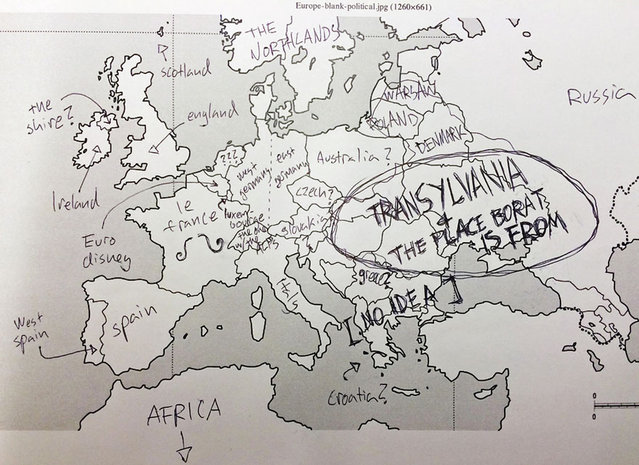
Americans Try To Place European Countries On A Map Part 2

How sure are you of your geographical knowledge? Buzzfeed recently put Americans’ geographical knowledge to the test with a survey in which participants had to write in countries’ names on a blank European political map. Unfortunately, they didn’t fare too well, but some of their responses are hilarious (or hilariously mis-informed). But don’t be so quick to judge Americans – when Buzzfeed posted a similar survey testing Brits’ knowledge of the 50 United States, they also came up short. On the one hand, knowing a country’s states is different from knowing independent countries, but on the other, some U.S. states are larger than some European nations, and some U.S. states have larger economies than some European nations.
Details
03 Dec 2013 08:45:00
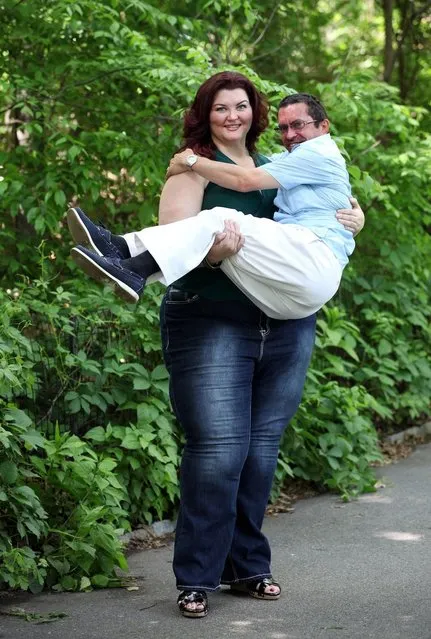
Amazon Amanda and Sergio on a day out in Central Park on May 25, 2014 in New York City. (Photo by Ruaridh Connellan/Barcroft Media)

Amazon Amanda and Sergio on a day out in Central Park on May 25, 2014 in New York City. Meet Amazon Amanda – the 6ft 3 ins, 20 stone model who is paid to dwarf men. Amanda, 38, is a big hit with guys who like being squashed, crushed, wrestled or simply seen out in pubic with super-sized women. After growing too big to be a mainstream model, Amanda discovered a subculture where she could put her natural assets to good use. With 63 inch hips and a 44DD bust Amanda is worshipped by amazon fans all over the world. And shockingly she was once asked to crush a terminally ill client to death – so he could die doing what he loves. Despite the suggestive nature of her work Amanda insists nothing sexual ever takes place between her and her clients. (Photo by Ruaridh Connellan/Barcroft Media)
Details
30 Jul 2014 10:52:00
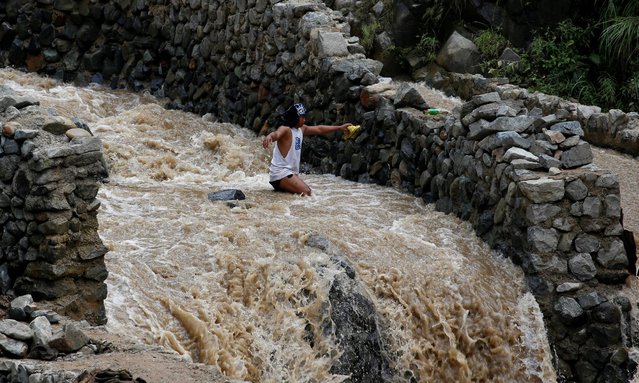
A local miner wades through water as he walks down from a mountain in Benguet a day after Typhoon Haima struck northern Philippines, October 21, 2016. (Photo by Erik De Castro/Reuters)

A local miner wades through water as he walks down from a mountain in Benguet a day after Typhoon Haima struck northern Philippines, October 21, 2016. Super Typhoon Haima slammed into the northeastern Philippine coast late Wednesday with ferocious winds and rain that rekindled fears and memories from the catastrophe wrought by Typhoon Haiyan in 2013. (Photo by Erik De Castro/Reuters)
Details
22 Oct 2016 10:15:00
Moraine Lake Canada

Moraine Lake is a glacially-fed lake in Banff National Park, 14 kilometres (8.7 mi) outside the Village of Lake Louise, Alberta, Canada. It is situated in the Valley of the Ten Peaks, at an elevation of approximately 6,183 feet (1,885 m). The lake has a surface area of .5 square kilometres (0.19 sq mi). The lake, being glacially fed, does not reach its crest until mid to late June. When it is full, it reflects a distinct shade of blue. The colour is due to the refraction of light off the rock flour deposited in the lake on a continual basis.
Details
15 Oct 2013 11:56:00
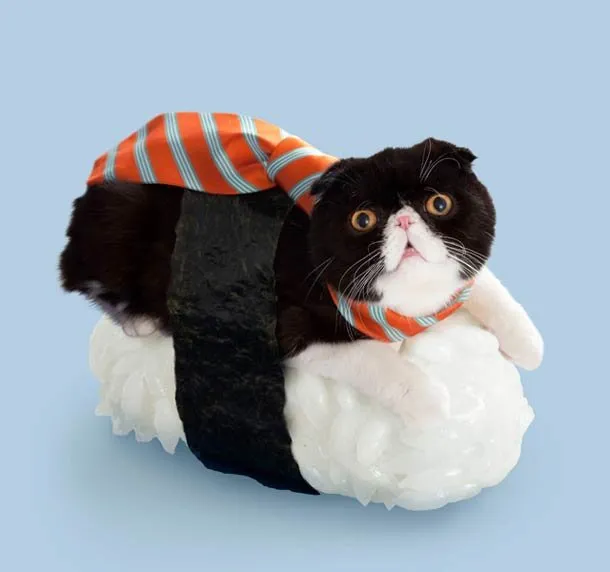
Sushi Cats By Tange & Nakimushi Peanuts

Sushi Cats (originally branded as Neko-Sushi) is a series of photographs created by the Japan-based company Tange & Nakimushi Peanuts. In this series the creators have dressed up a number of cats and placed them on top of oversized balls of sushi rice. The kitties don’t look too happy with what is going on, though they do look adorable in their little outfits. Tange & Nakimushi Peanuts didn’t think that making a set of photos was enough, so they’ve also created an Android and iPhone apps featuring Sushi Cats. Moreover, people living in Japan can visit their website, if they wish to order photo prints, postcards, and other items. (Photo by Tange & Nakimushi Peanuts)
Details
08 Jan 2015 14:14:00
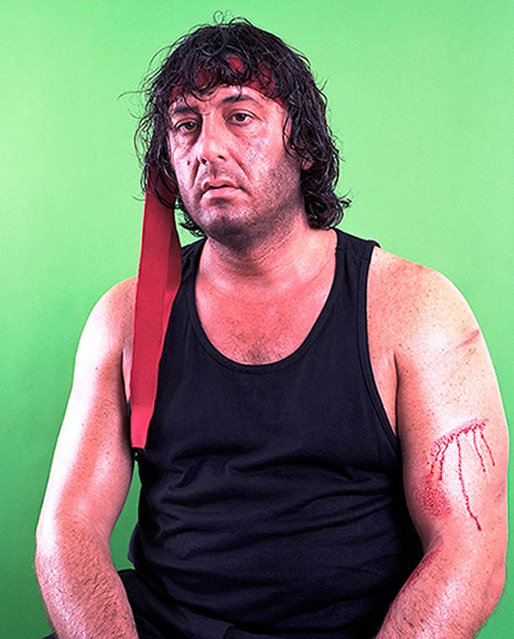
Nicolas Silberfaden: Superheroes

Due to the current economic, social and cultural crisis in The United States of America today, I have decided to do a photographic project consisting of a series of studio portraits of superhero and celebrity impersonators that live and work in the city of Los Angeles. Most of them unemployed Americans, they decided to suit up with their costumes and hit the streets, animate parties and events in efforts to make ends meet. Making them pose in their costumes against a colorful backdrop, I ask them to manifest feelings of genuine sadness – honest emotions that are a consequence of our current times. The result is a somber, striking visual image that contradicts the iconic nature of strength and moral righteousness typical in American superhero and celebrity imagery. Creating the illusion that Superman does exist – that he too was fallible and affected by America’s downturn.

Nicolas Silberfaden
Details
06 Dec 2012 12:13:00
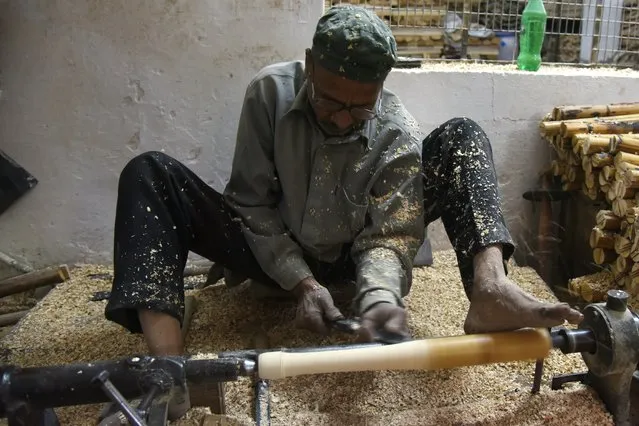
In this photograph taken on December 14, 2016, an Indian craftsman works on unfinished cricket bats in a factory in Meerut, some 70 kms north- east of New Delhi. As Indian factory worker Jitender Singh carves out another big- hitting slab of thick willow he insists MCC proposals to limit the size of cricket bats won' t tame Twenty20 marauders. “I don' t think the thickness matters. It' s more about the balance of the bat and the talent of the batsman”, says Singh, who has made bats for many stars, including South Africa's AB de Villiers. The World Cricket committee of the MCC, the guardians of the game, recommended in December 2016 that limitations be placed on the width and depth of bats because it had become too easy to smash fours and sixes. (Photo by Dominique Faget/AFP Photo)

In this photograph taken on December 14, 2016, an Indian craftsman works on unfinished cricket bats in a factory in Meerut, some 70 kms north- east of New Delhi. (Photo by Dominique Faget/AFP Photo)
Details
11 Jan 2017 14:32:00