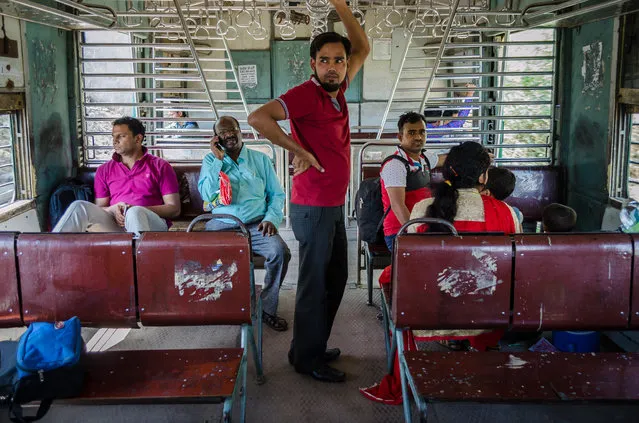
Indian passengers travel on a local train in New Delhi, India, October 2017. Constructed in 1975 to bypass the crowded and passenger-heavy Old Delhi, New Delhi and Hazrat Nizamuddin railway stations, the railway line once used to be the lifeline of the capital. (Photo by Ankur Dutta/Barcroft Media)
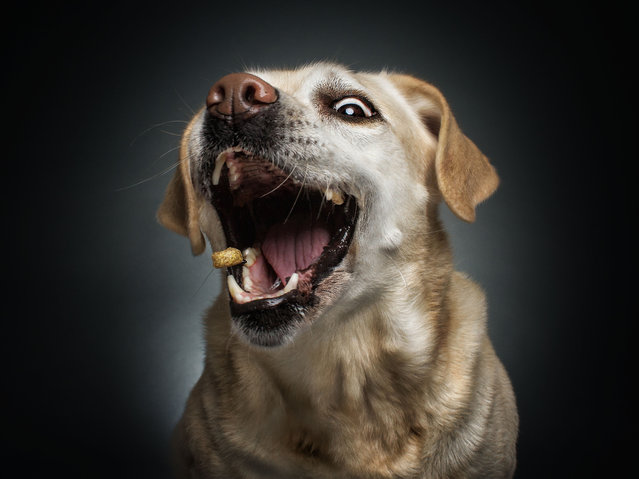
A photographer has created a series of paw-traits of hungry dogs pulling hilarious faces as they try and catch treats. Using a unique technique, the shots are captured at the exact moment the adorable pooches attempt to catch an airborne piece of food. The dogs appear surprised, happy, sad, confused – and sometimes even so blasé they miss the treat entirely. The images were taken by Christian Vieler, a photographer from Waltrop, Germany. Here: A labrador retriever. (Photo by Christian Vieler/Caters News)
A demonstrator wears a mask during a protest inside the Bay Area Rapid Transit (BART) Civic Center station on August 15, 2011 in San Francisco, California. The hacker group “Anonymous” staged a demonstration at a BART station this evening after BART officials turned off cell phne service in its stations last week during a disruptive protest following a fatal shooting of a man by BART police. (Photo by Justin Sullivan/Getty Images)
Bryan Adams took the pictures for next year’s Pirelli calendar, which features fellow musicians including Cher, Rita Ora, Iggy Pop and the American rapper Saweetie, above, as it depicts a typical day in the life of a touring performer. (Photo by Bryan Adams/Pirelli)
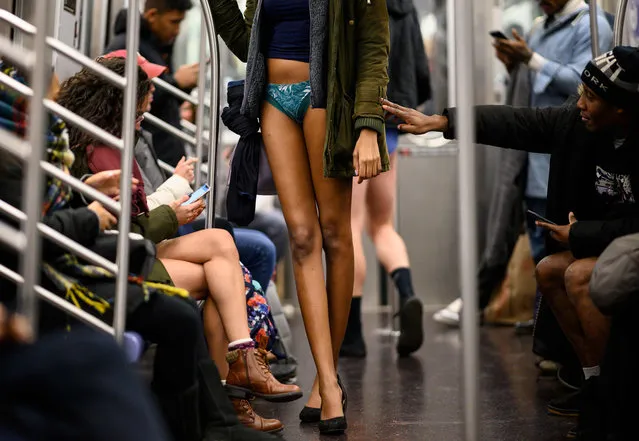
Participants in the 18th Annual “No Pants Subway Ride” travel in the subway on January 13, 2019 in New York. The “No Pants Subway Ride” is an annual event started in 2002 by Improv Everywhere in New York, the goal of which is for riders on the subway train to dress in normal winter clothes without pants while keeping a straight face. (Photo by Johannes Eisele/AFP Photo)
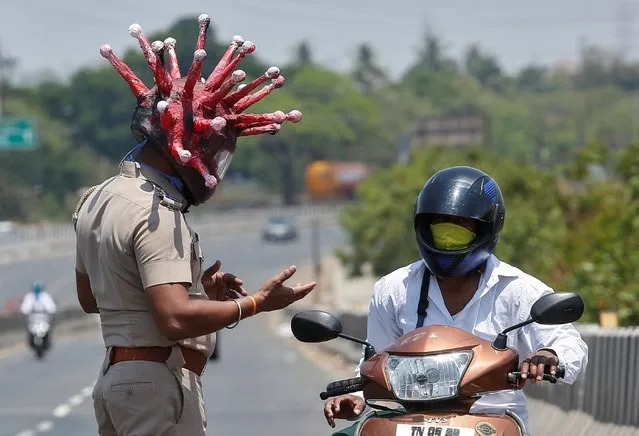
Rajesh Babu, a police officer, wearing a helmet depicting coronavirus, requests a commuter to stay at home during a 21-day nationwide lockdown to limit the spreading of coronavirus disease (COVID-19), in Chennai, India, March 28, 2020. (Photo by P. Ravikumar/Reuters)
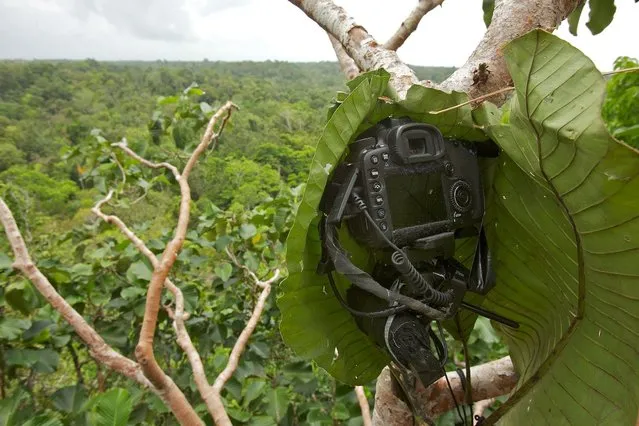
Tim Laman is a field biologist and wildlife photojournalist. His pioneering research in the rain forest canopy in Borneo led to a PhD from Harvard and his first National Geographic article in 1997. Since then, he has pursued his passion for exploring wild places and documenting little-known and endangered wildlife by becoming a regular contributor to National Geographic. He has eighteen articles to his credit to date, all of which have had a conservation message. Some have focused on endangered species such as Orangutans or Hornbills, while others, such as a series of articles on Conservation International’s Biodiversity Hotspots, have highlighted regions under intense pressure.