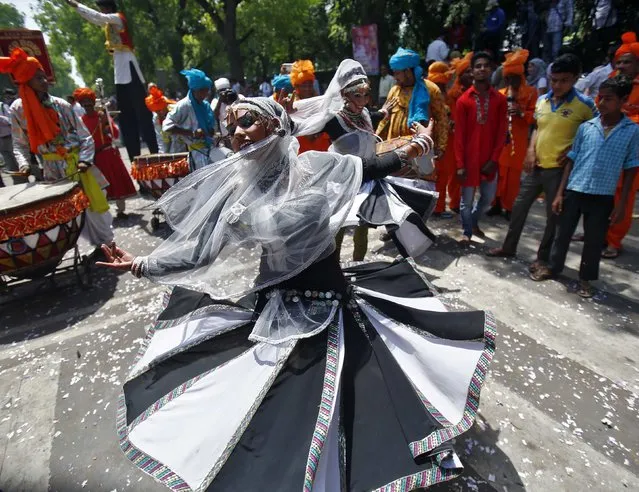
A supporter of BJP dances during celebrations after learning of initial poll results outside the party headquarters in New Delhi, on May 16, 2014. (Photo by Anindito Mukherjee/Reuters)
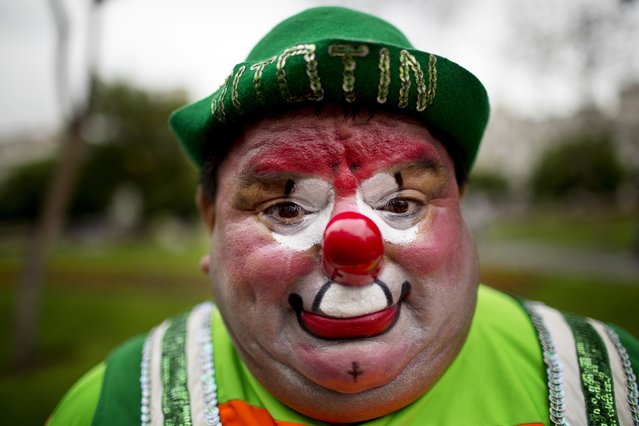
“Sorpresa” the clown poses for a picture during a march commemorating Peruvian clown day in Lima Peru, Monday, May 25, 2015. Hundreds of professional clowns dressed in colorful costumes, wigs and face paint marched through the streets of Lima to celebrate Peruvian Clown Day. (Photo by Rodrigo Abd/AP Photo)
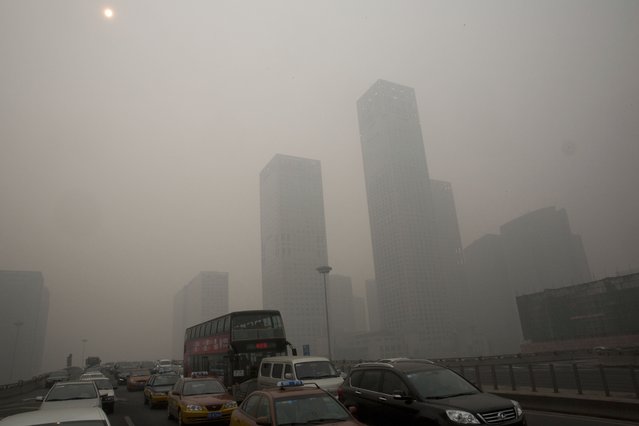
Vehicles clog a highway during a hazy day in Beijing, China, Wednesday, February 26, 2014. Beijing remained cloaked in hazardous white pollution hiding much of its skyline Wednesday, despite the announced closures or production cuts at 147 of the city's industrial plants. (Photo by Ng Han Guan/AP Photo)
Lucie Clayton instructs pupils in the art of correct posture by balancing a glass and book on their heads at her finishing school in Old Cavendish Street, London. (Photo by William Vanderson/Fox Photos/Getty Images). 25th November 1936
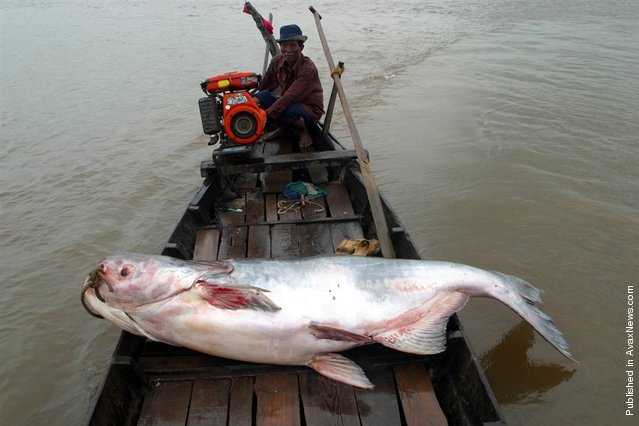
Among the fish populations that could be harmed by the Xayaburi dam in Laos is the critically endangered Mekong giant catfish, considered by the Guinness Book of World Records to be the world’s largest freshwater fish. The fish, which grows to 650 pounds and about 10 feet long, is only found in the Mekong River. It is migratory, moving between downstream habitats in Cambodia upstream to northern Thailand and Laos each year to spawn. Some experts fear the Xayaburi dam could block the migration and drive the giant catfish to extinction. (Photo by Courtesy of Zeb Hogan/University of Nevada, Reno)
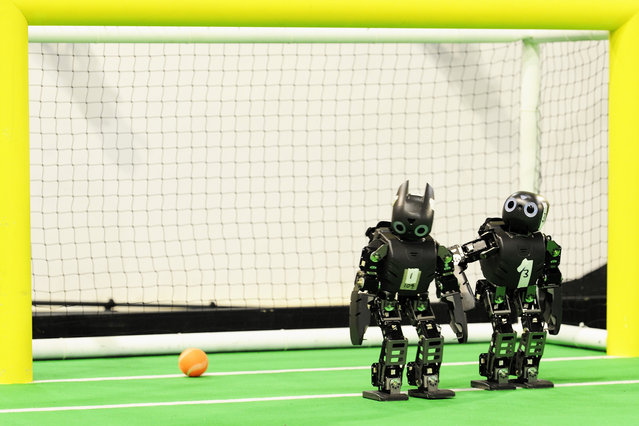
Final match Soccer Humanoid Kid Size between DARwIn vs. AUTMan at the World Championship finals of RoboCup 2013 in Eindhoven (NL). (Photo by Bart van Overbeeke)
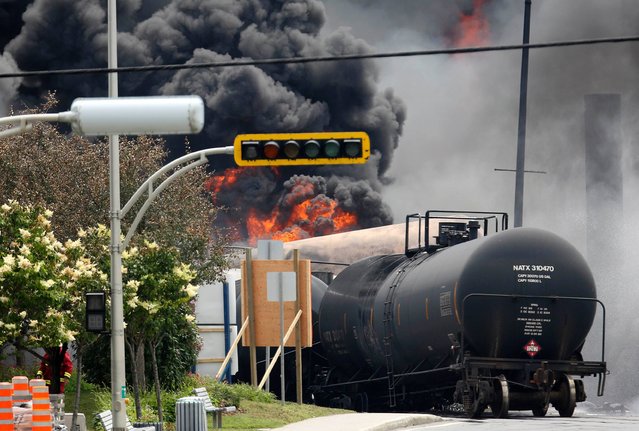
A burning train wagon is seen after an explosion at Lac Megantic, Quebec, July 6, 2013. A large swath of Lac Megantic was destroyed Saturday after a train carrying crude oil derailed, sparking several explosions and forcing the evacuation of up to 1,000 people. (Photo by Mathieu Belanger/Reuters)
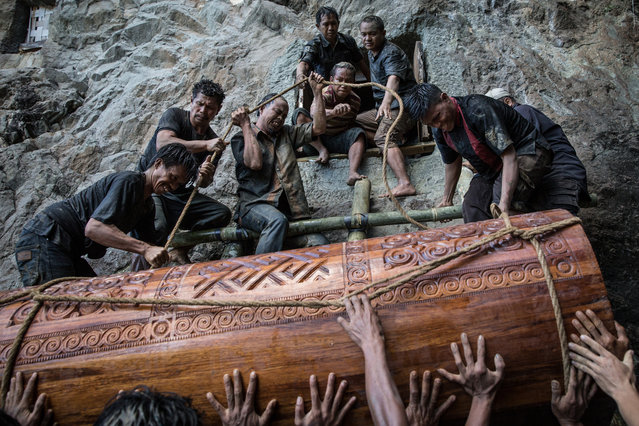
It is said that Torajans are people who “live to die”. For this Indonesian ethnic group, funerals are such extravagant events that they sometimes attract tourists. Families can postpone burials years (and the deceased are considered sick and hosted at home until the funeral) until the family can raise enough money and gather as many relatives as possible. And then it’s a jubilant multiday social event with a parade, dances and animal sacrifices. Agung Parameswara photographed these funerary practices when he traveled to South Sulawesi province, where the Torajans live. (Photo by Agung Parameswara/The Washington Post)