Loading...
Done
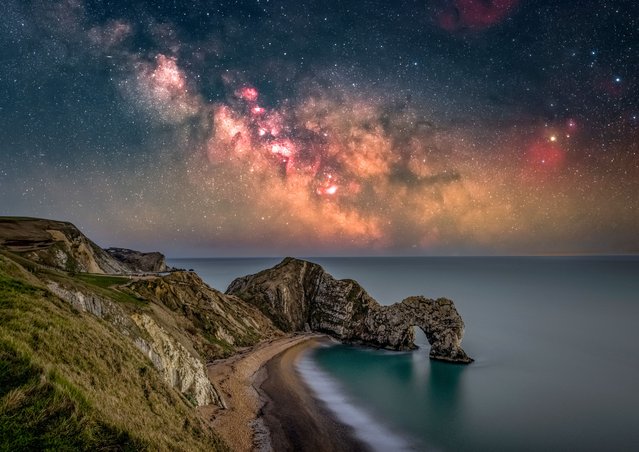
The Milky Way rising above Durdle Door in Dorset, United Kingdom on Saturday night, March 18, 2023. The image consists of 19 two-minute exposures, ten of the foreground and nine of the sky which needed a motorised star tracker to ensure the Milky Way wasn't blurry. All the photos were merged together to reveal more detail than what the naked eye can see. (Photo by Nick Bull/Picture Exclusive)

The Milky Way rising above Durdle Door in Dorset, United Kingdom on Saturday night, March 18, 2023. The image consists of 19 two-minute exposures, ten of the foreground and nine of the sky which needed a motorised star tracker to ensure the Milky Way wasn't blurry. All the photos were merged together to reveal more detail than what the naked eye can see. (Photo by Nick Bull/Picture Exclusive)
Details
24 Aug 2023 02:47:00
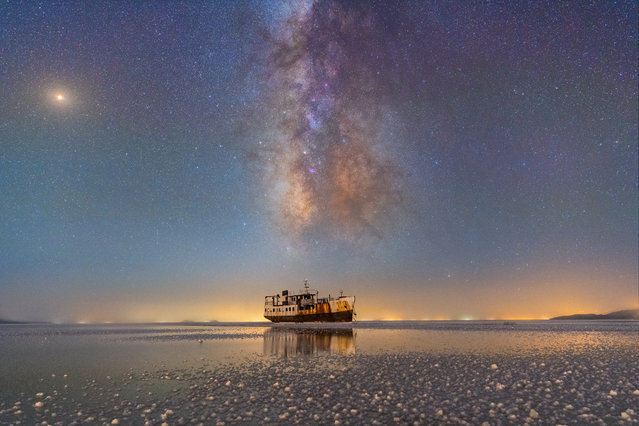
Sharafkhaneh port and lake Urmia. Masoud Ghadiri (Iran). The summer Milky Way is very prominent in this photo. On the galaxy zone, Saturn is located besides the Lagoon nebula. On the right of the horizon, you can see the extreme light pollution of Urmia, which is caused by ever-increasing city development. (Photo by Masoud Ghadiri/National Maritime Museum)

Sharafkhaneh port and lake Urmia. Masoud Ghadiri (Iran). The summer Milky Way is very prominent in this photo. On the galaxy zone, Saturn is located besides the Lagoon nebula. On the right of the horizon, you can see the extreme light pollution of Urmia, which is caused by ever-increasing city development. (Photo by Masoud Ghadiri/National Maritime Museum)
Details
20 Jun 2019 00:01:00
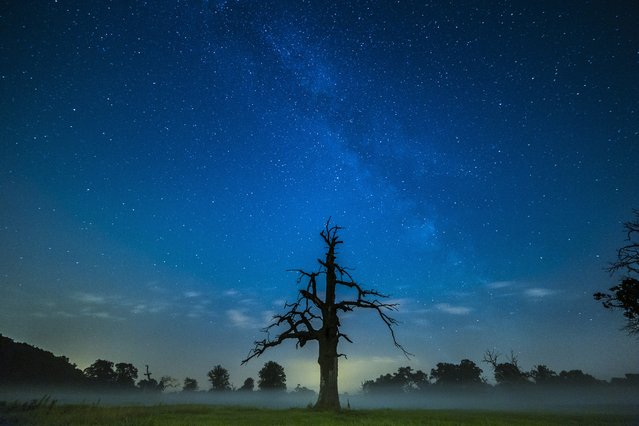
A picture made available on 17 July 2015 shows the bright line of the Milky Way above the old oaks at the Rogalin landscape Park in Rogalin village, near Poznan, on the night of 16 July 2015. (Photo by Lukasz Ogrodowczyk/EPA)

A picture made available on 17 July 2015 shows the bright line of the Milky Way above the old oaks at the Rogalin landscape Park in Rogalin village, near Poznan, on the night of 16 July 2015. (Photo by Lukasz Ogrodowczyk/EPA)
Details
21 Jul 2015 10:55:00
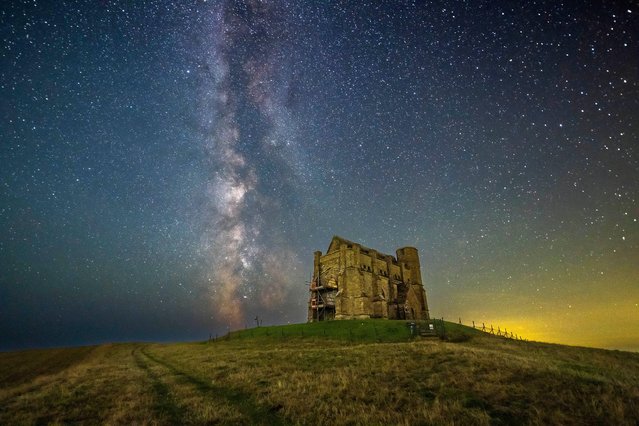
The galactic core of the Milky Way glows brightly in the clear night sky above St Catherine?s Chapel at Abbotsbury in Dorset, UK on August 2, 2024. (Photo by Graham Hunt/Alamy Live News)

The galactic core of the Milky Way glows brightly in the clear night sky above St Catherine?s Chapel at Abbotsbury in Dorset, UK on August 2, 2024. (Photo by Graham Hunt/Alamy Live News)
Details
03 Dec 2024 06:20:00
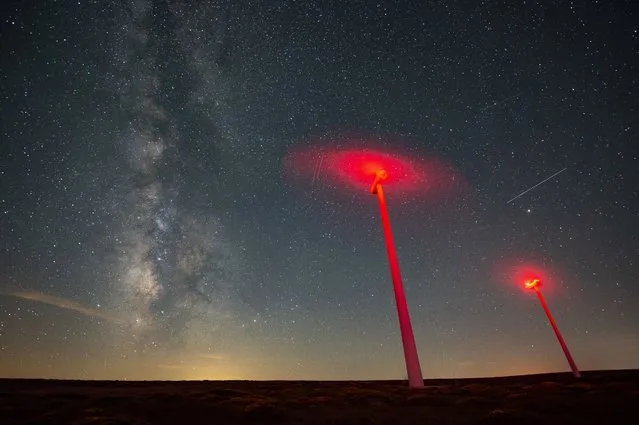
A view of the Milky Way over the windmills at the wasteland of La Lora, in Rocamundo, region of Cantabria, northern Spain, 29 May 2022. (Photo by Pedro Puente Hoyos/EPA/EFE)

A view of the Milky Way over the windmills at the wasteland of La Lora, in Rocamundo, region of Cantabria, northern Spain, 29 May 2022. (Photo by Pedro Puente Hoyos/EPA/EFE)
Details
22 Dec 2022 05:39:00
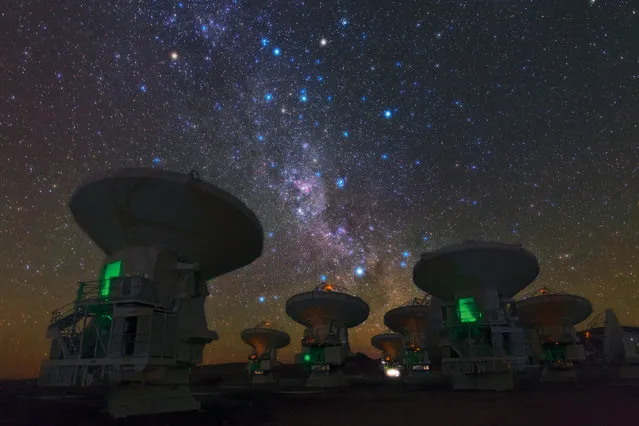
The antennas of the European Southern Observatory's Atacama Large Millimeter/Submillimeter Array, also known as ALMA, are set against the splendor of the Milky Way in this picture by Babak Tafreshi

The antennas of the European Southern Observatory's Atacama Large Millimeter/Submillimeter Array, also known as ALMA, are set against the splendor of the Milky Way in this picture by Babak Tafreshi. Construction of the full ALMA array is due to be completed in Chile's Atacama Desert in 2013, but the facility is already making scientific observations with a partial array of antennas. (Photo by ESO/B. Tafreshi/TWAN)
Details
03 Jun 2012 11:57:00
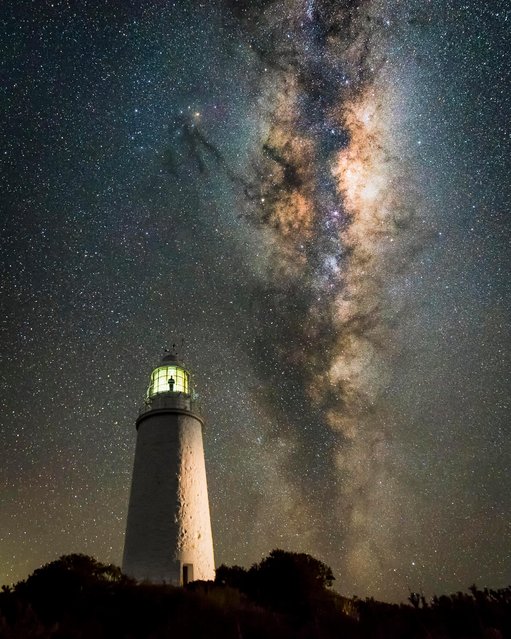
The Milky Way rises above an isolated lighthouse in Tasmania. Shot by James Stone of Australia. (Photo by James Stone/Astronomy Photographer of the Year 2018)

The competition is run by Royal Observatory Greenwich sponsored by Insight Investment and in association with BBC Sky at Night Magazine. This year astrophotographers from 91 countries sent in more than 4,200 spectacular entries. Here: The Milky Way rises above an isolated lighthouse in Tasmania. Shot by James Stone of Australia. (Photo by James Stone/Astronomy Photographer of the Year 2018)
Details
20 Jul 2018 00:05:00
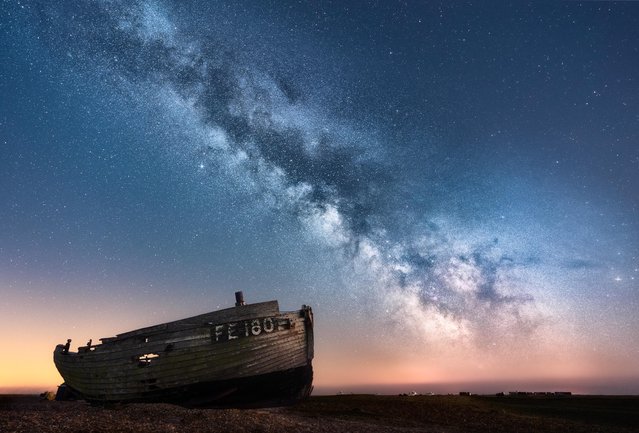
Paul Dixon is an engineer by day and an astrophotographer by night. He shot this broken boat on Dungeness beach, Kent in the last decade of August 2024, 17 times, stacking the images upon each other before combining them with a similar composite of the Milky Way. (Photo by Paul Dixon/Media Drum Images)

Paul Dixon is an engineer by day and an astrophotographer by night. He shot this broken boat on Dungeness beach, Kent in the last decade of August 2024, 17 times, stacking the images upon each other before combining them with a similar composite of the Milky Way. (Photo by Paul Dixon/Media Drum Images)
Details
10 Jul 2025 04:02:00