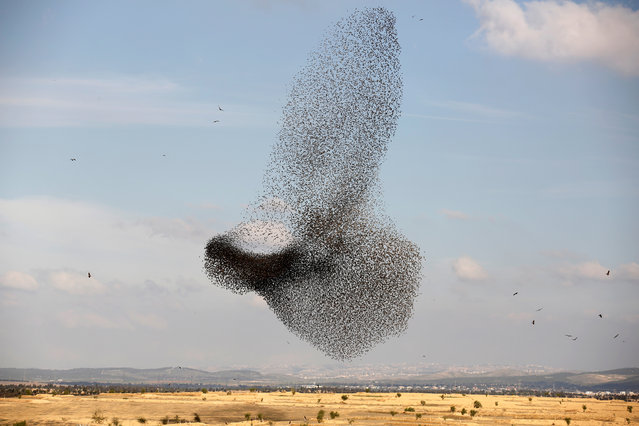
A murmuration of migrating starlings is seen across the sky near the village of Beit Kama in southern Israel on January 16, 2018. (Photo by Amir Cohen/Reuters)
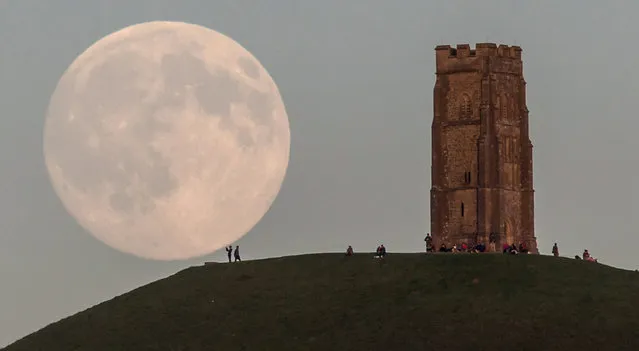
The moon rises over people gathered on Glastonbury Tor ahead of tomorrow's Blue Moon on July 30, 2015 in Somerset, England. The full moon appearing on July 31 will be what's called a Blue Moon, which refers to the second of two full moons appearing in the same calendar month. The last time this happened was in 2012 and there isn't due another until 2018. (Photo by Matt Cardy/Getty Images)
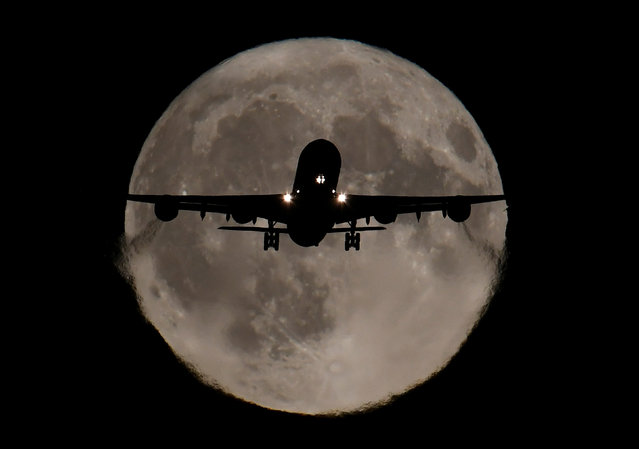
A passenger plane, with a full Harvest moon seen behind, makes its final landing approach towards Heathrow Airport in London, Britain, October 5, 2017. (Photo by Toby Melville/Reuters)
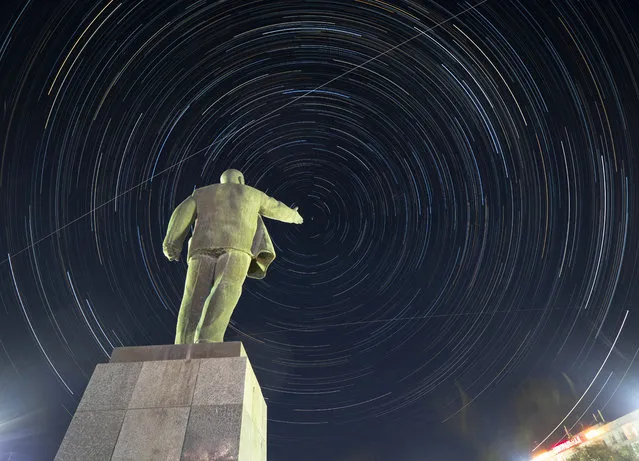
The International Space Station (ISS) moves along its orbit above at the Russian leased Baikonur cosmodrome, Kazakhstan, Thursday, July 18, 2019, with a statue of Soviet Union founder Vladimir Lenin in the foreground. Circular star tracks around the Polar Star and tracks of the ISS is the result of the camera multiple exposure with a total duration of two hours. (Photo by Dmitri Lovetsky/AP Photo)
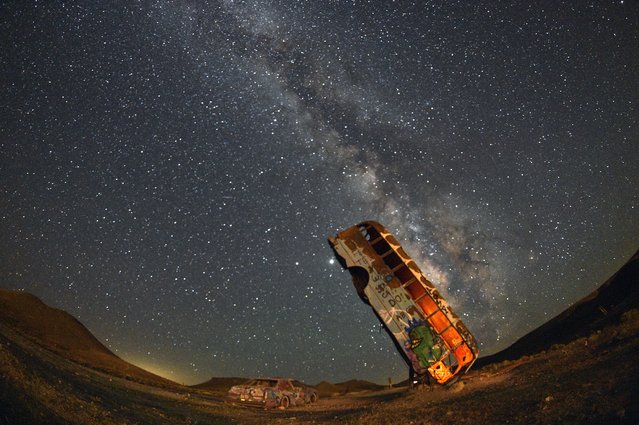
The Milky Way galaxy is seen in the sky above the International Car Forest of the Last Church in Goldfield, Nevada on July 18, 2020. The roadside attraction, created in 2002 by Mark Rippie, has over 36 automobiles including cars, trucks, vans and buses that have been balanced on their ends or stacked on top one of another. (Photo by David Becker/AFP Photo)
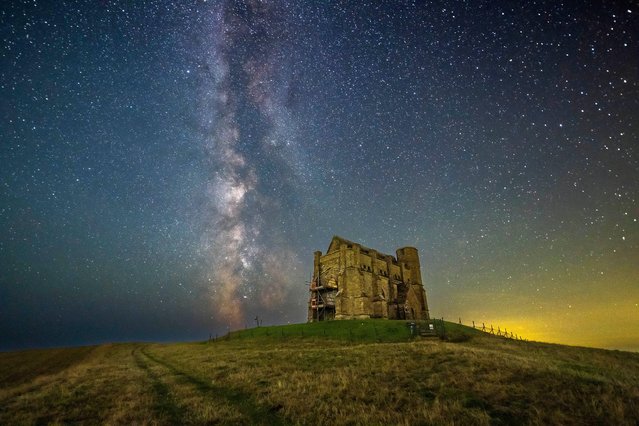
The galactic core of the Milky Way glows brightly in the clear night sky above St Catherine?s Chapel at Abbotsbury in Dorset, UK on August 2, 2024. (Photo by Graham Hunt/Alamy Live News)
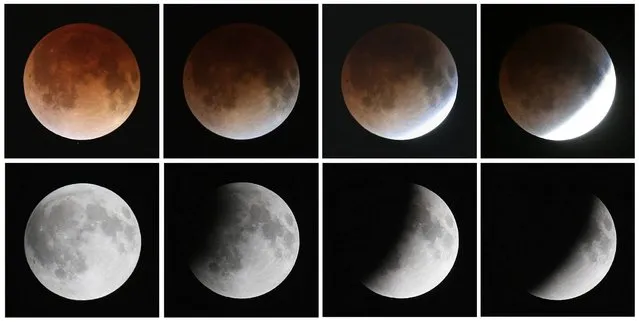
This composite image shows a sequence, from bottom left to top left, of the moon's transition during a total lunar eclipse on April 15, 2014 in Miami, Florida. People in most of north and south America should be able to witness this year's first total lunar eclipse, which will cause a “blood moon” and is the first of four in a rare Tetrad of eclipses over the next two years. (Photo by Joe Raedle/Getty Images)
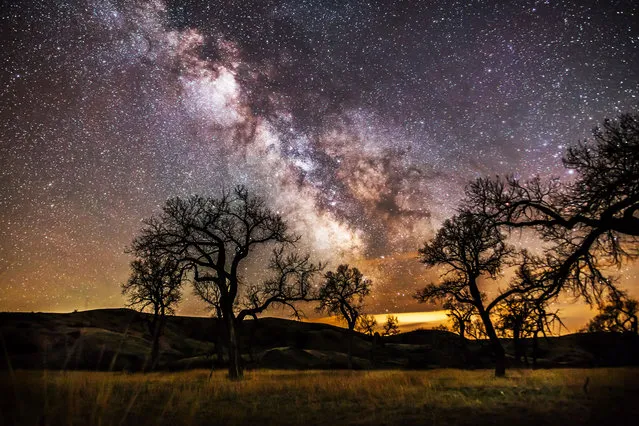
The stunning Milkyway in Midwestern U.S.A. captured by photographer Randy Halverson in 2013. The stunning skies in Midwestern U.S.A. captured by photographer Randy Halverson. The videographer captured rare footage of the Milky Way, the elusive Northern Lights and raging night storms in some of the most isolated regions of the U.S.A. The footage, which spans the skies of South Dakota, Wyoming and Utah, was taken between spring and autumn 2013. The 47-year-old spent 40 nights scattered across the eight-month period sat near his camera to capture the clear footage. Randy from Kennebec, South Dakota has been shooting timelapse for over 4 years. (Photo by Randy Halverson/Barcroft Media)