Loading...
Done
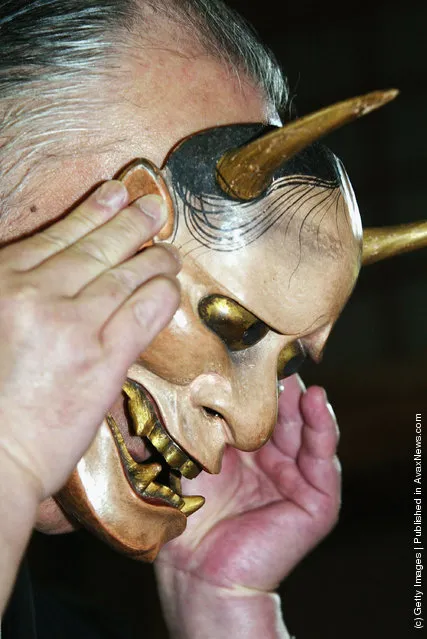
A renowned Noh actor, Otoshige Sakai, demostrates how to put on a Noh mask

“Noh, or Nogaku – derived from the Japanese word for “skill” or “talent” – is a major form of classical Japanese musical drama that has been performed since the 14th century. Many characters are masked, with men playing male and female roles. Traditionally, a Noh “performance day” lasts all day and consists of five Noh plays interspersed with shorter, humorous kyōgen pieces. However, present-day Noh performances often consist of two Noh plays with one Kyōgen play in between”. – Wikipedia

Photo: A renowned Noh actor, Otoshige Sakai, demostrates how to put on a Noh mask, on May 17, 2004 in Tokyo, Japan. (Photo by Koichi Kamoshida/Getty Images)
Details
02 Aug 2011 14:09:00
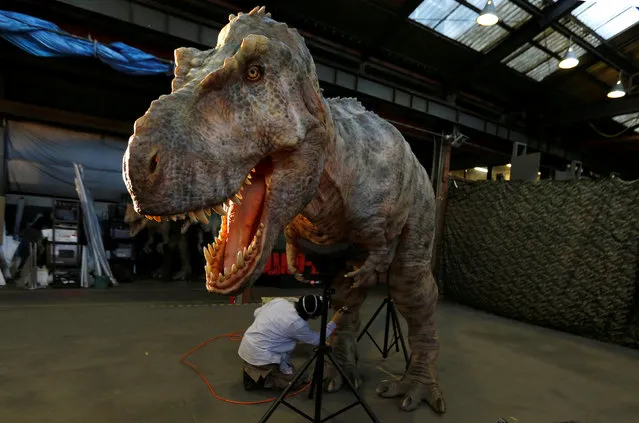
Japan's ON-ART Corp's staff repaints the company's eight metre tall man-operated walking dinosaur robot “TRX03” at the company's studio in Tokorozawa, Japan, December 6, 2016. (Photo by Toru Hanai/Reuters)

Japan's ON-ART Corp's staff repaints the company's eight metre tall man-operated walking dinosaur robot “TRX03” at the company's studio in Tokorozawa, Japan, December 6, 2016. (Photo by Toru Hanai/Reuters)
Details
23 Dec 2016 08:21:00
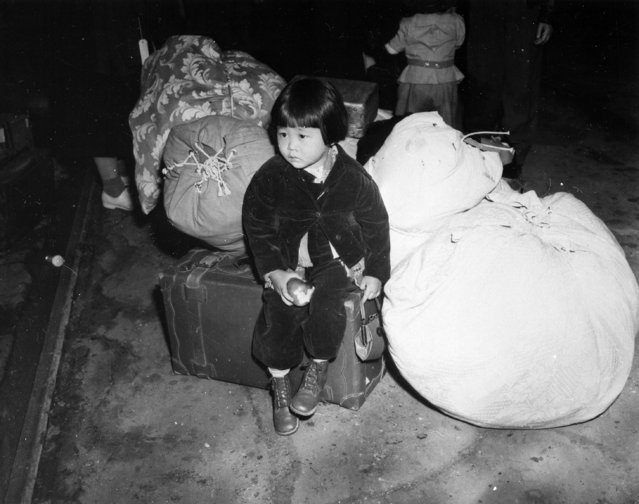
A young evacuee of Japanese ancestry waits with the family baggage before leaving by bus for an assembly center in California, in this April 1942 handout photo. (Photo by Courtesy Clem Albers/Department of the Interior/War Relocation Authority/National Archives/Reuters)

A young evacuee of Japanese ancestry waits with the family baggage before leaving by bus for an assembly center in California, in this April 1942 handout photo. February 19, 2017 marks the 75th anniversary of FDR signing executive order 9066, authorizing the internment of Japanese Americans during World War Two. (Photo by Courtesy Clem Albers/Department of the Interior/War Relocation Authority/National Archives/Reuters)
Details
19 Feb 2017 00:02:00


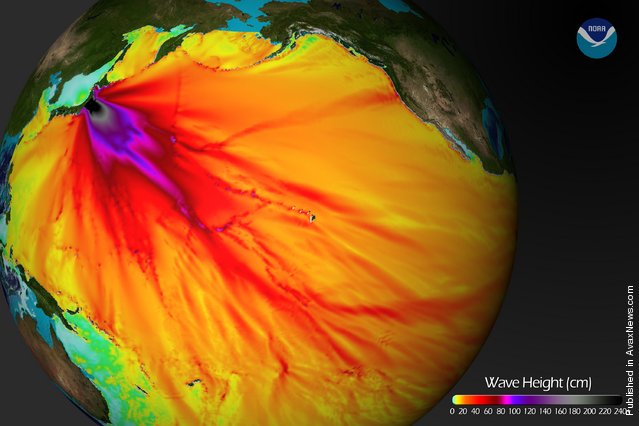
In this handout image provided by the National Oceanic and Atmospheric Administration (NOAA), model runs from the Center for Tsunami Research at the NOAA Pacific Marine Environmental Laboratory show the expected wave heights of the tsunami as it travels across the Pacific basin March 11, 2011. The largest wave heights are expected near the earthquake epicenter, off Japan. The wave will decrease in height as it travels across the deep Pacific but grow taller as it nears coastal areas. In general, as the energy of the wave decreases with distance, the near shore heights will also decrease (e.g., coastal Hawaii will not expect heights of that encountered in coastal Japan). (Photo by NOAA via Getty Images)
Details
13 Mar 2011 14:29:00
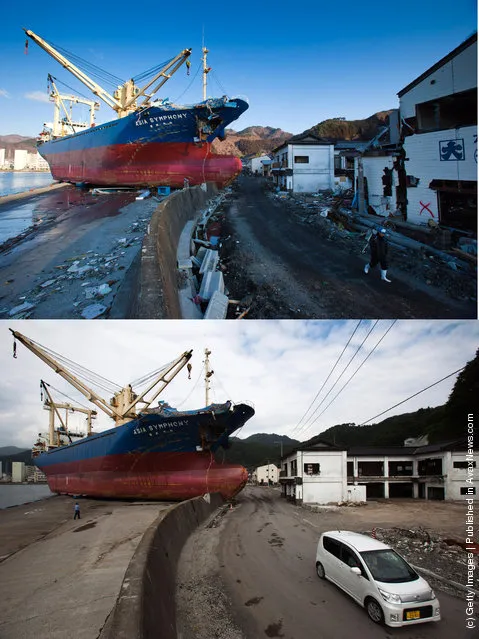
Japan To Commemorate 6 Months Anniversary Of Earthquake And Tsunami

In this composite image, (Bottom Photo) a car drives past a ship called Asia Symphony that was left stranded prior to the sixth month anniversary of the March 11 earthquake and massive tsunami on September 10, 2011 in Kamaishi, Iwate Prefecture, Japan. (Top Photo) Local residents walk past the Asia Symphony, which has been left stranded after being lifted up onto the promenade of the docks March 24, 2011 in Kamaishi, Iwate Prefecture, Japan. A 9.0 magnitude strong earthquake struck Japan offshore on March 11 at 2:46pm local time, triggering a tsunami wave of up to ten metres which engulfed large parts of north-eastern Japan and also damaging the Fukushima nuclear plant, causing the worst nuclear crisis in decades. The current number of dead and missing is reportedly estimated to be 22,900. (Photo by Athit Perawongmetha/Getty Images)
Details
11 Sep 2011 10:06:00
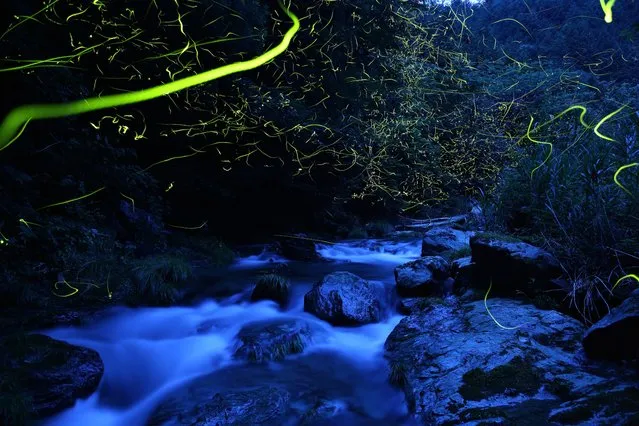
“In the late afternoon after a rain, genji botaru fireflies (luciola cruciate) dance above the swollen creek. The rocks darkened by the rain reflecting the blue sky, and the yellow-green ribbon of the glow from the fireflies, make a beautiful contrast”. – Takehito Miyatake. (Photo by Takehito Miyatake/Steven Kasher Gallery)

“In the late afternoon after a rain, genji botaru fireflies (luciola cruciate) dance above the swollen creek. The rocks darkened by the rain reflecting the blue sky, and the yellow-green ribbon of the glow from the fireflies, make a beautiful contrast”. – Takehito Miyatake. (Photo by Takehito Miyatake/Steven Kasher Gallery)
Details
19 Jun 2014 09:13:00
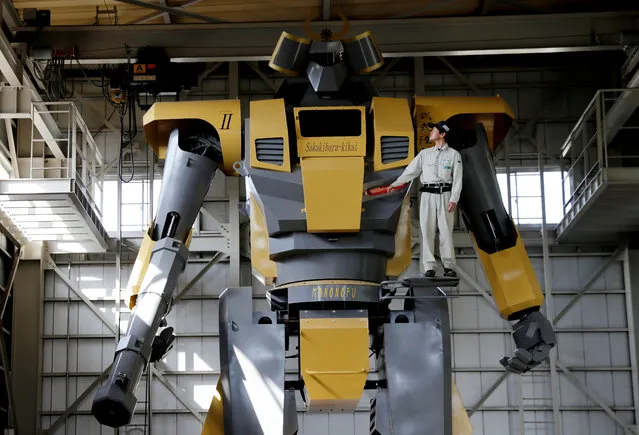
Sakakibara Kikai's engineer Go Sakakibara poses with the bipedal robot Mononofu during its demonstration at its factory in Shinto Village, Gunma Prefecture, Japan on April 12, 2018. Developed at Sakakibara Kikai, a maker of farming machinery, LW-Mononofu is a 28-feet tall, two-legged robot weighing in at more than 7 tonnes. It contains a cockpit with monitors and levers for the pilot to control the robot's arms and legs. (Photo by Kim Kyung-Hoon/Reuters)

Sakakibara Kikai's engineer Go Sakakibara poses with the bipedal robot Mononofu during its demonstration at its factory in Shinto Village, Gunma Prefecture, Japan on April 12, 2018. Developed at Sakakibara Kikai, a maker of farming machinery, LW-Mononofu is a 28-feet tall, two-legged robot weighing in at more than 7 tonnes. It contains a cockpit with monitors and levers for the pilot to control the robot's arms and legs. (Photo by Kim Kyung-Hoon/Reuters)
Details
17 Apr 2018 00:01:00
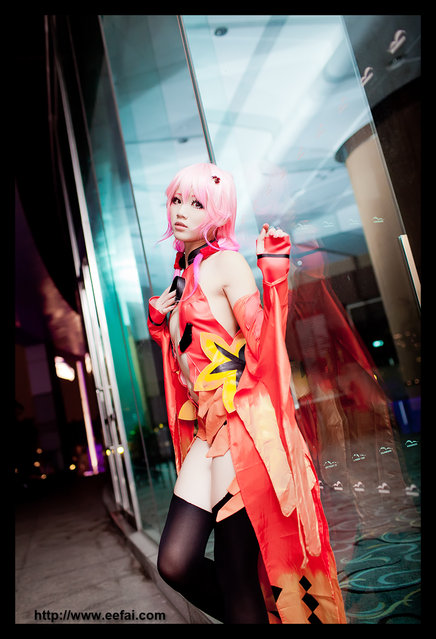
Guilty Crown ギルティクラウン 罪惡王冠 楪 祈 いのり ゆずりは Inori

Japanese Cosplay Photoshoot, taken on August 2-6, 2012. Photo: Guilty Crown ギルティクラウン 罪惡王冠 楪 祈 いのり ゆずりは Inori. (Photo by EE Fai)
Details
11 Aug 2012 11:37:00